What nutrient is a flowering plant lacking when its leaves turn yellow? Or it may be caused by a deficiency of some element
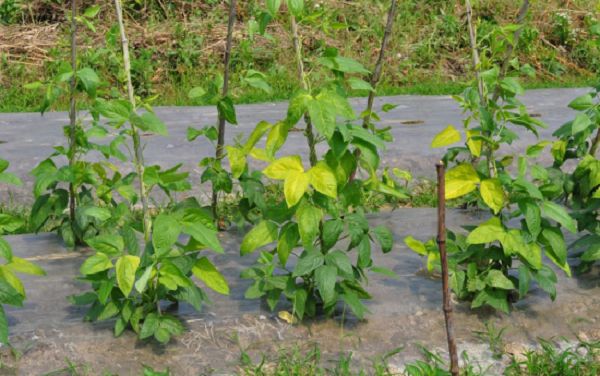
During their growth period, flowering plants sometimes show yellowing leaves. This is especially puzzling for beginners. So what exactly causes leaves to turn yellow? Let's take a look together at the reasons why the leaves of potted flowering plants turn yellow.
What deficiency makes the leaves of potted flowering plants turn yellow
1. Lack of water
When watering is missed or the plant is given only half-water (that is, wet on top and dry below) for a long time, nutrient absorption is affected, and the leaves easily become dull and lusterless, wilting and drooping. The older lower leaves age first, and gradually wither and drop from the bottom upward. At this point, water lightly and spray with water so the plant gradually recovers before returning to normal watering.
2. Lack of fertilizer
If nitrogen fertilizer has not been applied for a long time, or the pot and soil have not been changed, the soil lacks nutrients such as nitrogen, causing weak branches and leaves, with thin, yellow leaves. The plant should be repotted promptly, moved into fresh loose and fertile growing soil, and gradually given more dilute decomposed liquid fertilizer or compound flower fertilizer.
3. Temperature too low
If the room temperature is too low in winter, flowering plants that like high temperatures are often susceptible to cold damage, which causes the leaves to turn yellow, and in severe cases they wither and die. If the room temperature is too high, the plant transpires excessively, and the roots cannot supply enough water and nutrients, which also turns the leaves yellow. Take care to adjust the room temperature in time.
4. Lack of light or poor ventilation
If sun-loving flowering plants are placed in a shaded spot or a place with insufficient light for a long time, the branches and leaves will grow leggy, with thin, yellow leaves, and they will not bloom or will bloom very little. Move the pot to a sunny spot.
If too much nitrogen fertilizer is applied, the branches and leaves grow too luxuriantly, and with no pruning for a long time, the inner branches and leaves lack light, which easily causes leaves to turn yellow and drop. Fertilize reasonably and increase pruning so air and light can reach the plant.
5. Lack of essential elements
Finally, it should be mentioned that yellow leaves on potted flowers are sometimes caused by a lack of elements; here is how to judge and treat nutrient deficiency in flowering plants.
Nitrogen deficiency: the plant is thin and weak, with slender, long, hard branches and small leaves and flowers. Leaf color fades from deep green to pale from the old leaves to the new leaves, then develops a red-purple color, until it withers and drops; in severe cases the whole plant loses its green color.
Prevention and treatment: apply more decomposed human manure and urine, cake fertilizer, barnyard manure, or fertilizers such as ammonium sulfate, urea, and ammonium nitrate.
Phosphorus deficiency: the leaves turn from dark green to copper-purple, and the veins (especially the petioles) become yellow with a purple tinge. Flower buds are difficult to form, the flowers are small, few, and pale, causing poor fruit development, and they may even wither and drop early.
Prevention and treatment: apply more bone meal, fish meal, poultry manure, or superphosphate, ammonium phosphate, and potassium phosphate (a phosphorus-potassium compound fertilizer); usually a water solution of about 0.10% is used as a foliar top dressing.
Potassium deficiency: the plant is short and small, with soft stems that easily lodge. The leaves often shrivel, and the old leaves develop dark brown spots from the leaf tip along the leaf margin, the leaf edges turn yellow, while the center and the veins remain green.
Prevention and treatment: apply more plant ash, a 1%-2% potassium chloride water solution (not for bulb and tuberous-rooted flowering plants), and a 0.30%-0.50% potassium nitrate water solution as a foliar top dressing; inorganic fertilizers such as potassium phosphate can also be used.
Calcium deficiency: the young leaves are green and shriveled, the leaf margins curl upward and have white stripes, flowering is hindered, and the new leaves are difficult to unfold or become distorted in a diseased way.
Prevention and treatment: half a month before sowing or potting, apply an appropriate amount of calcium chloride to the soil, which can increase calcium and disinfect (not for acid-loving flowering plants); calcium nitrate can also be used as a top dressing.
Magnesium deficiency: the plant does not grow vigorously. The old leaves gradually lose green and turn white from the leaf margin to the center, from bottom to top, and spots of various colors appear on the veins, until the whole leaf turns yellow.
Prevention and treatment: spray continuously 3—4 times with a 0.20%-0.40% magnesium sulfate water solution, with an interval of 7-10 days each time. For soil severely deficient in magnesium, apply 5-10 kg of magnesium sulfate per mu, mixed into the base fertilizer in autumn or winter and applied to the soil.
Sulfur deficiency: the young leaves begin to yellow from the veins, and finally the whole leaf turns yellow; the root system develops abnormally.
Iron deficiency: yellowing from the young leaves to the old leaves.
Prevention and treatment for sulfur deficiency and iron deficiency: spray with a 0.30% ferrous sulfate water solution, 3 times in a row, with an interval of 1 week each time; when spraying, the mist droplets must be fine and even. At the same time, a 0.20% urea-iron water solution can be used for foliar top dressing.