Chinese people spend only 300 yuan a year on flowers; the pandemic and a consumption gap become hidden worries for the floral industry
(Continued from previous text) As the global Wuhan pneumonia pandemic continues to spread, flower exports have suffered, and domestic sales have also been greatly affected. Actually walking into the Taipei Flower Market, the market is sparsely populated. Comparing the actual average transaction prices and leftover stock volumes of the past three years, they are down by nearly 30% compared with previous years. Vendors selling cut flowers and potted flowers in the flower market all say that the pandemic has tightened consumption, and currently only scattered demand remains for ritual offerings, birthdays, and funerals.
"Taiwan has flowers in all four seasons, and right now is also the season with the most flowers." Huang Lijuan, deputy general manager of the Floriculture Industry Association, said that domestic flowers are mainly used for festival rituals, events and venue decoration, and various floral art classes, but now there are few people at flower markets and flower shops everywhere. The pandemic has led to economic contraction, and because flowers are not daily necessities, they have become the first sacrifice.
Taipei Flower Market: "Now business is all relying on 'white' ones!"
Lin Hongyan of Taipei Flower Marketing Co., Ltd. (referred to as Taipei Flower Market) explained that from the Chinese New Year this year to now, transaction volumes have been far below previous levels. At Taipei Flower Market alone, total transaction value has dropped by more than 25 million compared with the previous two years.
"The current situation is that there are flowers but no market." Lin Hongyan explained that on the first and fifteenth day of each lunar month or during festivals, flower prices clearly rise, but this year buying sentiment has been poor. Flower shop operators still come to the flower market to wholesale goods, but the number of visitors to the flower market has clearly decreased. When actually asking vendors in the flower market, from cut flowers to potted flowers, they all say that only scattered demand remains for ritual offerings, birthdays, and funerals. "Now business is all relying on 'white' ones!" The "white" ones the shops refer to means funerals.

Gerbera daisies are in season, transaction volume has decreased, most transactions are at the floor price, and farmers are adjusting on their own
The main base for domestic flowers is Changhua. The farmers' associations of Tianwei and Yongjing Townships in Changhua both say that flower sales after the Chinese New Year have decreased by about 30%. Currently it is the chrysanthemum season. Large chrysanthemums mostly used for funerals have been less affected; small chrysanthemums commonly used for rituals and celebrations have seen prices fall by 40% compared with last year. The most abundant flowers on the market now are gerbera daisies, whose hot sales period is around Qingming Festival. The farmers' associations are also looking for various sales channels and ways to assist farmers.
Yang Mingjing, head of the ninth class of the Changhua Yongjing Flower Production and Marketing Group, said that the group's planting area is about 10 jia, mainly growing chrysanthemums, gerbera daisies, and lisianthus. At present, about 10,000 stems of chrysanthemums and gerbera daisies are sent to the auction market each week. Recently, sales volume has fallen sharply. At present, group members are adopting self-adjustment, reducing flower volume, and temporarily switching to growing other vegetables and fruits. Next, they will cooperate with the central government in holding flower display events for relief. "Recently the pandemic has made everyone very nervous. Looking at more flowers can make you feel a bit better."
Qiu Heyuan, head of the fourth class of the Changhua Tianwei Flower Production and Marketing Group, who mainly grows gerbera daisies, said that after Lantern Festival, sales volume and prices began to fall. In previous years in early March, because of festivals such as the Mazu pilgrimage and the birthday of the Three Mountain Kings, there would be demand for decorative flowers. "The bigger the event, the greater the sales volume." But this year the emergence of the pandemic disrupted the originally scheduled plans.
Qiu Heyuan explained that recent transaction prices have only reached the guaranteed purchase price. "If there is a transaction, the guarantee means we won't lose money yet. What we fear most is not being able to sell them." He is currently assessing the market situation and has decided to make self-adjustments: reducing shipment volume. "Actually, buying flowers now is a great deal. You can almost buy the best quality at the cheapest price."

Lilies: production seasons overlap, and selling pressure on lilies is gradually emerging
Luo Hongqi, a Houli flower farmer known as a lily expert and also chairman of the Lily Industry Development Association, said that the Houli production area mainly focuses on bulb flowers such as lilies, gladioli, oncidium orchids, calla lilies, and statice. His own planting area is nearly 8 hectares, with diverse items, from lilies to carnations. Lily output can reach 1.2 million stems a year.
Luo Hongqi explained that for lilies, the Houli production season is about from November each year to May of the following year. Lilies in other months come from high-altitude areas. After March, as it gradually warms, lily growth accelerates. Unfortunately, at this time, the lily production seasons in Houli and high-altitude areas overlap, and the subsequent large output of lilies will create strong selling pressure.
"Thank the Earth God, buy flowers on the first and fifteenth day of the lunar month to go worship"
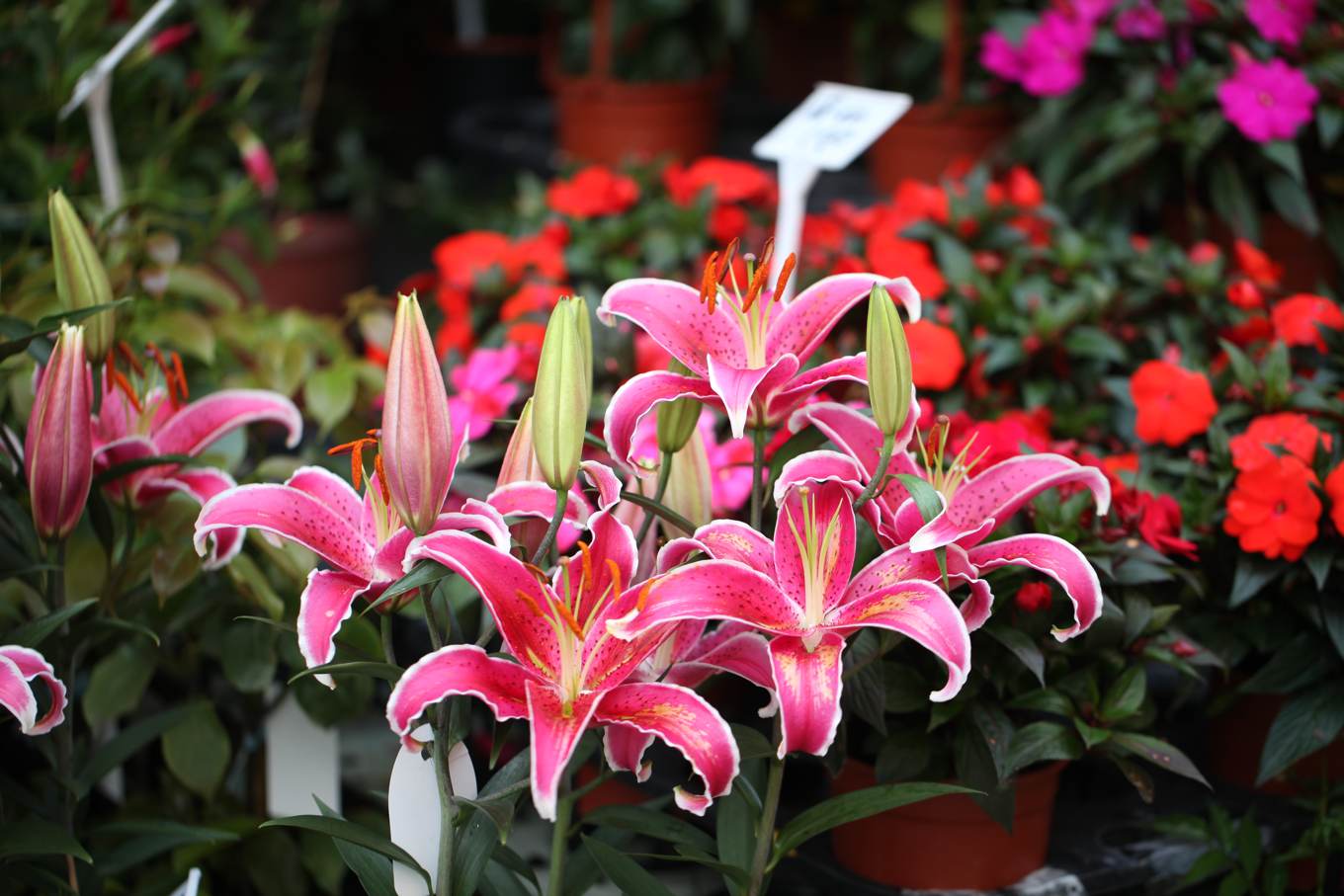
Hao Fengji, who once won the Shennong Award and grows Oriental lilies, and is head of the fourth class of the Alishan Flower Production and Marketing Group, said that monthly output can reach about 100,000 lily stems, about 70% sent to the auction market and 30% sold directly. But after the Chinese New Year this year, buying sentiment began to decline, and the pandemic affected flower exports. Some flowers flowed back to the domestic market, and many ritual activities were canceled, making this year's flower prices and sales volume poor.
Hao Fengji said that flowers, unlike industrial products, are not durable for storage and have a short display period. When large quantities appear on the market, prices are prone to fall, so when sales stall, they choose to destroy them to stabilize market prices. He believes that Taiwan, unlike Europe, does not include buying flowers in the grocery budget. When selling directly himself, most customers are over 50 years old and usually buy flowers for rituals. "We must thank the Earth God for reminding everyone to buy flowers on the first and fifteenth day of the lunar month to go worship."
Roses: prices begin to fall after Valentine's Day, with roses other than red most affected
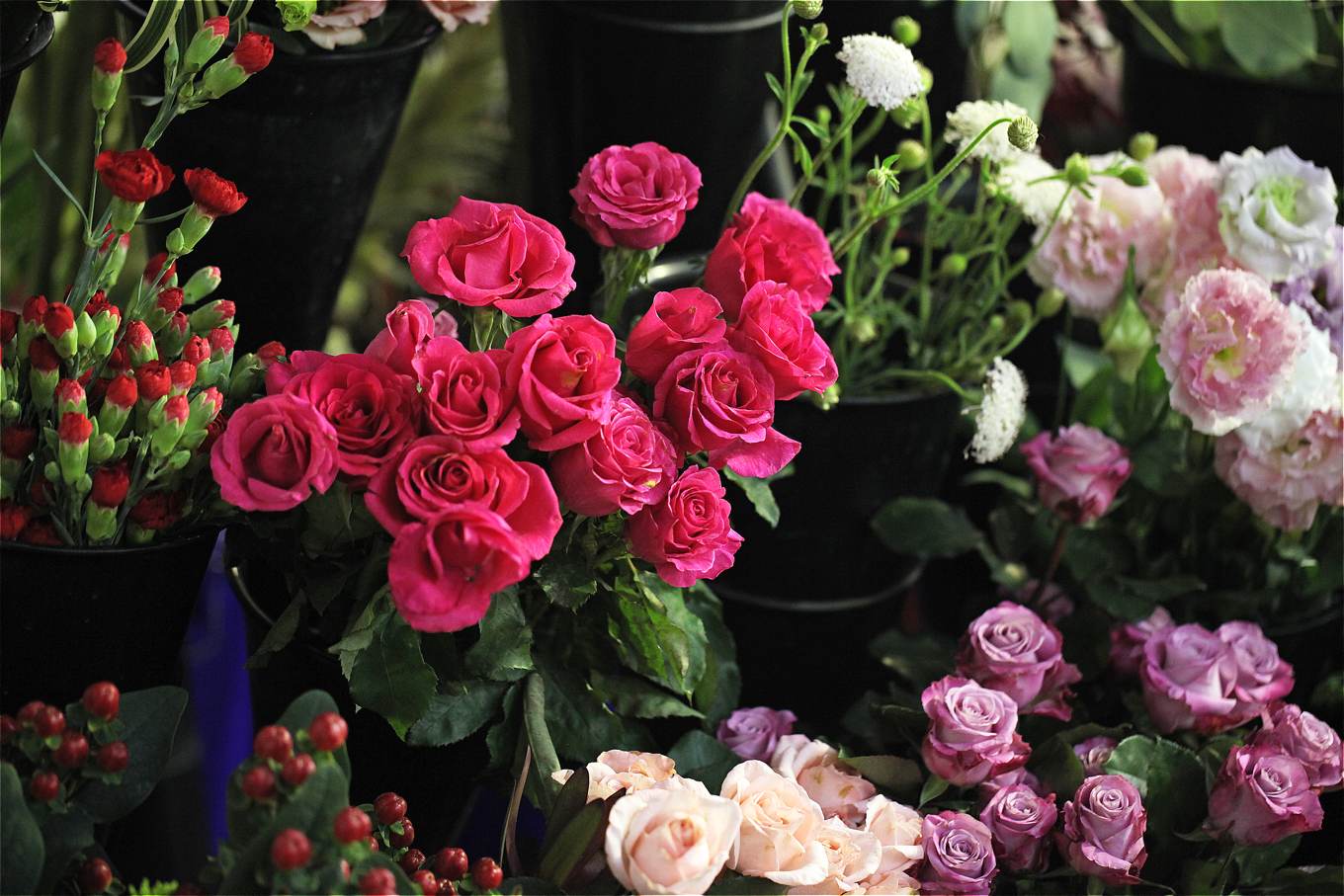
Ruan Weipeng of the Nantou Puli Flower Production and Marketing Group is a second-generation flower farmer. His family's rose garden is about 0.8 jia in size and can harvest about 1,000 miniature roses per day, mainly sold to major flower markets across Taiwan, while flowers from other family members in the group are mostly sold to the Taipei Flower Market. He said that compared with gerbera daisies, although rose prices have fallen slightly, they have not yet hit bottom, and not many leftovers appear when sent to the flower market.
"Prices start to fall after Valentine's Day." Ruan Weipeng said that roses are used in the greatest quantity on Valentine's Day. After March 14 this year, prices began to decline slightly, which should be normal, but because overall buying sentiment has tightened, only red rose prices remain relatively stable, while prices of roses in other colors have fallen a lot.
Ruan Weipeng believes that although this pandemic has affected buying sentiment, it has also given his family's rose garden room to try new things. "Flowers depend heavily on freshness, and varieties must constantly be replaced." He explained that growing new varieties until sales stabilize takes time, but it is easy to encounter competition from imported flowers. In the past, most time was spent growing flowers. Next, they will gradually move toward sightseeing gardens, expand new customer groups, and let more people know about roses.

Carnations: prices are still above cost, and they continue to wait for Mother's Day orders
"From becoming class head at 29 to now at 72, I have rarely seen flower prices fall." Zhuang Mingren, head of the ninth class of the Changhua Tianwei Flower Production and Marketing Group, who has grown flowers for more than 40 years, said that current carnation transaction prices are still above cost. In the past, around Mother's Day, nearby restaurants, companies, cram schools, and schools would order carnations, sending flowers to female customers before Mother's Day or children presenting flowers to their mothers. This year, Mother's Day orders are still being received so far, and sales in May are expected not to fluctuate too much.
Compared with Zhuang Mingren, flower farmer Luo Hongqi in Houli, Taichung, has a different feeling. He said that carnations are mainly used in May for graduations and Mother's Day. Across Taiwan, about 6 million carnation stems are used before Mother's Day. He himself ships about 200,000 carnation stems in early May each year, usually ordered by restaurants, companies, and city councilors. Normally orders begin in early March, but this year inquiries have been very low, and he is very worried about carnation sales this year.
Potted flowers: sales halved, potted flowers have a longer buffer time, but there is still selling pressure
Zhou Jiahong, a member of the tenth class of the Changhua Tianwei Flower Production and Marketing Group who grows potted flowers and one of the Top 100 Young Farmers, said that potted flowers are mostly used for store openings and gifts to congratulate others. Before elections is the peak season, especially as purchases by local candidates increase greatly. After this year's major election, sales fell slightly. So far, his own selling prices remain unchanged, but sales volume has decreased by 50% compared with last year.
Zhou Jiahong explained that in the past he would sell while producing potted flowers at the same time, but this year's situation is special. The return of orchids from export also squeezed the potted flower market, so he chose to reduce production for self-adjustment. Compared with cut flowers, although potted flowers have a buffer time as long as two to three months and less selling pressure than cut flowers, over time the plant shape also changes, affecting their marketability.
Zhou Jiahong said that this pandemic has greatly reduced sales volume in flower shops and flower markets. The only orders unaffected may be large woody bonsai and herbaceous flowers used in landscape engineering, or potted plants used as green walls. Regarding the current situation, he will first cooperate with central government policies and then gradually transform step by step, trying a sightseeing approach involving teaching and guided tours.

Flower consumption gap: young people do not buy flowers; flower-buying customers are mostly middle-aged women
In addition to the pandemic shock, flower farmers, farmers' associations, flower markets, and flower shop operators all coincidentally say that the current flower-buying group is concentrated among women above middle age. Young people are unfamiliar with flowers and do not have the habit of buying flowers. This consumption gap is a major warning sign for the long-term development of the floral industry.
Luo Hongqi, chairman of the Lily Industry Development Association, used himself as an example. During his schooling, schools had flower-related courses, but now the younger generation is distant from flowers. "Sending flowers on Valentine's Day is no longer popular either." He observed that the younger generation has many consumption choices and believes that flowers have low practical value, so their willingness to spend on flowers is not high.
"If parents did not take their children to the movies when they were little, the children will not buy tickets when they grow up." Luo Hongqi used this analogy as a suggestion. Food and agriculture education is currently popular. Flowers, like fruits and vegetables, also come from the nourishment of the land. Likewise, through combining education, seeds of concern for the land and demands for aesthetic living can be planted in the hearts of the younger generation.

Related Articles
- How to prevent and control rabies in dogs? Timely vaccination of puppies ensures safety
- How to Explore Keelung's Fishing Port Docks? Practical Tips for Picking Fresh Seafood
- The Slow Food movement advocates that how you eat matters more than what you eat, helping you eat your way to health
- How to Identify Inferior Cooking Oil? Key Points for Quality Control from Cultivation to Purchase
- Which agricultural activities require tax payment? The ranch court case clarifies the boundary of tax exemption
- Ractopamine, a lean meat agent, is banned; scientific pig farming to increase lean meat percentage is the right path
- Horizontal Windbreak Nets for Welsh Onion Cultivation in Winter Reduce Losses
- Top Ten Fungicides Ranking Released, a Useful Reference for Farmers Choosing Products