Five timely tasks for flower care during the White Dew season
The White Dew season is a very important time for flowers. Just as autumn begins, flowers should have their watering controlled and fertilizing stopped. In fact, there are five "timely" tasks that should be done for flowers during the White Dew season.
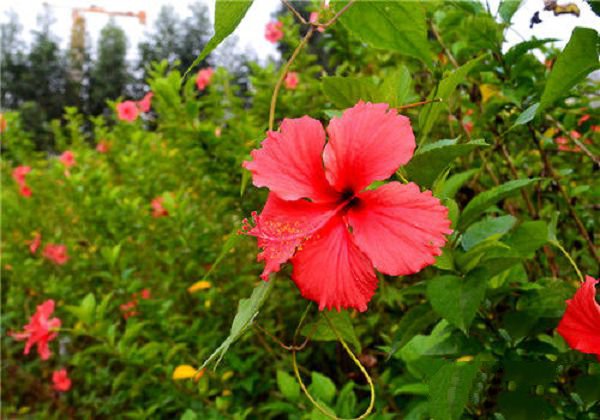
Hibiscus
1. Timely light
Some light-loving woody flowers that bloom in summer, such as jasmine, hibiscus, and orange jessamine, should still be placed in a sunny spot so the plants can fully receive light, promoting the maturation of the current year's branches and helping them survive the winter safely. Potted flowers that bloom around the Spring Festival, such as azaleas, clivias, cyclamen, poinsettias, and Christmas cacti, should also be placed in a sunny spot to receive full sun; otherwise their flowering period will be delayed, or they may even fail to bloom. Generally, foliage plants are more shade-tolerant, so a little light can be provided appropriately.
2. Timely moving indoors
This can be handled separately according to the different varieties of flowers. Warmth-loving flowers and trees such as hibiscus, poinsettia, begonia, cyclamen, jasmine, coleus, and split-leaf philodendron should be moved indoors when the temperature is 10°C; spider plants, asparagus ferns, cast-iron plants, dwarf umbrella trees, and rubber trees should also be moved indoors when the temperature is 5°C.
3. Timely water and fertilizer
Start controlling the amount of water given to flowers at the right time and stop fertilizing, so as to avoid root rot from too much water and leggy branches and leaves from too much fertilizer, which would affect overwintering. Flowers that bloom around the Spring Festival, such as cyclamen, clivias, Christmas cacti, and azaleas, have already passed their dormant period and are beginning to enter their peak growing season, so from autumn until the Spring Festival bloom, fertilizer and water management should be strengthened, and phosphorus and potassium fertilizers can be appropriately increased to help flower bud formation.
4. Timely pruning
Except for flowers that bloom in early spring, most flowers such as jasmine, crape myrtle, and pomegranate can be pruned and shaped in autumn. This can reduce nutrient consumption in winter and encourage potted flowers to bloom more the following year. When pruning, remove diseased branches, dead branches, overly dense branches, and leggy branches, laying a good foundation for potted flowers to overwinter.
5. Timely propagation
As autumn arrives and temperatures gradually drop, some biennial flowers, such as pansies, carnations, cineraria, and hollyhocks, are at just the right time for sowing. After sowing, pay attention to spraying water and keeping the soil moist. Some woody flowers are also suitable for autumn cuttings, such as Chinese roses, geraniums, and jasmine; the survival rate of autumn cuttings is relatively high. For perennial flowers that grow densely and need division, such as peonies and Chinese peonies, divide and propagate them promptly. For flowers that bloom around the Spring Festival, such as hyacinths, tulips, and amaryllis, pot them up as soon as possible.