What varieties of cold-hardy herbaceous perennials are there for northern regions
Herbaceous perennials mainly refer to plants that, after being planted in the soil, can overwinter and continue to sprout, grow, and even bloom and bear fruit again the following spring. Because herbaceous perennials generally have strong cold tolerance, they are relatively suitable for planting in northern regions. Since northern regions generally have four distinct seasons and great temperature differences between seasons, it is necessary to plant flowers and plants with strong cold tolerance and strong adaptability to the environment. So, what are the common ones?
I remember that Lao She's description of Jinan's winter is very chilling: not only does the north wind howl, but it is also freezing cold, with a scene of decline and decay everywhere. Yet even in such harsh growing conditions, there are still some relatively cold-hardy flowers and plants whose roots and stems hide deep in the soil, resting and conserving strength for sprouting the following spring, silently enduring the invasion of the cold, accumulating nutrients, and making full preparations for the return of warmer temperatures the next year.
And these flowers and plants in Lao She's writing happen to be herbaceous perennials, so they can keep their roots and stems intact in the freezing environment of the north, and even quietly keep growing. It can be seen that these flowers and plants have extremely strong cold tolerance and stress resistance. The common flower and plant varieties are typically represented by Bajing Baotian, astilbe, blackberry lily, purple coneflower, garden phlox, hosta, gazania, blazing star, and so on.
These flowers and plants not only have strong cold tolerance, but also have tenacious vitality and can adapt well to the climate environment of the north, so they usually propagate relatively quickly as well. Moreover, because these varieties of flowers and plants are highly ornamental, they are also very widely used and deeply loved by people in the north. More importantly, these flowers and plants are generally relatively easy to maintain and manage; as long as they are handled scientifically and reasonably according to their growth habits, they can be grown well with just a little care. For landscaping and environmental beautification, and even for potted ornamental display, this is highly meaningful, and they are very suitable for planting.
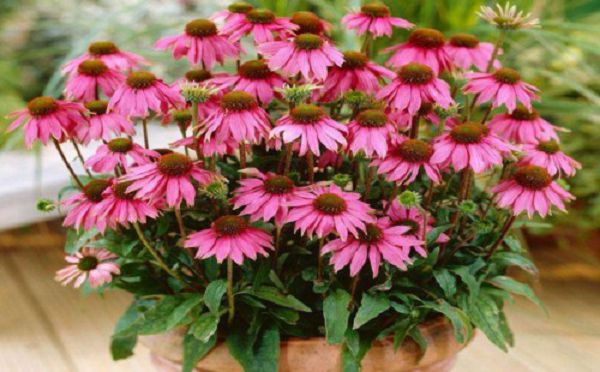
Take purple coneflower as an example. It likes a cool and moist growing environment with sufficient light, and it has both cold tolerance and shade tolerance. As for soil, purple coneflower prefers to grow in fertile, loose soil, and the soil in northern regions is generally fertile, so it can well meet its growth needs.
And many of the other herbaceous perennial plants listed above by the editor have growth habits almost similar to those of purple coneflower, so they are also very suitable for planting in northern regions. Although winters in northern regions have low temperatures and harsh climatic conditions, the soil is often relatively fertile and loose, and in addition these herbaceous perennials have good cold resistance, so they are very suitable for planting in such regions and on such land.
However, even so, we still need to do a good job in maintenance and management, especially when growing them as potted plants, where the scientific and reasonable care process cannot be ignored. If we want them to fully display their ornamental value and present themselves in a charming form, maintenance and management must be done well, done properly, and put into practice. Because only when maintenance and management are done well can the plants have a suitable environment for growth, maintain good growth momentum, and have abundant flowers and lush leaves.