What are some shade-tolerant potted flowers? If the light indoors is poor, grow these
Flowers can never do without light, but the space on south-facing balconies and windowsills at home is limited, so we can choose some potted plants that do not need much light and place them in shaded spots indoors to beautify our home environment. Let's take a closer look below:
1. Camellia,
Camellia is famous for being gorgeous and elegant, and many flower lovers say it is too difficult to grow. I have also had the experience of killing one! When planting camellias, pay special attention to the soil. Camellias like slightly acidic mountain red loam that is rich in humus and loose and well ventilated, with a pH value between 5 and 6.5. Soil in the north is generally alkaline, so ferrous sulfate or sulfur powder needs to be added to improve it. Also pay attention to humidity, and water and mist frequently. For fertilizing, it is best to use alum fertilizer water (alum fertilizer water is made by adding ferrous sulfate when peanut oil is fermenting). No need to fear a poorly oriented bedroom~ 5 shade-tolerant flowers
2. Azalea,
Azaleas are also very difficult plants to grow well in the north. They like high humidity and cool shade, and such conditions do not match the north. Like camellias, they also like acidic soil, and special attention must be paid to drainage; river sand can be added on top of the camellia mix. Humidity must also be watched. They need frequent watering but must not have standing water. They can be fertilized daily, and it is likewise best to use alum fertilizer water. During normal watering, some fermented rice washing water can be added, which can also serve as part of the fertilizer. The same applies to camellias. No need to fear a poorly oriented bedroom~ 5 shade-tolerant flowers
3. Banana shrub
Banana shrub is a precious fragrant flower plant. Because its fragrance is too strong, it is not very suitable for small spaces such as bedrooms; it can be placed in spacious places such as the living room or courtyard. Banana shrub likes a warm and humid environment and is not tolerant of drought. The soil is best slightly acidic, and neutral soil is also acceptable. In winter, it can overwinter safely only at around 10 degrees. Its growth period is suitable from April to October, when it begins to grow, and from August it grows rapidly, so fertilizing should gradually increase according to its growth characteristics. Fertilizer can also use self-fermented fertilizer and rice washing water. No need to fear a poorly oriented bedroom~ 5 shade-tolerant flowers
4. Asparagus fern,
Asparagus fern is a highly ornamental plant that can be placed in the living room, study, or bedroom. While purifying the air, it also adds a scholarly atmosphere. Asparagus fern is a climbing plant, and if grown well it can even serve as a small curtain or similar thing. Asparagus fern likes a warm and humid environment, is not cold tolerant, and is not drought tolerant, but it also must not have standing water. The soil should be loose, fertile, well-drained sandy soil with more humus material added. The temperature should not exceed 25 degrees. Asparagus fern should be fertilized little and often. It must not be too concentrated. Using rice washing water once a month is enough. No need to fear a poorly oriented bedroom~ 5 shade-tolerant flowers
5. Lucky bamboo;
Lucky bamboo has emerald green leaves and stays evergreen through the four seasons. In winter, the green leaves paired with red berries look even better. It is suitable for decorating the living room. In the study, it can be placed in a corner or beside the sofa as decoration, filling the room with vitality. Lucky bamboo likes high temperatures and is not cold tolerant. It likes moisture and should be watered frequently in summer. The soil should also be loose, fertile, and well drained. For fertilizer, mainly choose nitrogen fertilizer, applied once every 15 days from March to August.
6. Snake plant
Snake plant is a very shade-tolerant green plant, and relatively speaking it is also a very easy plant to grow. It is shade tolerant, drought tolerant, and tolerant of poor soil, and it is also very easy to propagate; both leaf cuttings and division are possible. Snake plant can release oxygen at night, so it is also quite suitable for placement in the bedroom.
7. Peace lily
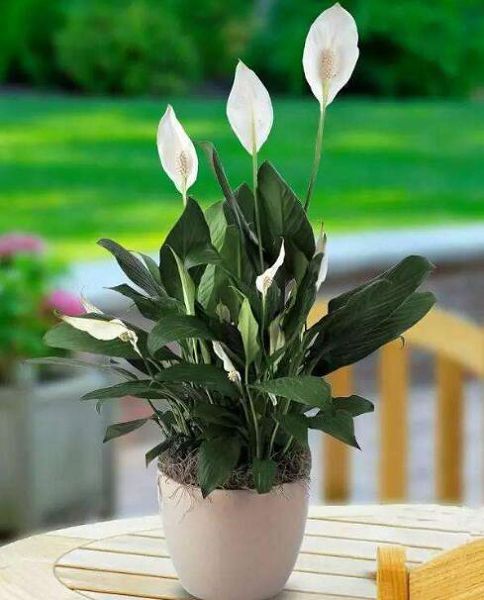
Peace lily is a rare indoor flowering plant. It blooms in spring and summer, with a large and conspicuous spathe that rises above the leaves, white or slightly green, and a spadix that is creamy yellow. Like lilies, it is very shade tolerant and very easy to care for; both water culture and soil culture are fine. When caring for it, it also needs appropriate light, and long-term shade makes it not very easy to bloom.
8. Hydrangea
Hydrangea is a very shade-tolerant flower. If you want hydrangea to bloom well, you must ensure it gets 10 hours of dark treatment every day. It is best placed in an environment with little light, such as a north balcony. In summer, watering about once a week is enough.
9. Clivia
Clivia is a flower that likes partial shade. It does not like direct sunlight, so placing it in a bright living room is fine. Usually, you can choose to wipe the leaves or spray the leaves with beer mixed with water, which can keep Clivia glossy and shiny.
10. Spider plant
Spider plant can be said to be a flower that every household grows. Although it is easy to grow and hard to kill, problems such as yellow leaves, dry tips, and root rot keep emerging one after another. In fact, if you want to grow spider plant into a full pot of lush green, you need extensive, low-intervention care.
10. Moss rose
A flower commonly seen in rural hometowns, growing it gives a great sense of accomplishment. It is really too easy to keep alive; it can fill a pot without much care, and it also grows super fast. If moss rose is pampered too much and always watered, it will rot at the roots. Under normal circumstances, it will not die of drought; what it fears is drowning.
Moss rose likes light very, very much. The more light and the stronger the light, the more and more brilliantly it blooms, so it is best to put it outdoors, or on a windowsill with good light, and just let it bask in the sun. No need to fertilize; sunlight is the best fertilizer.
11. Heartleaf ice plant
Heartleaf ice plant, like moss rose, is ridiculously easy to keep alive. Usually, after taking a few cuttings of stems, it can grow into a waterfall the next year. Heartleaf ice plant has strong adaptability. Placed on a balcony or windowsill with good light, it grows very vigorously, and it can grow into a large waterfall even without much care.