Three timely tasks for autumn care and management of potted flowers
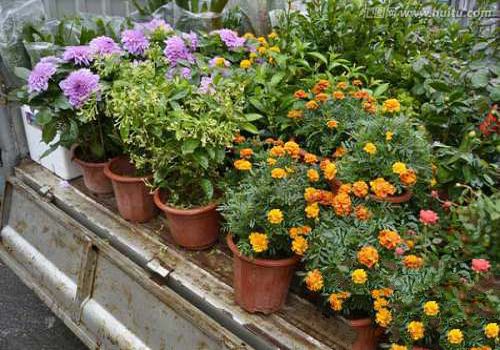
In autumn, as the seasons change, the ambient temperature gradually changes. For potted flowers, autumn is a very critical growing season. Of course, how to care for potted flowers in autumn is also something flower growers often study and dread. In autumn, the climate changes from hot summer to cool and gradually colder; at this time all things begin to wither, so potted flower care requires even more attention. Therefore, at this time potted flower management should focus on the following management tasks.
I. Three timely tasks for autumn flower care
1. Light: Timely light. Some light-loving woody flowers that bloom in summer, such as jasmine, hibiscus (Hibiscus rosa-sinensis), and orange jessamine (Murraya paniculata), should still be placed in a spot with ample sunlight. Potted flowers that bloom around the Spring Festival, such as azalea, clivia (Clivia miniata), cyclamen, poinsettia, and Christmas cactus, should also be placed in a spot with ample sunlight.
2. Pruning: Timely pruning. Apart from flowers that bloom in early spring, most flowers such as jasmine, crape myrtle, and pomegranate can be pruned and shaped in autumn. This reduces nutrient consumption in winter and encourages potted flowers to bloom more the following year.
3. Propagation: Timely propagation. In autumn the temperature is lower, and for some biennial flowers, such as pansy, dianthus (Dianthus chinensis), cineraria, and hollyhock, it is exactly the good time to sow. After sowing, pay attention to spraying water to keep the soil moist. Some woody flowers are suitable for autumn cuttings, such as Chinese rose, geranium, and jasmine; the survival rate of autumn cuttings is relatively high. For perennial flowers that grow densely and need division, such as tree peony and herbaceous peony, divide and propagate them in a timely manner. For flowers that bloom around the Spring Festival, such as hyacinth, tulip, and amaryllis (Hippeastrum), pot them up as soon as possible. Cao Qidong
II. How should potted flowers be managed in autumn
1. Appropriate water and fertilizer: After the beginning of autumn, water and fertilizer management must be handled differently according to the habits of different flowers. For autumn chrysanthemum, osmanthus, camellia, azalea, wintersweet, and others that bloom once a year, promptly apply 2 to 3 times a liquid fertilizer mainly based on phosphorus fertilizer; otherwise not only will the flowers be fewer and smaller, but bud drop may also occur. For Chinese rose, milan (Aglaia odorata), jasmine, and others that bloom multiple times a year, continue to supply relatively sufficient water and fertilizer to promote continuous blooming. For most flowers, in northern regions after the Cold Dew solar term, generally no more fertilizer should be applied, to help them overwinter. As the temperature drops, except for flowers that bloom in autumn and winter or early spring and autumn-sown herbaceous flowers, which can continue to be watered normally according to the actual needs of each flower, for other flowers the frequency and amount of watering should be gradually reduced to avoid excessive water and fertilizer, which causes leggy growth, affects flower bud differentiation, and leads to cold damage.
2. Pruning and shaping: After the beginning of autumn, when the temperature is around 20°C, most flowers tend to sprout many tender branches. Apart from retaining some as needed, the rest should be cut off in a timely manner to reduce nutrient consumption. The retained tender branches should also be pinched in a timely manner. For chrysanthemum, dahlia, Chinese rose, jasmine, and others, after buds appear in autumn and the buds grow to a certain size, apart from retaining 1 well-growing large bud at the top, remove all the other side buds.
3. Timely seed collection: The seeds of many flowers mature successively around mid-autumn and need to be collected in a timely manner. After harvesting the seeds of scarlet sage, cypress vine, and morning glory, remove impurities and dry them, then put them in cloth bags and store them in a low-temperature, ventilated place. For some seeds with thicker seed coats, such as tree peony, herbaceous peony, magnolia, and banana shrub (Michelia figo), after collection it is best to bury the seeds well with moist sandy soil for stratification in sand storage.
4. Sowing at the right time: Biennial or perennial herbaceous flowers grown as annual or biennial plants, such as snapdragon, dianthus, and daisy, as well as open-field flowers and greenhouse flowers such as cineraria, cyclamen, and gloxinia, and flowers that easily lose germination capacity after collection such as African daisy (Gerbera), delphinium, primula types, and begonia types, are all suitable for autumn sowing.
5. Moving indoors at the right time: In northern regions, after the Cold Dew solar term, most flowers should be moved indoors one after another for overwintering according to their cold resistance, so as to avoid cold damage. The specific time for moving indoors varies with the flower. For most flowers, when the weather has just changed, do not rush to move them indoors. This is because moving indoors too early affects nutrient accumulation and is unfavorable for growth and development the following year. Therefore, on the premise of not suffering cold damage, it is better to move them indoors a little later.