Under the epidemic, the small town of Xingang empowers its elderly community, using epidemic prevention to dispel fear
The COVID-19 (commonly known as Wuhan pneumonia) epidemic broke out rapidly in Europe and America in March. With the epidemic prevention pressure brought by the wave of people returning to Taiwan, confirmed cases in Taiwan surpassed three digits starting last Wednesday (3/18), social panic spread, and crowds queued up at supermarkets to snap up daily necessities.
Chen Chin-huang, who once served as chief executive of the 921 Reconstruction Commission and is a physician in the small town of Xingang, took the 921 earthquake experience as an example: an epidemic crisis is like many large-scale disasters, causing massive casualties and social panic, and relying on the government and medical professionals alone is not enough. He called out: "Many community activities have temporarily stopped, but in a time of crisis, communities should all the more fulfill their function as a community of shared life, carry out proactive community epidemic prevention, and provide the power to stabilize people's hearts in society."
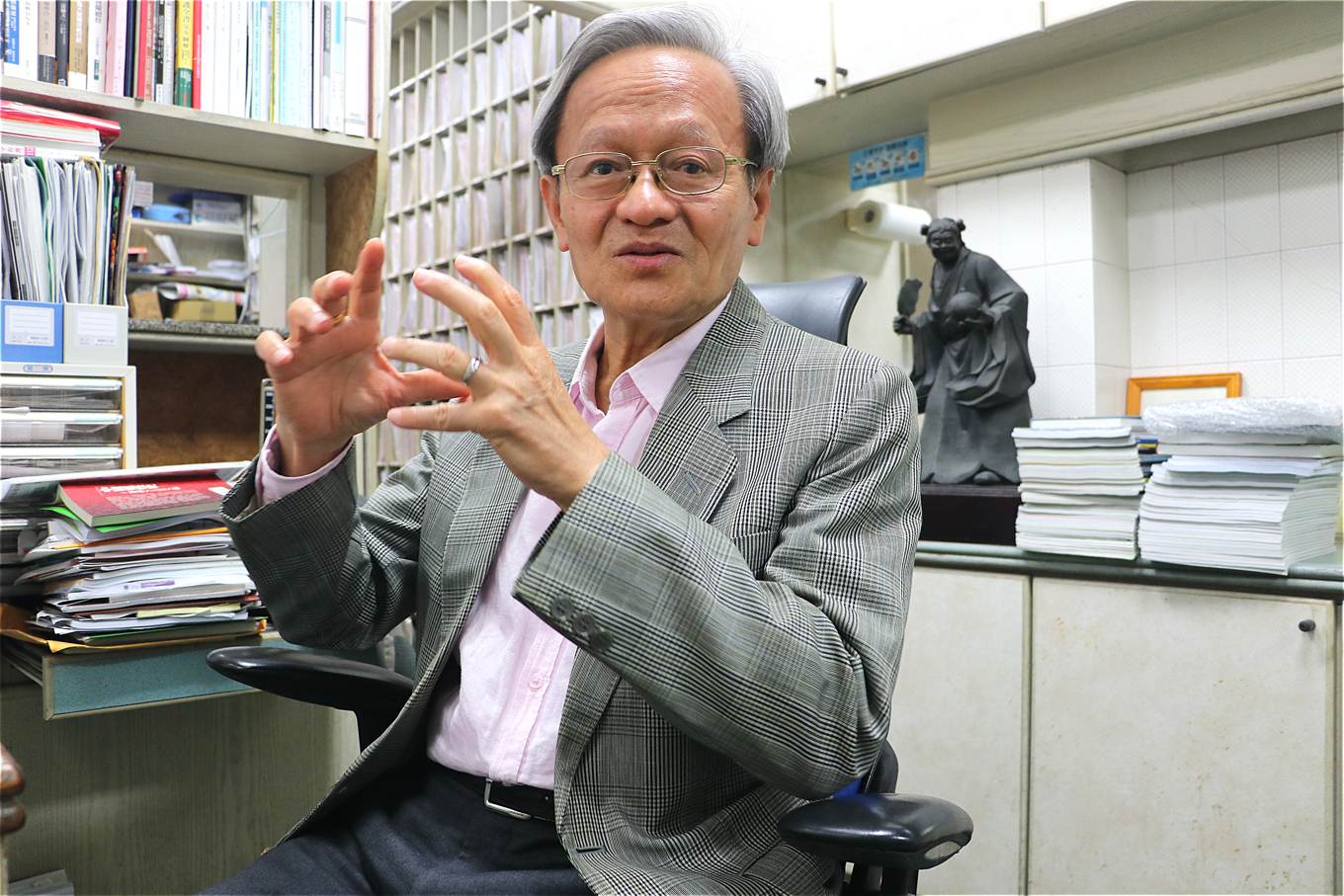
Using local self-governing bodies as units, establish community epidemic prevention committees, and let frontline physicians play the role of community epidemic prevention
"The 921 experience tells me that in the face of large-scale disasters, the government's power has its limits, while community mobilization of civil forces can be implemented in people's daily lives." Chen Chin-huang said. Not long ago, confirmed cases in Taiwan suddenly rose past one hundred, triggering social panic and a surge of crowds hoarding food. Even in a grain-producing area like Xingang, crowds rushed to buy supplies at supermarkets, which made him sigh deeply.
Chen Chin-huang suggested that perhaps local self-governing bodies could be used as units to establish community epidemic prevention committees, with public departments, physicians, schools, community organizations and local associations building a platform to face the crisis together, solve problems, avoid the constant spread of panic, and reduce unnecessary problems.
Don't let fear tear the community apart; let frontline physicians play the role of community epidemic prevention
Chen Chin-huang said that some people who do not understand the situation now regard those under home isolation or quarantine as sick people, generating suspicion and hostility. Currently, groups in local areas that are easily stigmatized include people from Southeast Asia and mainland China, and even the families of medical staff are deliberately kept at a distance as dangerous groups.
As a frontline physician at the grassroots level, he does not know exactly how much information there is locally about home isolation and home quarantine, let alone local residents, who can only rely on word of mouth to grasp the local epidemic situation. Chen Chin-huang believes that physicians' professional ethics and legal constraints obligate them to keep information confidential, and grassroots physicians should be given epidemic-related information so they can grasp the situation.
Chen Chin-huang said: "This emerging virus is contagious even without symptoms or fever, which makes people feel even more frightened. When the local epidemic situation is not transparent, as a frontline grassroots physician, not knowing the epidemic situation in one's own area not only does not help prevention, but one may also become exposed to risk."
