A complete summer flower care tutorial to teach you careful management
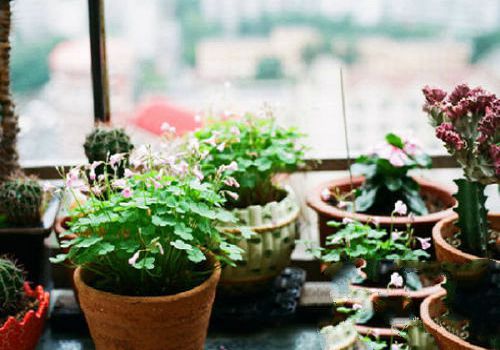
In summer the weather is hot and rainfall increases. This is precisely the vigorous period of growth and development for most flowers, and also a good time for taking cuttings of flowering shrubs. But this season is also a period when pests and diseases break out in large numbers, so flowers must be cared for with even greater care.
1. Water frequently
In summer the temperature is high and water evaporates quickly, so potted flowers need timely watering. But different flower varieties have different characteristics and different water requirements. Flowers that love moisture, such as narcissus, Monstera deliciosa, and calla lily, need plenty of water. For moisture-loving flowers, such as Milan, jasmine, oleander, and hibiscus, and the vast majority of other flowers, the usual practice is to water once in the morning and give one thorough watering in the late afternoon or evening.
2. Light and shading
In summer the weather is hot and the sunlight is intense, which is not good for the growth of flowers. In particular, flowers left exposed to the blazing sun for long periods are easily scorched or even killed. Of course, some flowers love the sun, and their light exposure can be suitably extended. So in summer, different flowers must be treated differently according to their nature. Sun-loving flowers, such as poinsettia, croton, pomegranate, Milan, fig, Chinese rose, hibiscus, and white orchid, can be placed in a sunny spot for care, but care must also be taken to provide proper shade when the sunlight is too intense, as with Milan, white orchid, hibiscus, and chrysanthemum. Orchids, hosta, Araceae, and camellia need to be kept in a well-ventilated place with weak or diffused light. At the same time, flowers should be shaded to lower the temperature and prevent heat damage.
3. Pay attention to ventilation
When the temperature exceeds 30°C, indoor flowers need attention to ventilation. Open the windows and let fresh air flow into the room to help lower the temperature and prevent heat damage.
4. Fertilizing
In summer flowers grow very quickly, so they need a timely, adequate supply of fertilizer. Fertilizing also needs to be done differently according to the flower variety. Ordinary flowers can be given a diluted, well-rotted liquid fertilizer once every 7 to 10 days; for flowers that like acidic soil, a solution of alum fertilizer water can be applied about once every 10 days. When fertilizing, be careful not to splash the fertilizer water onto the leaves, otherwise the leaf surface is easily damaged.
Summer fertilizing should be done in the evening. Before fertilizing, loosen the soil; loosening the soil helps the roots absorb fertilizer and water, and also helps microorganisms reproduce and grow, promoting the accelerated decomposition of organic matter in the soil and providing more nutrients for the growth and development of potted flowers. Pay attention to watering the day after fertilizing.
5. Pruning
Pruning potted flowers in summer mainly consists of pinching, bud removal, leaf removal, flower thinning, and fruit thinning. For some spring-sown herbaceous flowers, once they reach a certain height they should be pinched in time to encourage more branching and more blooming.
For some woody flowers, such as kumquat, when the current year's shoots grow to 15 to 20 cm they should also be pinched so that nutrients are concentrated, which helps flowering and fruiting.
In summer, adventitious buds often appear on the stem base or trunk of some flowers, disrupting the plant's shape and consuming nutrients, so they should be removed promptly.
For flowering ornamentals such as chrysanthemum, camellia, and Chinese rose, excess flower buds should be removed so the flowers bloom larger and more vividly colored.
For fruit ornamentals such as pomegranate, kumquat, and finger citron, if part of the young fruit needs to be removed in time, generally only one fruit needs to be kept on a short fruiting branch. The fruit that grows this way will be large and brightly colored because of the rich nutrients.
In addition, leggy branches of the plant should also be cut off promptly to shape it.
6. Propagation
Summer is precisely the best time for taking cuttings of some evergreen flowers. Flowers such as Milan, jasmine, rhododendron, and hibiscus take root very easily when cuttings are taken in this period. For flowers such as plum blossom and ornamental peach, summer is a good time for bud grafting, and for white orchid it is a good time for approach grafting.
Summer is also the best time for sowing some potted flowers. For example, pansy sown in July can bloom around National Day. Cineraria sown in July to August can bloom in the flower-scarce season of deep winter. Gloxinia and carnation sown in August to September can bloom the following summer.
Flowers for winter viewing, such as primrose, amaryllis, and geranium, should be sown in June or July.
Begonia, rhododendron, camellia, Milan, gardenia, honeysuckle, and some tropical foliage flowers are propagated by cuttings in June or July.
Flowers such as calla lily and rhododendron can be propagated by division in summer.
Flowers such as Chinese rose, kumquat, camellia, and some cacti can be grafted in summer.
Flowers such as plum blossom, rhododendron, osmanthus, and jasmine can be layered in June or July.
7. Pest and disease control
After summer begins, various pests and diseases cause great harm to the growth of household potted flowers.
When the weather is excessively stuffy or excessively damp, pathogens multiply faster. For the control of pests such as stinging caterpillars, scale insects, and red spider mites, which mostly appear on Chinese rose, rhododendron, five-needle pine, and Buddhist pine, a small number can be caught by hand, or sprayed with chemicals such as trichlorfon.
Inchworms mainly harm flowers such as pomegranate and boxwood, and can be sprayed with trichlorfon or caught by hand.
Chinese rose, garden balsam, and others are prone to powdery mildew, showing symptoms such as yellow leaves, withered leaves, and curled tender shoots. Pay attention to ventilation and light transmission for the flowers, and also apply less nitrogen fertilizer and more phosphorus and potassium fertilizer. For plants just infected, spray once with 15% triadimefon diluted with water at 700 to 1000 times.
8. Carefully protect flowers in the dormant period
For example, some succulents, cyclamen, fuchsia, gloxinia, calla lily, geranium, and epiphyllum are in a dormant or semi-dormant state during the hot season, when metabolism is slow and growth stalls. In view of the growth characteristics of these flowers, they must be carefully tended so they can pass through the dormant period smoothly. Put these flowers in a cool, ventilated place and avoid strong light and rain, otherwise the damp soil easily causes root rot and may even kill the whole plant.
In addition, watering must also be controlled, otherwise the potting soil being too wet can also easily cause root rot; of course, do not water too little either, otherwise the roots will shrivel. Keeping the potting soil slightly moist is enough. For these flowers in the dormant period, fertilizer is not needed, otherwise it can also easily cause root rot and may even kill the whole plant.