How to Grow Hydroponic Flowers? A Complete Guide to Cultivation Methods
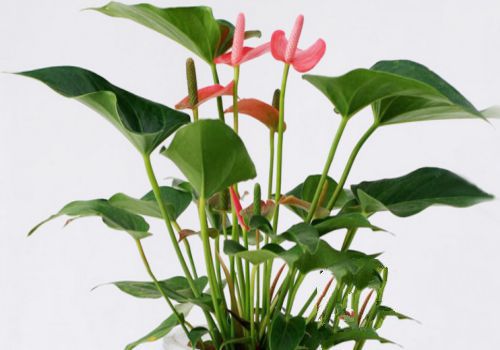
Hydroponic flowers are a very popular cultivation method nowadays, so do you know how to grow hydroponic flowers? Here is an introduction.
Selection of flower types:
Not all flowers can be grown hydroponically. Below are some flowers that are easy to grow hydroponically, summarized based on my own practical experience: umbrella plant (Cyperus alternifolius), peace lily (Spathiphyllum), green emerald (Aglaonema), Guangdong evergreen (Aglaonema modestum), arrowhead vine (Syngonium), pothos (Epipremnum aureum), lucky bamboo (Dracaena sanderiana), variegated lucky bamboo, and others.
1. Choosing containers. Based on the specific variety, form, size, and flower color of the flower material you intend to grow hydroponically, choose substitute bottles, pots, vats, and other containers that can complement and bring out the best in that flower variety. Following the principles of hydroponic container selection mentioned earlier, purchase or make your own so that they are appropriate to use and elegant to look at. Never just grab whatever container is at hand and use it randomly, as this may affect the appearance of the hydroponic flowers and the beauty of the indoor decor. Achieve unity and harmony between the container, the flowers, and the room environment to attain a relatively ideal ornamental effect.
2. Removing soil and washing roots. The indoor flower hydroponic technique described here mainly refers to the technique of converting soil cultivation to hydroponic cultivation, so the work of removing soil and washing roots must be done well. As everyone knows, soil cultivation involves organic nutrition, but after converting to hydroponics, it becomes completely inorganic nutrition cultivation. The organic matter in the soil and adhering to the root system must be strictly washed clean, so as not to affect the normal growth of the hydroponic flowers and to prevent infection by pests and diseases.
The method for washing roots is: take the selected flower plant, dig it out from the soil or gently tip it out of the flower pot. First use your right hand to gently lift the stem, and your left hand to gently support the root system, then switch to your right hand to gently shake and slowly pat, so that the soil around the roots falls away and all the roots are exposed. Then soak in clean water for 15-20 minutes, and use your hands to gently wash the roots. After 2-3 changes of water and rinsing, until the roots are completely free of soil and the washing water is clear and transparent without mud or sand, it is considered clean. But pay great attention: some flowers have hard root systems that are tangled and knotted, and much soil remains in the crevices. When necessary, use a bamboo skewer, wooden stick, or screwdriver to dig it out. Not a bit of soil may remain; this is one of the important steps for successful hydroponics and must not be neglected.
After washing off the soil, based on the root growth condition of the flowers, appropriately trim off old roots, diseased roots, and old or yellow leaves. Because the roots of hydroponic flowers are equally an important ornamental part, when arranging the root system you should also consider the beauty of its form. After trimming the roots and leaves, rinse once more in clean water to wash away the residual root hair fragments left from trimming, so as not to bring them into the hydroponic container and cause contamination.
3. Root disinfection. After the flower roots are washed clean, prepare a 0.1% potassium permanganate aqueous solution and place it in a plastic or enamel basin. The amount of solution can be determined by how many flowers you need to soak; you can soak several plants or many plants at once, with the standard being to submerge all the roots. After soaking for 10-15 minutes, take the flower plants out of the solution and rinse them in clean water before planting. Note that the root disinfection time must not be too long or too short, and the potassium permanganate solution must not be too concentrated or too dilute. Apart from using a balance to measure the appropriate ratio, it is mainly determined by experience and by observing the color of the solution (which should be light purplish-red).
4. Scientific planting. If planting in a vase, and if it is a glass vase, since glass is relatively thick and has a certain weight, you can gently arrange the flower's root system and carefully place it into the vase. To keep the flower upright and prevent it from falling over, you can fix it around the mouth of the vase with stones or pebbles, then pour water into the vase to 2/3 of its volume. Be careful to spread out the root system. If using a plastic vase, since it is very light in texture, even with water it is difficult to support the flower plant, causing it to be top-heavy and fall over. Therefore, for this type of container, before planting you can first put a certain amount of stone pellets into the vase to increase its weight, and then plant the flower into the vase as described above.
Next, let us look at the water requirements of flowers.
Different plant types have greatly differing water requirements, which is related to differences in rainfall and its distribution in the places of origin of different plants. Usually, based on different water requirements, flowers are divided into four major categories: xerophytic flowers, hygrophytic flowers, mesophytic flowers, and aquatic flowers:
(1) Xerophytic flowers
These refer to flower types that can endure long-term drought and still grow and develop well. This category of flowers is mostly found in desert regions with scarce rainfall and on dry low grasslands. During their phylogenetic development, xerophytic flowers formed physiological and morphological characteristics adapted to drought, such as leaves becoming smaller or degenerating into spines, hairs, or becoming succulent; the epidermal cuticle thickening and stomata becoming sunken; leaf texture becoming hard and leathery, glossy, or covered with fine hairs; and increased cell sap concentration and osmotic pressure, thereby greatly reducing water transpiration from the plant body. At the same time, this type of flower generally has a well-developed root system, further increasing its ability to resist drought. Examples include succulent plants in the Cactaceae, Crassulaceae, Aizoaceae, and Euphorbiaceae families.
(2) Hygrophytic flowers
This category of flowers has weak drought tolerance and needs to grow in moist environments; under arid or moderately humid conditions they grow poorly or die. Their characteristics are well-developed aerenchyma, relatively low osmotic pressure, an underdeveloped root system, weak structures for controlling transpiration, and thin, soft leaves. Examples include some tropical orchids, ferns, Bromeliaceae, Araceae, begonias, hygrophytic irises, and other flowers.
(3) Mesophytic flowers
This type of flower is suited to growing in environments that are moderately dry and moist, with water requirements between those of xerophytic flowers and hygrophytic flowers. Some species tend toward xerophytic plant characteristics and prefer neutral to dry environments; some species tend toward hygrophytic plant characteristics and prefer neutral to moist environments. The vast majority of open-field flowers belong to this category.
(4) Aquatic flowers
Aquatic flowers refer to flowers that live in water year-round, or that live in water during a certain period of their life cycle. The plant body of aquatic flowers is entirely or mostly submerged in water and generally cannot leave the water-wet environment. Their root systems are underdeveloped, conductive tissues have degenerated, almost the entire plant surface has absorptive functions, mechanical tissues are weakened, and cell osmotic pressure is very low, generally not exceeding 10 atmospheres. Because light is weaker and oxygen is scarcer in water, the submerged leaves of aquatic flowers are usually soft, small, and thin, and some are even split into linear shapes to expand the contact surface with the outside. Structurally, there is no differentiation of palisade tissue and spongy tissue within the leaves; all parts of the stems and leaves contain chloroplasts, and the plant body has large intercellular spaces or well-developed aerenchyma. Usually, based on differences in their lifestyle and morphology, they are divided into four major categories: emergent flowers, floating-leaved flowers, free-floating flowers, and submerged flowers.