What you need to know about fertilizing home-grown flowers, and how to make your own flower fertilizer
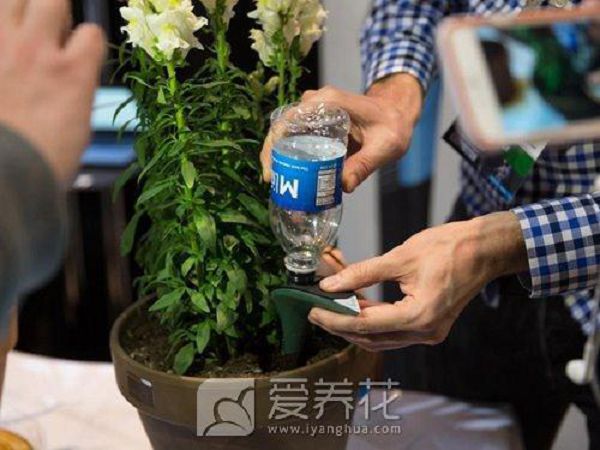
Some flower enthusiasts often bury spoiled eggs, chicken, duck and fish innards, meat scraps, raw horse manure, cake fertilizer and the like into the potting soil, hoping to boost nutrients and make their flowers bloom profusely and grow lush foliage, but the result is the opposite of what they wanted. What is the reason for this? And how can households make their own flower fertilizer?
What you need to know about fertilizing home-grown flowers
This is because flowers grow and develop by absorbing nutrients such as nitrogen, phosphorus, potassium, magnesium and iron that have been fermented in the soil and dissolved in water, whereas the spoiled foods mentioned above are buried directly into the pot without fermentation; once they meet water they ferment and generate high temperatures, which directly scorch the flower roots, and together with the activity of harmful microorganisms, this causes oxygen deficiency in the soil and leads to the death of the flowers. At the same time, when undecomposed fertilizer ferments it also produces a foul odor that attracts flies to lay eggs, and the maggots can also bite and damage the roots, harming flower growth, while the stench can also pollute the environment. So when growing flowers, be sure to apply fully decomposed organic fertilizer to ensure good flower growth and development.
Applying liquid fertilizer at too high a concentration often causes the branches and leaves of flowers to turn yellow and wither, and can even kill the whole plant. This is because under normal conditions the concentration of the cell sap in the plant's root hairs is greater than the concentration of the soil solution, so the two have different osmotic pressures; the soil solution can then continually seep into the root hair cells, and the root hairs can absorb water and nutrients from the soil to supply the flowers' growth and development. If the liquid fertilizer is applied at too high a concentration (its concentration greater than that of the cell sap), reverse osmosis occurs, that is, the cell sap instead seeps out into the soil solution, causing the root hair cells to lose water and triggering plasmolysis, and in severe cases causing the plant to dry up and die. This phenomenon mostly occurs when too much chemical fertilizer is applied, and a similar phenomenon can also occur if fermented liquid fertilizer is applied too concentrated. Therefore, the concentration of chemical fertilizer applied to potted flowers must not be too high, generally around 0.1% is suitable. When applying fermented liquid fertilizer, it is also best to dilute it 10 to 15 times.
6 types of fertilizer that households can make themselves
Household garbage contains abundant sources of flower fertilizer; if prepared properly, it is both simple and has fairly high fertilizer efficiency.
1. Liquid organic fertilizer
Put poultry and animal manure and urine, soybean residue and soybean cake, freshwater fish innards, as well as fruit peels and rotten vegetable leaves, together with water from washing rice, into a vat, cover it and seal it to ferment. There should be more rice-washing water than the other materials, and it should ferment fully. Generally it is prepared in autumn, sealed and then opened the following year, diluted at a water:fertilizer ratio of 8:2, and applied as a top dressing. The nutrients it contains are fairly comprehensive, and it has a good effect on improving the physical and chemical properties of the potting soil, as well as on the growth and development of flowers and flower bud differentiation.
2. Bone meal fertilizer
Soak leftover meat bones and chicken, duck and fish bones in water for 24 hours, wash away the salt and impurities, then steam them in a pressure cooker for 20 minutes, take them out, crush them and let them decompose, after which they can be mixed into the growing medium as a base fertilizer, or sprinkled on the surface of the potting soil as a top dressing, or you can simply buy bagged defatted bone meal; this is a complete fertilizer based mainly on phosphorus.
3. Green manure
Take a small amount of bone meal and plant ash, put them into a vat or bowl, soak them in water and add an appropriate amount of vegetable leaves or tree leaves and green grass; after about 1 month of fermentation, once decomposed, scoop them out and they are ready to use. This kind of fertilizer is economical and practical with high fertilizer efficiency, and can make flowers have green branches and leaves and beautiful blooms.
4. Cake fertilizer
Put tofu residue, soybean residue, peanut residue or rapeseed residue and the like into a vat, add water and let it ferment and decompose; after it has fermented, mix it at a water:fertilizer ratio of 6:4 and use it as a top dressing, with quick results.
5. Medicinal residue fertilizer
Mix Chinese medicine residue into garden soil, put it into a vat or pack it into a jar, add rice-washing water and let it ferment. After the Chinese medicine residue has fermented into humus, cover it with a layer of soil, and take it out whenever needed. This kind of flower fertilizer does not harm the plants, and can also be mixed into water for use; it has the effect of promoting growth and strengthening stems and leaves.
6. Snail fertilizer
Mash fresh snails and shellfish, put them into a jar or vat, seal them at a water:fertilizer ratio of 4:1 and let them ferment; in summer, with high temperatures, after about 20 days of fermentation they can be diluted with an equal amount of water and used, applied into the flowerpot as a top dressing, with very quick results.