How plant growth regulators make flowers bloom according to your wishes
1. Making flowers bloom early. Using gibberellin to accelerate the vegetative growth or reproductive growth of flowers speeds up their growth and brings the flowering period forward. For example, camellia stops growing in early summer and begins flower bud differentiation, but the process is very slow. If a certain concentration of gibberellin (500-1000 mg/L) is applied to the buds twice a week, it can bloom early.
2. Breaking dormancy. Growth regulators such as indoleacetic acid, naphthaleneacetic acid and gibberellin can break the dormancy of flower buds and storage organs. For example, after lily bulbs are stored at 21°C for 6 weeks, they need 66 days before they sprout. If treated with gibberellin at a concentration of 2500 mg/L, under the same conditions, they can sprout in 37 days.
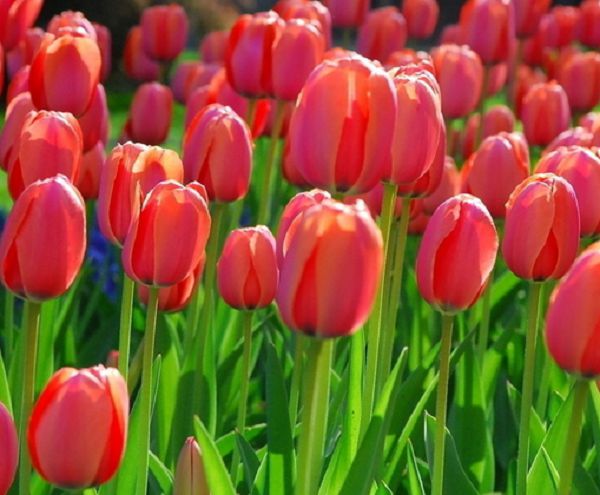
3. Promoting flower bud differentiation. Using growth regulators such as indoleacetic acid, naphthaleneacetic acid and gibberellin can induce flower bud differentiation and promote flowering. For example, when tulips have grown to 5-10 cm, dropping gibberellin at a concentration of 200 mg/L and 6-benzyladenine at a concentration of 5 mg/L into the center of the tubular leaf rosette can make them bloom early.
4. Making flowers bloom later. Growth inhibitors such as triiodobenzoic acid and chlormequat can inhibit or delay flowering. Treatment with a certain concentration of auxin can also delay flowering. For example, treating chrysanthemums with naphthaleneacetic acid at a concentration of 100-500 mg/L and 2,4-D at a concentration of 5 mg/L can significantly delay their flowering.
5. Extending flower longevity. Gibberellin, cytokinin and auxin can extend the flowering period and prevent shedding of chrysanthemums, poinsettias and snapdragons. For example, treating poinsettias with 2,4,5-trichlorophenoxyacetic acid at a concentration of 6 mg/L can extend both the flower-viewing period and the foliage-viewing period.