What varieties of shade-tolerant indoor plants and flowers are there?
Placing a few pots of plants in a living room can not only improve the air quality at home, but also, looking at the green leaves, add endless vitality to the home. But inevitably, some rooms have poor ventilation and light. What should you do? Huar Gu today will share with you several common shade-tolerant indoor green plants and flowers. If your home has a rather dark corner that needs plants, these flowers and plants are just the right choice.
Spider Plant
Function
Growing spider plants actually does not require much effort. In everyday care, the main things are regular watering and protecting them from accidental damage. The difficulty lies in persisting in paying attention and not forgetting about them and leaving them unattended for a long time. Spider plants can absorb toxic and harmful gases in the air. For example, their absorption capacity for carbon monoxide and formaldehyde can reach 95% and 85% respectively, making them equivalent to an air purifier.
Planting Method
The spider plant's homeland is South Africa. Now it is cultivated in open fields or greenhouses in various parts of our country. In the Xi'an area, spider plants cannot overwinter in open fields and must be grown indoors at no lower than 5°C. Usually, just keep the potting soil moist; it should not be too dry, nor too wet. Spider plants have strong sprouting ability and grow quickly, easily filling the pot, so they should be repotted once every two years.
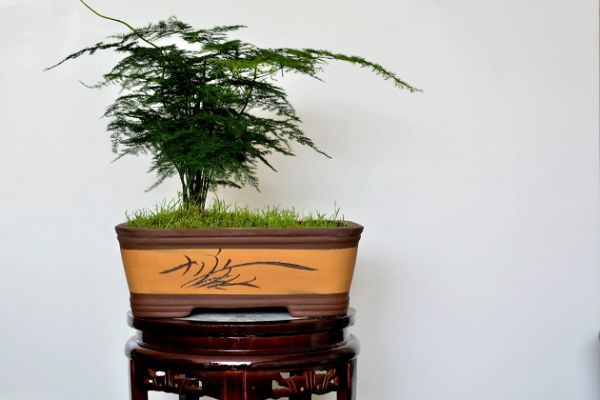
Asparagus Fern
Function
Asparagus fern is a protective umbrella that eliminates bacteria and viruses. The plant fragrance contained in asparagus fern has antibacterial components, can remove bacteria and viruses from the air, and has health benefits.
Planting Method
The key to managing asparagus fern is watering. In spring and the hot summer season, watering should be properly controlled. Generally, water again when the surface of the potting soil looks dry, so that the potting soil remains moist from top to bottom without containing too much water.
Rubber Plant
Function
The rubber plant has a certain resistance to harmful gases in the air such as carbon monoxide, carbon dioxide, and hydrogen fluoride. At the same time, it can also eliminate inhalable particulate pollution and effectively trap indoor dust.
Planting Method
Just keep the soil on the drier side or slightly moist regularly. It is best to let it receive no less than 4 hours of direct sunlight every day.
Broadleaf Lady Palm
Function
It can absorb more than 80% of various harmful gases and purify the air; it eliminates heavy metal pollution and has a certain resistance to sulfur dioxide pollution; it can also consume carbon dioxide and produce oxygen.
Planting Method
For potted broadleaf lady palm, a mixture of leaf mold soil, garden soil, and river sand in equal amounts can be used as the growing medium. The potting soil should preferably be moist; better moist than dry, but it must not become waterlogged, otherwise the roots rot easily. During the growing season, it needs shading and requires a well-ventilated environment.
Money Tree
Function
The money tree is evergreen throughout the four seasons, can absorb toxic gases through photosynthesis, and release oxygen; it can relatively effectively absorb carbon monoxide and carbon dioxide, and has a certain effect in resisting exhaust gases produced by burning tobacco.
Planting Method
When placing a money tree, the leaf surface must face the sunlight. Otherwise, because the leaves grow toward the light, the entire branches and leaves will become distorted. Every 3 to 5 days, spray water onto the leaves once with a spray bottle, which helps photosynthesis proceed. When watering, better moist than dry.
Ivy
Function
Ivy is currently the most effective indoor plant for absorbing formaldehyde. Every square meter of ivy leaves can absorb 1.48 milligrams of formaldehyde. It can also absorb benzene, and under 24-hour lighting conditions it can absorb 90% of indoor benzene. It can also adsorb fine dust particles.
Planting Method
Ivy prefers warmth and should be placed in a bright spot indoors. But it fears heat and is not cold-tolerant. In addition, watering should be moderate; the potting soil must not be kept excessively moist, otherwise it easily causes root rot and leaf drop.
Dwarf Umbrella Tree
Function
The dwarf umbrella tree can bring fresh air to smoking households. Its leaves can absorb nicotine and other harmful substances from smoke-filled air, and through photosynthesis convert them into harmless substances of the plant's own.
Planting Method
It prefers partial shade, and about 4 hours of direct light indoors each day is enough for it to grow well. Be careful that the potting soil does not lack water. Repot once every spring, and if a plastic container is used, pay attention to drainage.
Peace Lily (Spathiphyllum)
Function
It can suppress waste gases exhaled by the human body, such as ammonia and acetone. It can also filter benzene, trichloroethylene, and formaldehyde from the air. In addition, its high evaporation rate can prevent the nasal mucosa from drying out, greatly reducing the likelihood of illness.
Planting Method
The peace lily is relatively shade-tolerant. As long as there is about 60% scattered light, its growth needs can be met. It can be kept year-round indoors in a spot with bright scattered light. The potting soil should be kept moist, but excessive watering should be avoided; long-term wet potting soil easily causes root rot and yellowing and withering of the plant.
Aloe
Function
Aloe can absorb harmful substances such as formaldehyde, carbon dioxide, sulfur dioxide, and carbon monoxide, and its absorption of formaldehyde in particular is especially strong. It can also kill harmful microorganisms in the air and adsorb dust, playing a major role in purifying the indoor environment.
Planting Method
Aloe fears waterlogging the most and likes to grow in loose soil that drains well and does not easily become compacted. Newly planted aloe should not be exposed to the sun; let it see sunlight only in the morning, and after ten days to half a month it can then be exposed to sunlight normally.