Taiwan consumes 20 billion worth of imported fruit a year! But local guava beats apples and kiwis on nutrition - see the charts for the truth!
Do you know how much imported fruit you eat in a year? Taiwan spends more than 20 billion NT dollars a year buying imported fruit, but local fruit is actually more nutritious - guava, for example, has 67 times the vitamin C of an apple! With pneumonia bearing down, fruit exports are blocked and local fruit is in trouble. This is exactly the right time to eat less imported fruit and more local fruit!
"Taiwan is a land flowing with milk and honey!" says Li Wen-hsiung, owner of the well-known Lily Fruit Shop in Tainan, who knows Taiwan's fruit better than anyone and has written an article about every kind. He says that to be eco-friendly you should eat local: "Eating Taiwan's fruit is the most environmentally friendly - no planes or ships needed. Imported fruit is all picked before it ripens, because it has to sit on the shelf for a long time, so it isn't at its most nutritious."
300,000 tonnes of imported fruit a year, and half of it is apples
Checking the import data, from the 101st to the 108th year of the Republic of China (2012-2019), an average of about 300,000 metric tonnes of fresh chilled fruit was imported each year, a weight equivalent to the water in 120 international standard swimming pools (one pool holds about 2,500 tonnes of water). Add dehydrated and dried fruit, frozen fruit, prepared fruit, canned fruit, fruit juice and so on, and the figure exceeds 400,000 metric tonnes.
Fruit imports account for about 10-15% of domestic production, costing more than 20 billion NT dollars a year. If only some of that 20 billion could stay in Taiwan, how good that would be.
Looking closely at the top eight imported items, apples take first place by a wide margin, kiwis are second, grapes third, followed in order by oranges (mainly Sunkist), peaches (mainly honey peaches), pears, cherries and fresh durian.
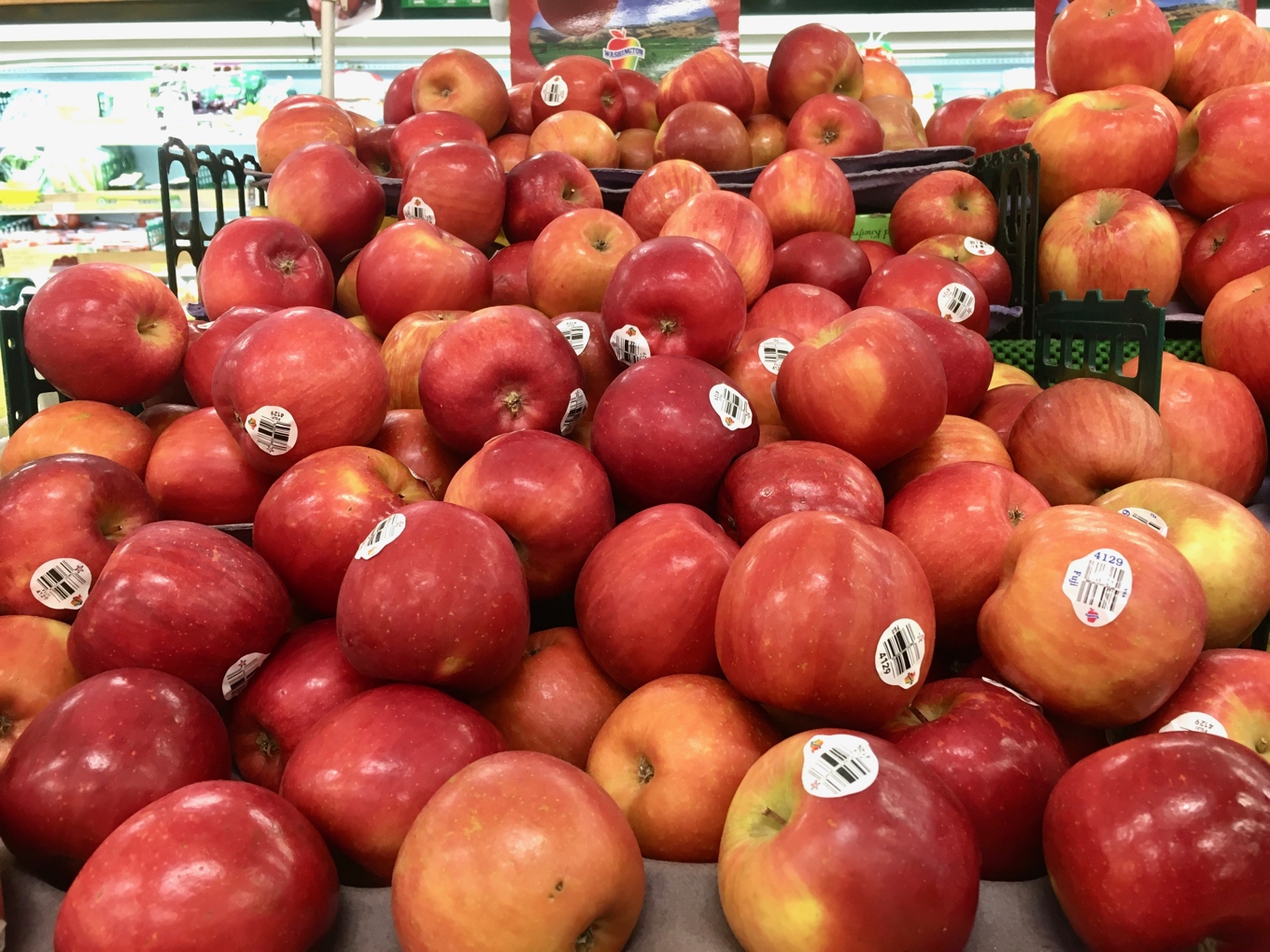
Apples alone account for half of total imports; last year 158,773 metric tonnes were imported, enough to fill 60 large swimming pools! Converted, that means each person ate 6.7 kg of apples last year, while in a whole year we eat only 45.6 kg of rice.
Apples and kiwis advertise aggressively, shaping their reputation as kings of fruit
Why do people here love apples so much? Li Wen-hsiung explains that in the eyes of earlier generations the apple was a symbol of luxury, something you only got to eat when you were sick, and even today people still habitually bring apples when visiting the sick. In the past, much was cleared and planted with apples around Lishan, but later imported apples were opened up and nearly wiped them out, and domestic apples fell sharply.
Apples are red and appealing, and can be expensive or cheap, so although Taiwan's apple production is tiny, the apple has become Taiwan's fruit of the common people. Imported fruit also has advertising: "An apple a day keeps the doctor away." Kiwi ads are even more aggressive, almost shaping the kiwi into the king of nutrition. But is that really the truth?