How to care for air plants? Plant encyclopedia detailed guide to flower growing methods
I. What to do after purchasing an air plant
The air plants everyone owns are mostly purchased through two channels: one is group buying, advantages: relatively favorable prices, more variety choices; disadvantages: longer waiting period, and generally only available for group buying in spring and autumn. The other is online purchasing, advantages: shorter waiting period; disadvantages: more expensive prices, fewer variety choices. But regardless of which channel you purchase from, everyone surely has one question: after the air plant arrives home, what should I do?
First, air plants are CAM plants (Crassulacean Acid Metabolism). The characteristic of this type of plant is: during the day, the leaf stomata close; at night, after the surrounding ambient temperature drops to an appropriate level, the leaf stomata open, absorbing CO2 and releasing oxygen. Because of this, if air plants need misting or soaking, it is best to choose the evening. Personally, I suggest that after the air plant arrives home, do not rush to soak it. You can place the air plant in a relatively ventilated environment, then appropriately mist the leaf surface (leaves slightly wet is enough). After that, no more misting is needed, then observe for two days (if there are problems, you can communicate with the seller as soon as possible), and after the third day proceed with placement and care.
After caring for it for a period of time, you will find that your air plant is not as beautiful as when it first came back. It will become greener and greener. This is a normal phenomenon, because the farm applies fertilizer and corresponding elements to the air plant to make it more beautiful for sale. So after the air plant has been home for a period of time, the home growing environment absolutely cannot compare with the farm, so it is normal that the air plant is not as beautiful as when first purchased. In addition, after the air plant has been grown for a period of time, it may sprout aerial roots. The roots of air plants have no function of absorbing fertilizer or water; they only serve to anchor the plant. But the air plant growing aerial roots also proves that the air plant has adapted to your environment. However, not every variety has strong aerial roots; long-stemmed air plants generally have fewer aerial roots.
In addition, you need to purchase some tools, such as a spray bottle, flower pot, bark, expanded clay pebbles, tree fern fiber, aluminum wire, etc., for the subsequent handling procedures.
II. Air plant cultivation methods
What method to use for caring for air plants depends on your environment. There is no so-called best, only the most suitable.
1. Pot cultivation style
Advantages: relatively convenient to operate, good moisture retention, air plants adapt to the environment more easily, grow faster.
Disadvantages: takes up more space, requires a good ventilation environment, otherwise prone to rot.
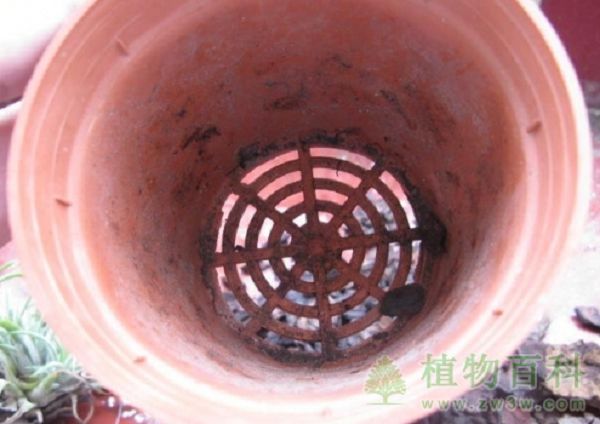
Method: Prepare a flower pot. Plastic or ceramic are both fine, as long as it can drain. Prepare some medium: bark, tree fern fiber, orchid expanded clay pebbles are all fine, but I personally prefer bark. Choose bark about the size of a fingertip, then put 80{bf} bark into the pot, place the air plant, then fill the remaining 20{bf} bark around the air plant. Once done, use general care methods together with other air plants.
2. Hanging style
Advantages: takes up less space, convenient to operate, the plant is not prone to core rot.
Disadvantages: air plants grow slower than potted ones, air plant humidity is not guaranteed, requires frequent misting, otherwise tips easily dry out.
Many people say copper wire cannot be used, otherwise air plants are easily poisoned to death. Actually, I think air plants are relatively tough plants, and the harmful substances from copper wire, if they are to be released, would take a very long process. Anyway, I personally have two air plants also grown with copper wire, and after two years, they are still in good condition. I am not saying I don't believe what the seniors say, but I believe more that everything should be based on practice.
Method: Prepare aluminum wire, then wrap it around the base of the air plant, then hang it in a relatively ventilated place with appropriate light.
3. Empty bottle style (self-created method)
Advantages: simple, convenient, not prone to core rot.
Disadvantages: not every kind of air plant can use this, has certain limitations, and is easily blown over by wind.
Method: Choose a variety whose root-stem part is larger than the bottle mouth, select an empty bottle (I generally use a small mineral water bottle), then put expanded clay pebbles and stones inside, the purpose being to increase the weight of the bottle so it is not easily blown over by wind, then place the air plant on the bottle mouth. Generally within two months, roots will grow out, and then the plant and bottle become one.
III. Four-season care for air plants
1. Spring (February-April) (taking Guangdong as an example)
Air plants are plants with virtually no pests or diseases (this is also their appeal), but you must also prevent damage from uninvited guests such as mice and locusts. Let me explain here: after air plants are established, if you want them to grow well, do not pick them up to play with whenever you feel like it. If you want to look, observe without moving the air plant. Only then will the air plant grow well.
The growing seasons for air plants are spring and autumn. In spring there is more rain and higher humidity. Starting after the New Year, I generally mist once a week. Since it is the growing season, when misting I also use a spray bottle to apply fertilizer at the same time. My fertilizing principle: first mist water, then mist fertilizer, so that the air plant absorbs better. In addition, due to high humidity, absolutely avoid pouring water, because when air humidity is high, the air plant does not dry easily and is very prone to core rot. But generally in spring, if cared for properly, the chance of core rot is not great.
2. Summer (May-August) (dangerous season)
Many people think air plants are very tough and easy to grow, and most like sunlight, so they do not pay much attention in summer. Actually, summer is the season with the highest mortality rate for air plants throughout the year. Moreover, air plants show few signs before dying; often you only discover it after they are dead, making it impossible for air plant enthusiasts to guard against. To prevent air plant deaths in summer, there are several points to note.
(1) Avoid frequent misting, soak in water as little as possible
In summer's high temperatures, if an air plant is misted wet and the moisture does not evaporate within a short time but remains on the leaf surface, it will block the air plant's breathing pores and prevent respiration. Combined with high temperatures, metabolism accelerates, and the air plant will be suffocated to death. So, it is suggested to mist once every three days in summer, and do not fertilize.
(2) Provide appropriate shade
Since air plants fear high temperatures, exceeding 35°C is already a dangerous temperature, and if exposed to direct sunlight for a long time, the leaves are extremely prone to sunburn. So, taking appropriate measures to shade air plants is very necessary. In summer, scattered light is completely sufficient for air plants.
(3) Handling after core rot appears
If unfortunately you find the air plant has core rot (leaves may show discoloration), make the greatest effort to save it, although the chance is not great. If it is a long-stemmed air plant, please do not throw away the rotted core and lower stem. Follow normal care methods, and with proper care, there is a chance of side shoots sprouting. But for types like Ionantha and small butterflies, generally there is no way to save them.
3. Autumn (September-November)
This season is the rapid growth season for air plants. You can mist relatively frequently (the premise is still a good ventilation environment). Please choose nighttime or morning for misting. Absolutely do not expose to sunlight after misting if the air plant has not dried completely, otherwise the air plant is extremely prone to sunburn. The water used for misting air plants actually has no special requirements, as long as it is non-toxic, harmless, and has no chemical components. Ordinary water for watering flowers will do; you can choose tap water, well water, filtered water, etc. I use aquarium water to mist my air plants. In addition, fertilize no less than once a week. In autumn, air plants can be given more light with full sun exposure, and the color of the air plant will slowly begin to change as autumn ends.
4. Winter (December to February of the following year)
In this season, air plants are mostly in their flowering period. According to my experience, quite a few air plants, especially the Ionantha types, will bloom during this period. The most important thing in winter is cold protection. If the temperature is below 5°C, please bring them indoors as much as possible, and put them back outside during the day for sunlight. Winter air is dry, so a misting frequency of three times a week is sufficient. In addition, when you see flower buds, try not to spray water onto the buds, to avoid the buds rotting. Just spray water onto the leaf surface of the air plant. Try to spray toward the roots.