Urban-Rural Symbiosis 01"One-third of the land in the Milan metropolitan area has been voluntarily designated as an agricultural park, where residents farm and raise livestock, preserving the pastoral landscape
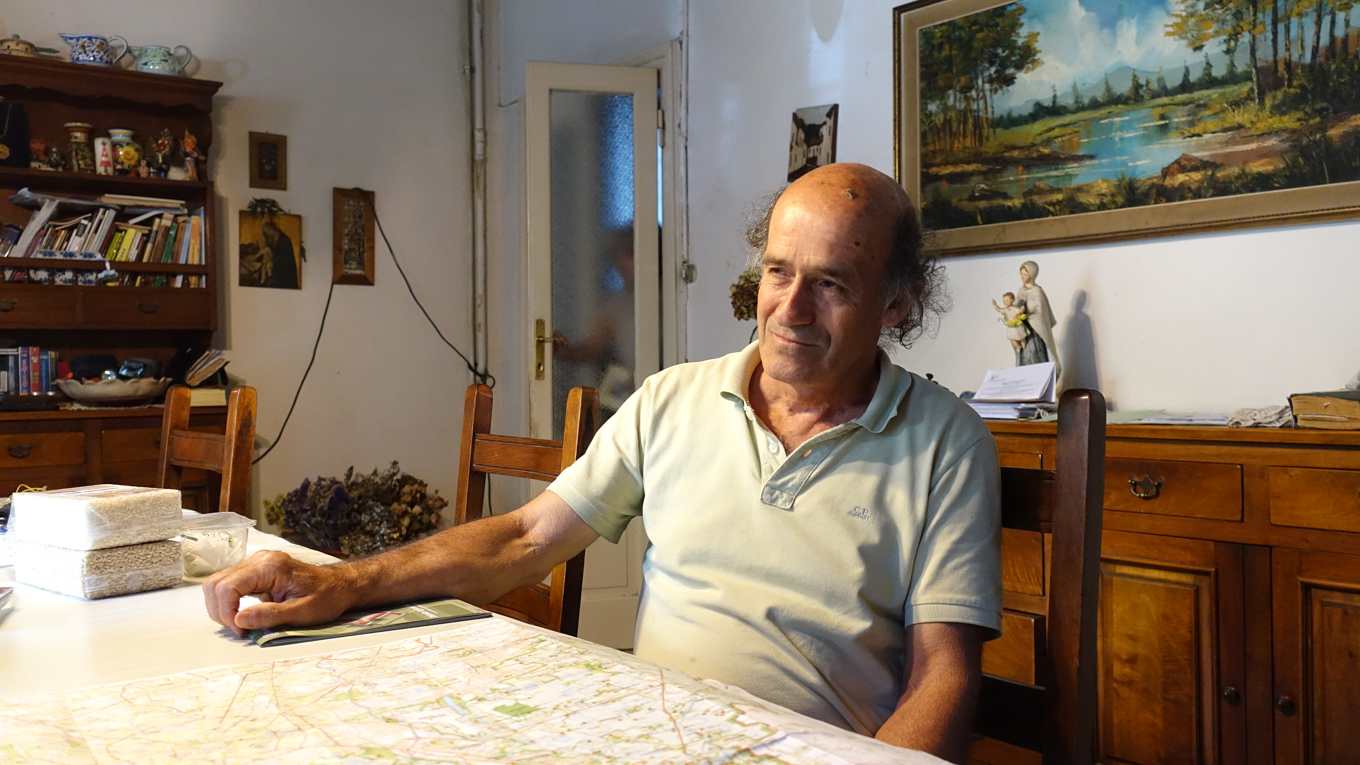
Farming in a fashion capital where land is worth its weight in gold sounds like a pipe dream, but Andrea Falappi made it come true. His farm is less than four kilometers from the cathedral in downtown Milan, and just a ten-minute walk to the subway station. On 88 hectares of fields, cows graze while he grows rice and forage grass and makes cheese. Surrounded by poplar trees, white storks - commonly known as the birds that deliver babies - stroll through the grass, a gentle breeze rustles softly, and chirping birdsong drifts from the woods, singing a pastoral idyll amid the hustle and bustle of the metropolis.
As urbanization spread, a mayor once said: farmers should disappear from modern Milan
This farmland adjacent to the city center is like taking Daan Forest Park near Taipei 101 and tripling it, then using it to grow crops and raise cattle. Andrea rides his scooter through a gate of red tiles and brick walls and stops in front of a farmhouse with more than three hundred years of history. He says the dream began as a nightmare.
That was the era when money flooded into Italy. The country rose rapidly from the ruins of World War II with swift industrialization, and the economy boomed. As Italy's economic locomotive, Milan saw money flow like gold dust paving the ground. Wave after wave of rural people went to the city to strike it rich, and one high-rise after another shot up, occupying abandoned suburban villages, while concrete, steel rebar and asphalt swallowed one patch of good farmland after another.
The north of downtown Milan was already crowded with high-rises, so developers went south hunting for land, and cheap farmland was the first target. Some villages that originally had only a few hundred people suddenly took in tens of thousands of new residents. Houses were built, bridges constructed, roads paved, and the pace of modernization advanced with great strides. The prosperous future promised by developers looked to Andrea like the end of the fields and the doom of the countryside: farmers would have no place to stand, and the fertile soil cultivated painstakingly by generations of ancestors would turn to dust. He recalled, "Farmers were almost disappearing. One mayor even told me that farmers should rightly disappear from modern Milan."

Linking 61 towns to form the "Milan South Agricultural Park," where farming life preserves the townscape
Anarchic urbanization spread like cancer. Not only the countryside but also the city could hardly breathe, with air pollution and environmental degradation. Beginning in the 1970s, environmental groups and people who loved their hometowns advocated one after another for leaving a ring of parks around the city center, so that green space could embrace Milan.
Seeing the northern suburbs rapidly conquered by developers, the towns in the south of the Milan metropolitan area began to link up in the 1980s, and in 1990 successfully passed legislation designating a stretch of land covering 61 towns and 46,000 hectares - equivalent to 1.7 times the size of Taipei City - as the "Milan South Agricultural Park."
The agricultural park is not an agricultural industrial park. It promotes agricultural development and restricts building development, but it also preserves the millennium-old model of urban-rural symbiosis. On 37,000 hectares of farmland, 900 farming households grow rice, corn and forage grass, and there are 400 livestock farms raising cattle, pigs, horses or sheep. The existing townscape is also preserved here, with churches and monasteries.

Residents and farmers stood together and defeated the big-shark developer
Even so, Andrea's nightmare was not over. The deep-pocketed developer Salvatore Ligresti took a fancy in 1982 to Andrea's farm in the "egg-yolk district," bribed officials in the urban development bureau to bypass prohibitions, and quietly bought part of the ownership rights to the farm's land. Andrea, who leased the farm, saw his pastoral dream about to shatter.
Andrea was unwilling to surrender. With the help of the Milan South Park Association, he launched a struggle. The methods were diverse: street marches, flash mobs, lawsuits against the developer and the government, and all kinds of celebrations and activities held on the farm, bringing residents who had come to appreciate the beauty of rural life onto the same side. They gathered 5,000 signatures for a petition to make the 88 hectares around the farm into Parco del Ticinello.
"When things got more intense, we even occupied the council." Recalling this scene, Andrea could hardly hide his pride and raised his eyebrows. "Because their discussions dragged on endlessly, and they had no intention at all of passing a bill making the farm an agricultural park and banning developers from putting up buildings."
The developer was no pushover either. Ligresti would rather forgo rent and issued an eviction order demanding that all the more than twenty farming households move out. "Once the idle farmhouses fall into ruin and the fields are dilapidated, when people come to dump garbage illegally and there are security problems, the developer will have an excuse to say he wants to redevelop this land teeming with disorder." explained association chairman Renato Aquilani. "At that point, he would have even more justification to change the land category of the farmland and launch large-scale construction."
Police came to the farm many times to drive the farmers out, but they were always chased away instead by the crowds. Residents brought in one person after another. The association was full of talent: architects, geologists, teachers, writers, and even priests joined in. Everyone contributed their strengths and pooled ideas, drawing up blueprints and drafting bills to turn the farm into a park. In a letter to the park, an elderly man recalled those days: "Everyone united and gritted their teeth. We did not wait for higher-ups, did not rely on subsidies, did not wait for a ribbon-cutting. The result was that we lived better and were happier."
After more than a decade of struggle by this bottom-up grassroots movement, the small shrimp defeated the big shark. Developer Ligresti went bankrupt, the ownership rights were transferred to the city government, and the promise of an agricultural park was fulfilled. Andrea's farm became a fortress resisting the encroachment of urbanization, continuing its pastoral dream, and the neighboring residents also preserved a patch of greenery.
Related Articles
- How to prevent and control rabies in dogs? Timely vaccination of puppies ensures safety
- How to Explore Keelung's Fishing Port Docks? Practical Tips for Picking Fresh Seafood
- The Slow Food movement advocates that how you eat matters more than what you eat, helping you eat your way to health
- How to Identify Inferior Cooking Oil? Key Points for Quality Control from Cultivation to Purchase
- Which agricultural activities require tax payment? The ranch court case clarifies the boundary of tax exemption
- Ractopamine, a lean meat agent, is banned; scientific pig farming to increase lean meat percentage is the right path
- Horizontal Windbreak Nets for Welsh Onion Cultivation in Winter Reduce Losses
- Top Ten Fungicides Ranking Released, a Useful Reference for Farmers Choosing Products