Wuhan pneumonia impact 01"Taiwan's agricultural exports to China hit hard, pineapple and sugar apple exports stumble as prices fall, pineapple and grouper "bracing for the worst"
Text by Lin Yijun and Cai Jiashan, reporters for National Business Daily
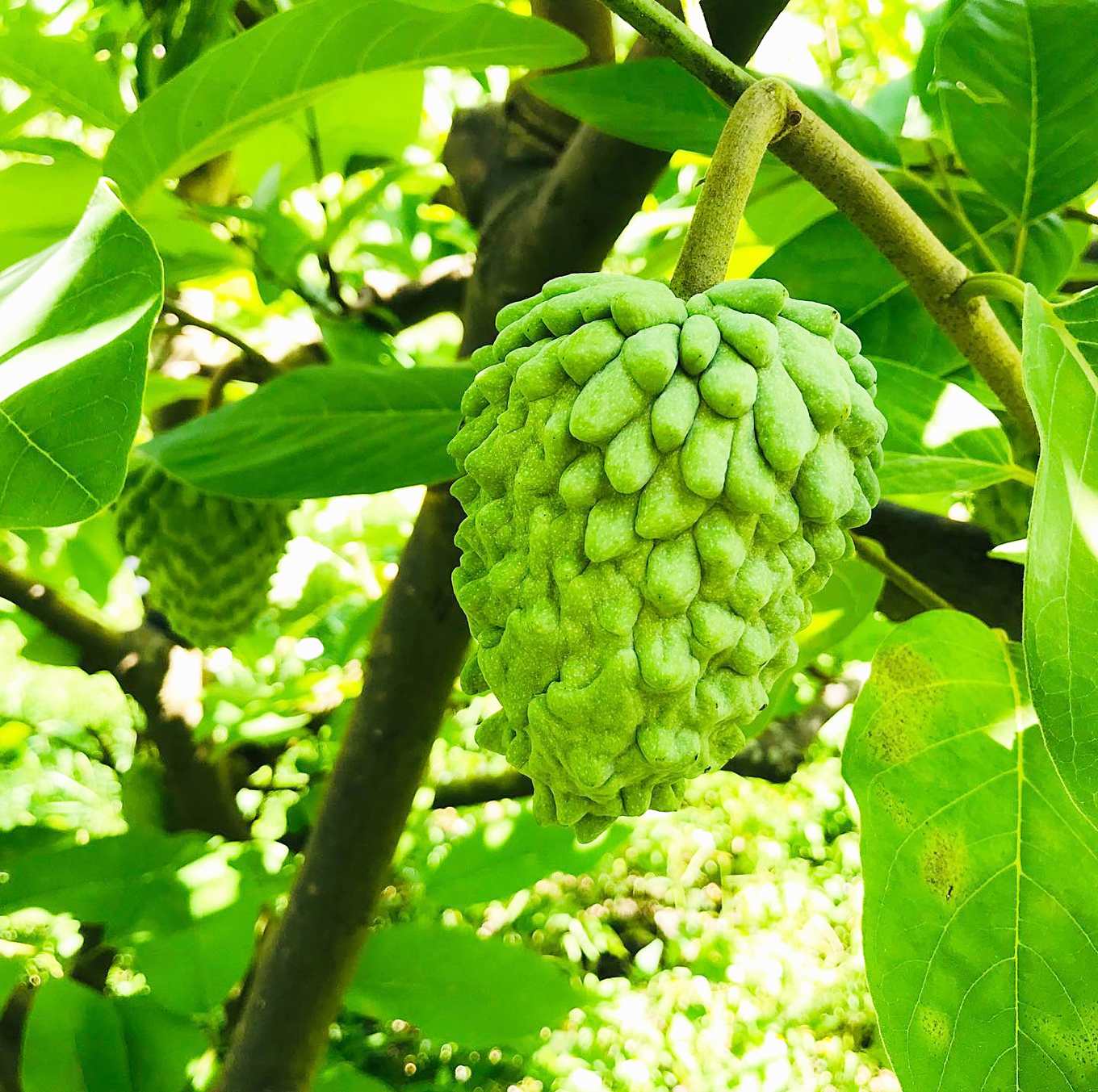
The Wuhan pneumonia outbreak in China is severe. To prevent the spread of the epidemic, Wuhan was locked down starting on the morning of January 23. After Wuhan, more than a dozen cities in Hubei Province successively closed off external transportation. Taiwan's agricultural exports to China have also been affected. Pineapple sugar apple (custard apple), which relies mainly on the Chinese market and is in season, has borne the brunt: traders have notified sellers to temporarily stop orders, and domestic prices immediately fell by 30%. Pineapple, 90% of whose exports depend on China, as well as giant grouper, may also be affected later.
Jiao Jun, who has studied the practicalities of agricultural exports for many years, analyzed that based on the SARS experience, the public's overall GDP and spending power will decline, and Taiwanese agricultural products can be considered a luxury on the other side of the strait. For example, pineapple sugar apple is mostly used as gifts, while giant grouper is a high-end restaurant delicacy. "Luxury goods are bound to bear the brunt when the economy suffers like this."
Jiao Jun observed that apart from first-tier cities like Beijing and Shanghai, second-tier cities are even more the mainstay supporting Taiwanese agricultural products in China. For example, Wuhan is the fastest-developing second-tier city, and its location is at the center of China. If the epidemic is a short-term phenomenon, that is fine, but if it burns for more than half a year or even shows no end in sight, it is bound to deal a huge blow to Taiwan's agricultural products. "As long as 20% flows back to the domestic market, it is actually terrifying. Even 3% or 5% will put pressure on domestic agricultural prices."
Forty percent of total pineapple sugar apple production is sold to China; temporary suspension of orders has already hit domestic prices
Our country's pineapple sugar apple relies heavily on the Chinese market. According to statistics, in the 107th year of the Republic of China, 28,964 metric tons of pineapple sugar apple were produced, of which about 10,000 metric tons were sold to China, accounting for as much as 40%. Zhuang Yihao of the promotion department of the Taitung District Farmers' Association said the epidemic has affected the transportation and freshness preservation of pineapple sugar apple, traders have notified that there are temporarily no orders for pineapple sugar apple, and it is unknown how long the impact will last. The pineapple sugar apples now being harvested are all sent to domestic wholesale markets, and the sudden increase in volume has also lowered prices. Traders are still continuously contacting new customers in Malaysia, Indonesia, Hong Kong, China, and elsewhere.
Qiu Ruizhang, a sugar apple farmer in Taimali Township, Taitung County, who once won the Excellence Award in the sugar apple high-quality orchard evaluation competition, explained that from now until March the fruit volume is at its peak. Ninety percent of exported pineapple sugar apples go to China. Now the amount sold to the domestic market is too large to be absorbed, and prices have been affected. Nearby fruit farmers, seeing the poor market conditions, dare not harvest.
Qiu Ruizhang added that because of the epidemic, China has delayed the opening of the market. He currently hears that traders will not begin receiving goods until early February, and people in the same trade all plan to wait for notification before harvesting.
Xie Jinhong, a young farmer growing sugar apple in Taitung County, said that with the impact of the epidemic, they can only switch to selling in the domestic market and first adjust the production season in response. Most class members are now delaying harvest. Pineapple sugar apple has not experienced a collapse before, so he is not particularly worried, and everything will wait until China opens the market on February 3.