What are the propagation methods for cactus flowers
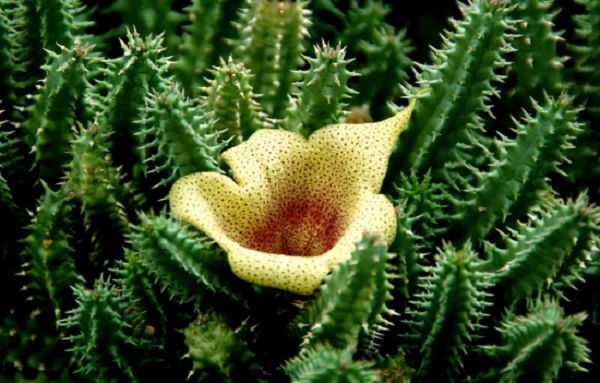
Terrestrial cacti are usually propagated by cuttings or grafting.
Cutting propagation is the most commonly used method for home cultivation of terrestrial cacti; it is simple and easy, with an extremely high survival rate. Summer is the most suitable time, though spring and autumn also work. For cuttings, use older and firm stem segments or bodies; ones that are too old root with difficulty, and ones that are too tender rot easily. First cut off the cutting with a sterilized sharp knife, taking care to keep the parent plant's shape intact, and apply a small amount of sulfur powder or charcoal powder to the cut surface for antisepsis. Place it in a semi-shaded spot to dry for several days, and once the cut has dried and the cortex has slightly shrunk inward, then insert the cutting. Cuttings that are inserted immediately after being cut tend to rot at the cut and fail to survive, but cactus balls can be inserted immediately after cutting. The cutting medium is best used in two layers: about 2 cm of sterilized pure sand on top, and an alkaline nutrient soil that drains and aerates at the bottom of the pot, so that after the cutting roots, it can promptly absorb nutrients from the soil. Insert it not too deeply; just let the base enter the sand a little. After insertion, place it in a shaded spot and water sparingly, keeping the cutting medium only slightly moist; afterward, water a little whenever it looks dry, and do not let water accumulate. Tall cuttings can be fixed with a support stake beside them to prevent tilting and wobbling. Cactus cuttings root in about 20-25 days, while slow-rooting types such as cactus mountain and cactus balls take 30-40 days to root. Three years after cutting, flowering can be expected. For the cutting propagation of epiphytic cacti such as Epiphyllum, orchid cactus, and Christmas cactus, this method can also be followed; after the cuttings survive, they also take 3 years to flower, but those propagated by division can flower the following year.
There are two grafting methods for cactus flowers: cleft grafting and flat grafting. Cleft grafting is suitable for epiphytic cacti, while flat grafting is mostly used for terrestrial cactus balls. Some white, yellow, and red bodies with poorly developed root systems, slow growth, or a lack of chlorophyll to make nutrients themselves, as well as a few rare precious varieties that are difficult to propagate by other methods, must be propagated by grafting. Grafting propagation can make the scion grow quickly, can rescue some fine balls with rot at the base, and can also artificially shape the plant; moreover, the operation is not difficult, the survival rate is high, and it is easy for beginners to master, so in recent years it has been widely adopted by home flower-growing enthusiasts.
The rootstock usually should be a species that is easy to propagate, slow-growing, has a well-developed root system, produces few offshoots, and has strong cold resistance. At present, Hylocereus undatus is mostly used as the rootstock, because it shows strong compatibility with most cactus balls, and after grafting the plants grow quickly, have proper color, and flower early. However, Hylocereus undatus is not cold-resistant; in the middle and lower reaches of the Yangtze River, it is better to use the more cold-resistant Echinopsis multiplex or Echinopsis tubiflora (commonly known as grass ball) as the rootstock.
The grafting period should be chosen when both the rootstock and the scion are in a period of vigorous growth; usually grafting is best at 25°C-30°C, that is, in May-June or September. At the same time, choose clear weather, because it allows the cut to dry quickly, which favors survival.
When grafting, first cut off the rootstock's growing point to expose the pith. Because the growing point is removed, the rootstock will no longer enlarge after grafting. For this reason, use a medium-sized Echinopsis tubiflora cultivated for 2-3 years with a diameter of 5-8 cm as the rootstock. Then make a horizontal cut at the base of the scion, and align the pith of the two before joining them, so that the cambium of the two fits closely and the survival rate is high. If the cut surfaces of the rootstock and scion are not smooth, they heal with difficulty and the survival rate is not high. Finally, use fine string to tie and fix them lengthwise together with the pot, binding from several directions, with appropriate tightness: small balls can be slightly loose, and large balls should be slightly tight. After binding, if the cut surfaces of the two are found not to be in close contact, a heavy object may be placed appropriately on top of the scion. If there is any exposed part of the rootstock cut, it must never get wet; sulfur powder, plant ash, or weathered lime powder may be sprinkled on it for antisepsis. After grafting, do not water; place it in a cool, ventilated spot. After half a month, the binding string can be removed, taking care not to touch the scion so it does not fall off. After removing the string, place the bottom of the pot in water and let it absorb until the surface soil in the pot is moist. Then place it in a semi-shaded spot, and only after the scion has begun to grow can it be moved into sunlight for care. Usually under relatively high temperatures, growth begins after 1 week; for common varieties, the diameter can grow about 4 cm within 1 year.