Forestry Bureau's tree protection personnel certification method criticized as a private examination that overrides national examinations
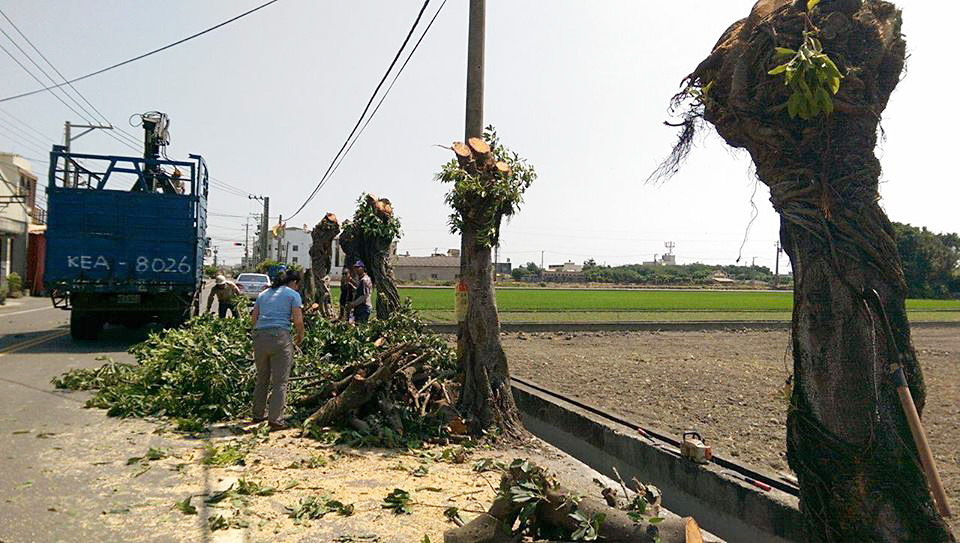
Trees on mountains fall under the Forest Act and cannot be cut at will, but in the past there were no rules governing flatland trees, from street trees to century-old giants. They were often pruned beyond recognition, with branches hacked at randomly in minor cases and trees arbitrarily "beheaded" in serious ones, while the arbitrary transplanting of large trees caused heavy casualties.
To protect flatland trees, in 104 (2015) the Legislative Yuan passed the parent act of the special chapter on tree protection (hereinafter the "Tree Protection Act"). Yet four years later, the competent authority, the Forestry Bureau, has still not announced the subsidiary regulations. Recently it was reported that the "Regulations on the Examination, Selection and Graded Certification of Tree Protection Professionals" within the subsidiary regulations would hand the qualification of tree pruners to specific private organizations to conduct examinations, prompting outside doubts of favoritism toward specific vendors and making it hard for the qualifications of future tree protection personnel to win public trust.
The Forestry Bureau clarified that the allegation of favoring vendors is untrue. Currently, all trees across Taiwan requiring protection have been registered, and the content of the subsidiary regulations has been previewed; they need only wait for briefing sessions with relevant industry groups to be completed before release. "The Tree Protection Act is very good, but the examination cannot be left to private hands." Lan Lizhu, chairwoman of the Taipei City Landscape Engineering Commercial Association, said the existing private arborist examination uses the American ISA system, which is not applicable to Taiwan, is costly and offers no benefit. She suggested the examination must be handled by units such as colleges and universities that are both professional and neutral, "private training must not be allowed to override national examinations."