Shengyang Aquatic Plants Flows with Vitality, a Yilan Family Guards Their Family Business
Text and Photos / Zhang Yayun
In 2001, in response to Taiwan, China's accession to the WTO, how rural areas could be revitalized and transformed received attention, and the Council of Agriculture proposed the development direction of "one township, one leisure agriculture and fishery park." Xu Zhixiong felt this was an opportunity, so in 2001 he returned to Shangde Village in Yuanshan to rebuild "Shengyang Leisure Farm," and the leisure farm was also approved and registered by the Council of Agriculture in 2005.
Seeking Innovation and Change, from Leisure Farm to Aquatic Plant Exhibition Hall
Since it is a leisure farm, over the years Xu Zhixiong and his family have developed various leisure and experience activities, such as: ecological guided tours, aquatic plant cuisine, eco-friendly moss ball DIY, ecosystem bottle DIY, aquaponics, fish pedicure, children's water battle zone, and more. They constantly innovate in order to give visitors something new, so that every visit to Shengyang feels like a different harvest.
The inspiration for some activity elements also comes from childhood memories of play. For example, Shengyang's very popular "aquatic plant bottle DIY" - Xu Zhixiong says the inspiration came from catching shrimp as a child with glass bottles at the creek or irrigation channel, replacing them with Yuanshan's well-known soy milk glass bottles, combined with the farm's signature aquatic plants. And Yuanshan health soy milk also has a story: in the early days, agricultural authorities set up processing demonstration plants at several farmers' associations to increase rural residents' protein intake, and Yuanshan Township Farmers' Association's soy milk processing is one example. Founded in 1964, Yuanshan Farmers' Association health soy milk is still loved by Yilan people today, and sometimes wedding gifts are health soy milk.

The guide humorously says: "This is Yuanshan health soy milk founded in Year 53 of the Republic of China, not something put there in Year 53 and kept until now." After everyone finishes drinking the soy milk, the bottles are cleaned, filled with water, and then the hornwort, Hokkaido moss balls, shells, and shell sand prepared by the farm are put into the bottles, making an ecosystem bottle full of environmental friendliness and local flavor. The guide says his biggest trouble is that "sometimes someone doesn't dare drink soy milk, so I have to help drink it. Drinking three bottles in one morning makes my stomach super full."
Sure enough, the "Eco-friendly Ecosystem Bottle DIY," combined with local soy milk bottles, won first place in the agricultural experience DIY category of the 4th "Republic of China Leisure Agriculture and Fishery Park Creativity Competition." After making the ecosystem bottle, visitors can have free time to stroll along the fish pond paths, enjoy the shimmering water and mountain scenery and the distant mountain mist; or take off their socks and step into the water to feel the small fish nibbling their feet. Children are often both ticklish and eager to be bitten by the fish, and exclamations and screams keep coming. In summer, children love to play in the water, and the fish pond can also become a mini pool. Two rows of water sprayers just let the children face off in a water battle. Adults and children alike can each have a corner of their own here.
It Is a Yilan House, and Also an Aquatic Plant Culture Exhibition Hall
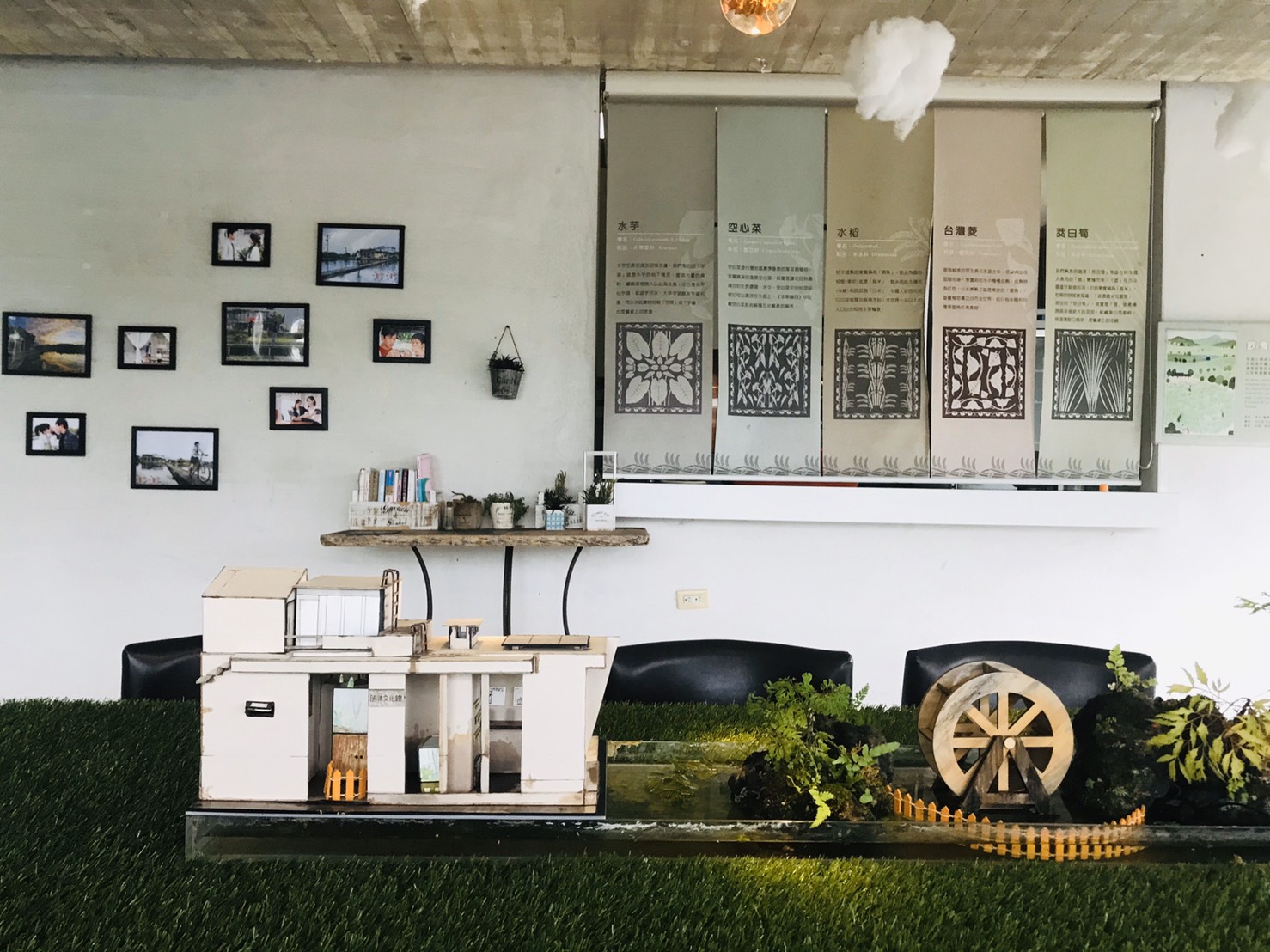
The "Shengyang Aquatic Plant Culture Exhibition Hall" is a striking landmark on the farm, and also Yilan House No. 12. It was originally intended as living space for the whole family, but unexpectedly it also extended into a combined aquatic plant culture hall and residence. The Aquatic Plant Culture Exhibition Hall was designed by architect Cheng Shao-Cheng-Tao, situated above the fish ponds. Fair-faced concrete serves as the main body of the building, and the horizontal lines blend with the surrounding fish pond landscape. The fair-faced concrete no longer has paint or tiles, reducing the production of construction waste. Because the roof is horizontal, after collecting water the roof was turned into an aquatic plant area, adding a layer of "cold water insulation." In 2016, in response to the government's green energy policy, solar panels were also added on the roof, storing heat and electricity while also providing a second layer of insulation.