Is learning your mother tongue at home really enough? Mayaw Biho opens an "all-Amis" kindergarten, teaching entirely in the tribal language, from reading picture books to growing vegetables
"We waited so long for a child to speak a single word in the tribal language." Mayaw Biho, former director of the Indigenous Television station, independently opened an "all-Amis-language" kindergarten (Pinanaman) in Hualien, where everything from reading picture books to growing vegetables is conducted entirely in Amis. In just a few months, 4 children have learned simple tribal-language words, and even these simple words have moved their families beyond words.
You don't have to be Amis to learn the Amis language; Amis singer Ado teaches everyone to say "I love you"
A mini kindergarten with both quiet and active activities, children and family members together
Austronesian Lumah is a nonprofit organization established this year, and Pinanaman Kindergarten currently has 4 students, 1 teacher and 1 kitchen worker, making it arguably the smallest in all of Taiwan. It adopts all-Amis-language instruction: mornings focus on quiet courses such as reading picture books and singing tribal-language nursery rhymes, while afternoons feature active courses such as drawing and handicrafts, with at least one day of outdoor courses each week.
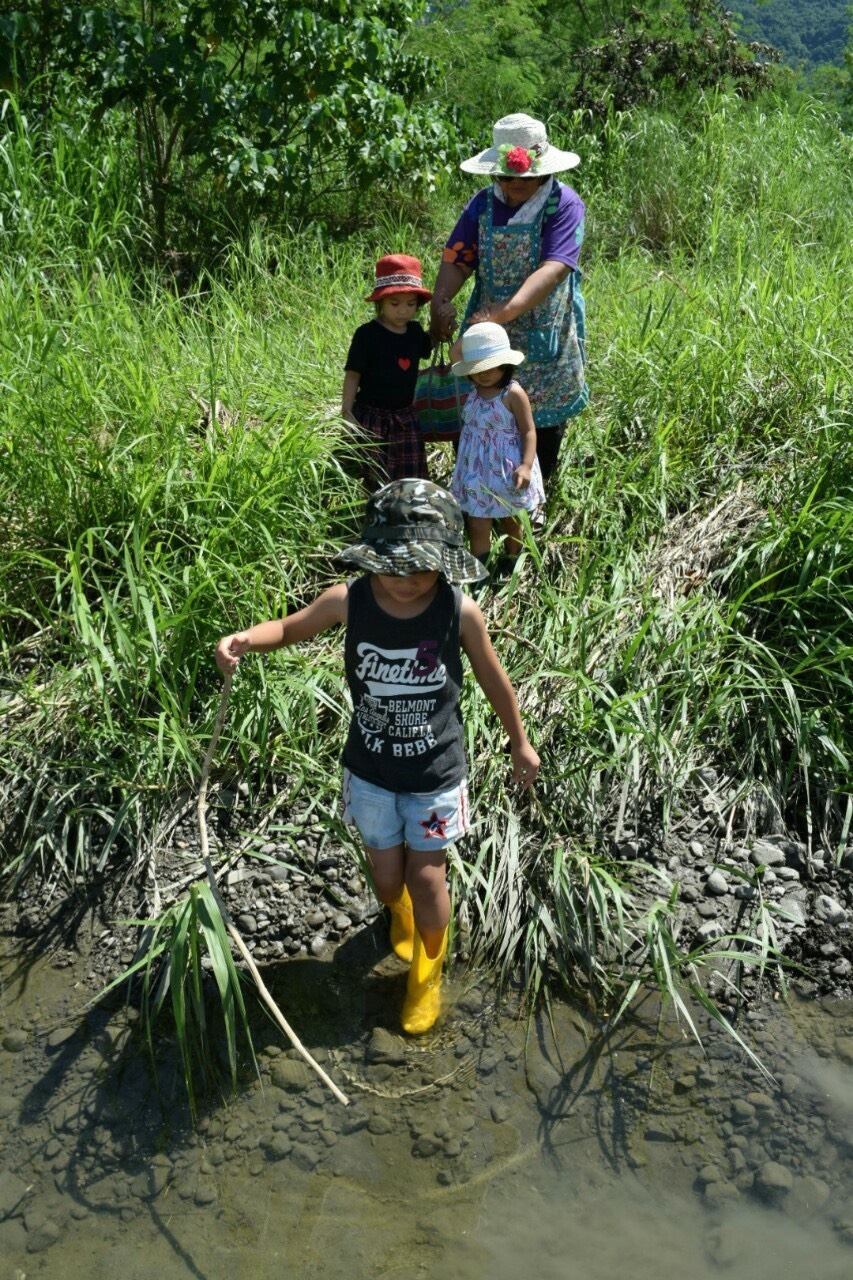
The outdoor courses are arranged flexibly, including getting to know vegetables, growing vegetables, cooking, river tracing, and joining tribal rice harvests. The courses combine life, indigenous culture and customary elements, and grasp the golden period of children's learning. Besides the students, parents also participate considerably in the kindergarten's various activities. Through the mouths of children, Austronesian Lumah strives to preserve the indigenous language, linking the tribe together bit by bit.

Mayaw Biho: "When you pray to the ancestral spirits in Chinese, do the ancestral spirits understand?"
Mayaw Biho, a senior indigenous cultural worker and CEO of Austronesian Lumah, was born in the Chunri tribe of Yuli, Hualien, and has made many indigenous documentaries and won awards multiple times. "Many indigenous people speak Taiwanese more fluently than their tribal language." While growing up, Mayaw Biho learned Chinese and English, but never learned his tribal language. He recalls: "People used to say: 'Just learn the tribal language at home!' But the result was that fewer and fewer people spoke the tribal language, especially tribespeople around my age, who don't know how to speak it."
Mayaw Biho gives conference interpreting as an example: at international conferences, representatives of all countries are encouraged to speak their mother tongues, so interpreters and translation devices are provided. When he worked at the Tainan City Council, most people spoke Taiwanese, yet no one felt a need for interpretation. "People don't think anyone present will fail to understand, and they don't encourage Hakka council members to speak Hakka or indigenous council members to speak their tribal languages."
Although Mayaw Biho is already 50 years old, he considers his mother tongue to be only at a 3-year-old's level. Giving a speech entirely in his mother tongue on a public occasion is quite difficult for him: "I can only do it by memorizing it." He says this with a smile, yet his determination to speak his mother tongue even if he has to memorize it by rote is still evident.

There are only a few hours of mother-tongue class each week, but grandpa and grandma are running out of time
The government is already promoting Southern Min and Hakka in elementary schools around the country, and has even added tribal-language courses in the Hualien-Taitung area, so why go out of the way to open a mother-tongue kindergarten? Mayaw Biho believes that although the mother-tongue teaching currently promoted is required, the hours are too few, totaling at most just over 20 hours over an entire semester, and children will not seriously speak it at home.
"From the past to now, school has always taught us to be someone else. Only when everyone needs bonus points for exams do they turn back to learn the tribal language." Mayaw Biho points out that many tribespeople begin learning the tribal language as adults, but they have already missed the golden period for language learning, and the different logic of the language instead makes learning painful for them.
"If we don't speak the tribal language anymore, there will be no one left who can speak it." Mayaw Biho has seen more and more tribal youth returning home in recent years, but generally they cannot speak the tribal language. Moved by the rupture in indigenous language and culture, and watching tribal elders grow old and pass away, he believes mother-tongue education cannot wait any longer, so he set about opening the kindergarten.