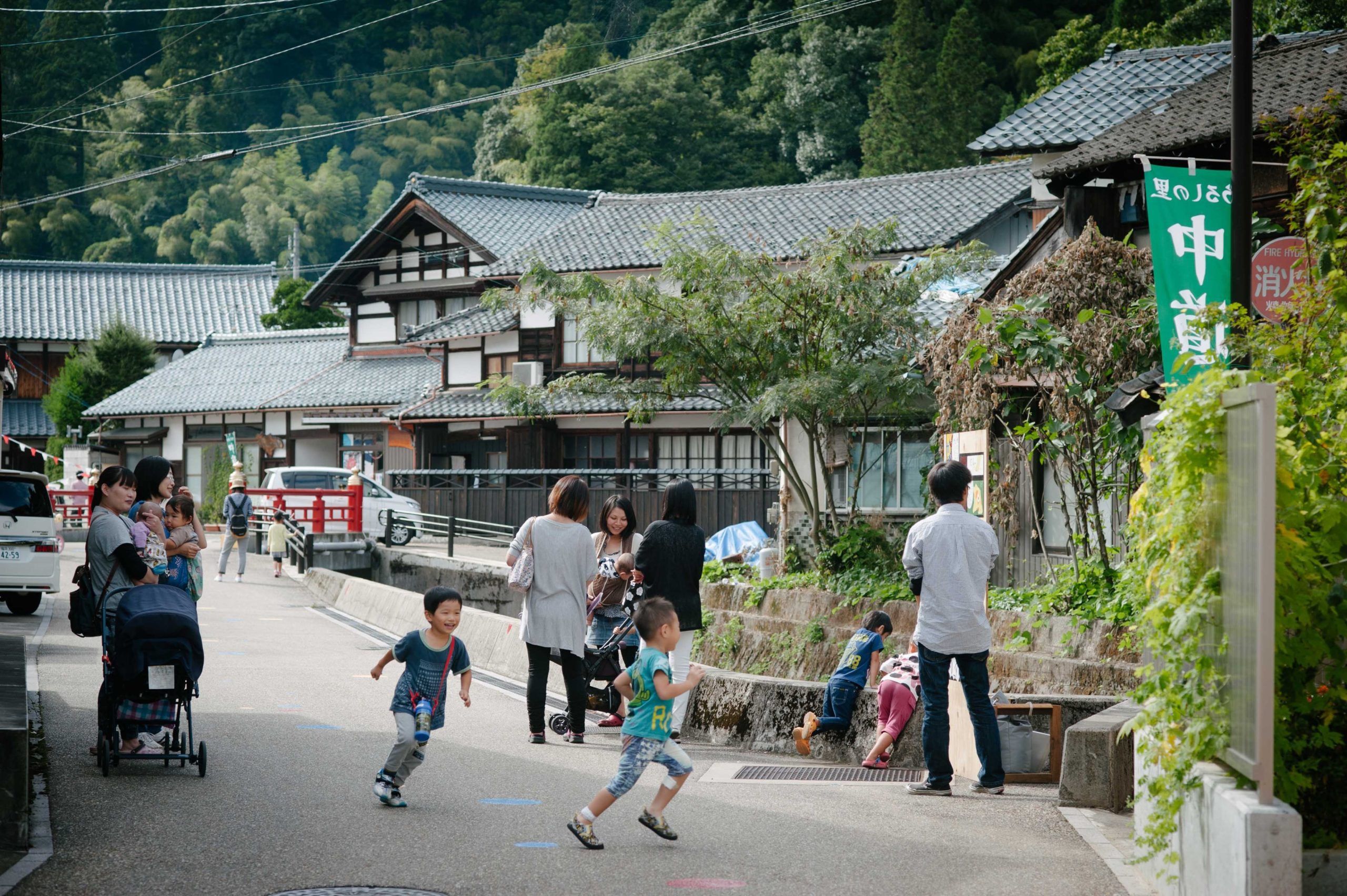
Japan rural migrants launch their own loose "yuru-i ijū" free long-stay trial program
According to the Cabinet Office of Japan2014annual statistics, more than 40 percent of Tokyo residents wish to move out of Tokyo, and among residents not originally from the Kanto region, the desire to leave Tokyo is even stronger, reaching nearly 50 percent. On the other hand, many rural areas in Japan face the problem of "depopulation"[note1], including aging populations and labor shortages, so everyone from Japan's central government down to local governments is trying every possible means to attract urban residents to relocate to the countryside.
However, migration means drastic changes in work and living environment, and objectively speaking it is not an easy thing, so in addition to promoting migration, attention has recently shifted to creating "relationship populations"[note2]as the goal, that is, through various local discovery short trips and trial-stay experiences, first attracting people to become "fans" of a certain place; and instead of strongly emphasizing migration, promoting "two-base living" instead. In short, it is about letting people first get to know a place, enter a place, and become "people who have a relationship" with a place.

Skip the cumbersome conditions and come to Fukui for "loose migration"!
2015In the year, Sabae City in Fukui Prefecture launched the "Sabae City Trial Migration Project- LooseMigration (yuru-i ijū)" program. The city government provided two rent-free units3LDK(three bedrooms and two living rooms) and recruited like-minded people who wanted to migrate and experience rural life. The reason it was called "loose migration" was that, unlike past migration promotion programs that set various conditions as prerequisites, this program did not require participants to work at local companies, engage in local agriculture, or start a business within a deadline, nor did it hold various workshops requiring members to constantly brainstorm. Loose migration lowered all kinds of thresholds to the minimum, so that program participants first only needed to come and experience life locally. It was fine to come with no purpose at all.
Unfortunately, thisloosemigration program ended after only one round, but interestingly, that round did not become the final chapter, because among the six members who later moved to Sabae, one member, Kazuki Mori, starting in2018the year, co-organized a private-sector version of "loosemigration" with rural migrants from various parts of Japan.

After Fukui's "loosemigration," life took a major turn
Kazuki Mori, who graduated from the University of Tokyo, Japan's top university, once worked at a consulting firm, and had an impressive resume, came to Sabae, Fukui, during the half year between jobs and participated in theloosemigration program. Originally, his next job offer had already been decided; originally, he had just thought of taking a detour to rest during the gap between jobs; originally, after the loose migration program, he was going to return to the normal track in Tokyo. But after coming to Sabae, the plan simply could not keep up with the changes.
At that time there were17people in theloosemigration program, and everyone's background was a bit unusual: a former baseball player, a freelancer who had originally been a pastry chef, and day laborers who saved up money from daily-wage work and then traveled abroad, and so on. Everyone's diversity in how they defined work and put it into practice deeply shook Kazuki Mori. In the process of eating and drinking and chatting together every day, Kazuki Mori realized one thing: "Working under some kind of 'belonging' may not be the only correct answer," and "If there is something you want to do, there is no reason you cannot create it yourself."
Later, Kazuki Mori resigned from his job offer in Tokyo and actually moved to Sabae. Here, he worked with a local design firmTSUGI, co-planned the large craft experience event "RENEW," also tried to assist local industry revitalization through design work, and in2018became a member of the local regional revitalization cooperation team[note3]。

If the city government stops holding "loosemigration," then let's plan it ourselves!
2018In the year, Kazuki Mori floated an idea on social media: "I want to create a society where people can choose where to live more freely." Through the internet and friends introducing friends, he met several friends who shared the feeling and wanted to join the project, so everyone each provided a place to stay, and just like that "without permission" they launched the first private-sectorloosemigration program, with locations all over Japan.
"In the countryside, doesn't it often happen that your own house is too big and has empty rooms?" So this program can also be described as connecting these empty rooms. Some are the personal homes of regional revitalization cooperation team members, and some are empty rooms provided by migration promotion groups that manage abandoned vacant houses in depopulated areas.
Tokushima Prefecture's Awa City, Nagasaki Prefecture's Unzen City, Nagano Prefecture's Kiso Town, Okinawa Prefecture's Kunigami Village, and Fukui Prefecture's Sabae City, five locations, from October to the end of March the following year, minimum one day to maximum half a year, no designated dates, no limit on length of time, no requiredKPI, so there were no mandatory workshops or conditions of exchange, but likewise the organizers only prepared space, and did not prepare furniture or anything else. In short, it was a free, but at the same timeloosebeyondloose, casual beyond casual migration trial program.
When asked about Kazuki Mori's motivation for organizing loose migration, he said that in recent years "migration" has become very popular, but each place's characteristics always come down to "ah, our place has rich nature, delicious food, warm human kindness……." Every place says this, so for a person choosing a migration destination, it is meaningless and leaves them stuck unable to choose. "But if you can try living there and trying it out at relatively low cost, and then make some local friends, maybe you can also find possible job opportunities." In that way, perhaps the picture of migration can become clearer and more realistic.