How should flowering plants that go dormant in summer be cared for?
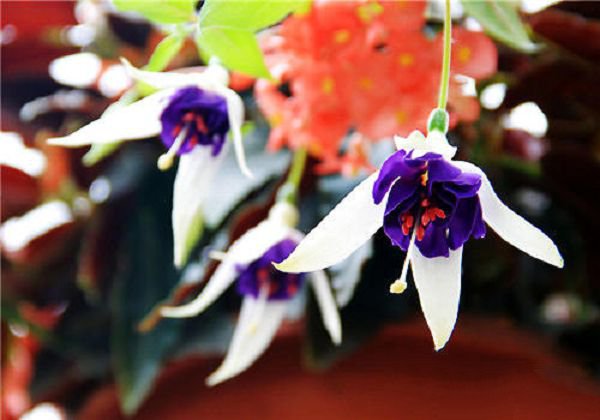
Some flowering plants, such as cyclamen, fuchsia, wax begonia, narcissus, geranium, caladium, clivia, freesia, gloxinia, tulip, and epiphyllum, enter a semi-dormant or dormant state when the high-temperature summer season arrives, showing slowed or paused growth in order to withstand the harm of adverse external environmental conditions. To help these flowering plants safely pass through the summer dormancy period, corresponding measures must be taken to care for them meticulously according to the physiological characteristics of their dormant period.
Fuchsia
1. After the beginning of summer, move dormant flowering plants to a shady and well-ventilated place, avoiding direct sunlight and preventing rain exposure, otherwise root rot is easily caused, or even death.
2. Watering must be strictly controlled. During the dormant period, too much watering and long-lasting wet potting soil very easily cause root rot, while too little watering and overly dry potting soil easily cause the root system to shrink. Therefore, watering should be done so as to keep the potting soil slightly moist. However, it is necessary to frequently spray water on the branches and leaves and sprinkle water on the ground around the flowerpot, so as to form a moist and cool microclimate, which is beneficial for dormancy. But for flowering plants such as gloxinia, whose leaf surfaces have dense fine hairs, and for cyclamen, whose flower buds are sensitive to water and moisture, it is not suitable to spray water on the leaf surface or the center of the leaves.
3. Any fertilizer application must be stopped. Because the physiological activity of flowering plants during the dormant period is extremely weak, fertilizer is not needed. If fertilizer is applied, it also easily causes root rot and bulb rot, and even the death of the entire plant.