What are the control methods for flower and nursery stock rust?
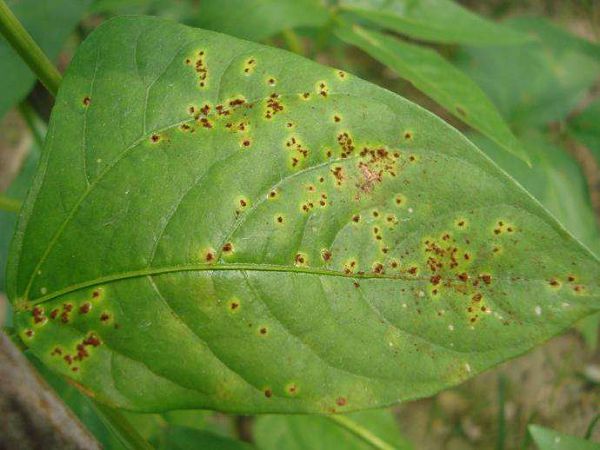
Flower and nursery stock rust is a relatively common and serious disease of flowers and landscaping trees. There are many types of rust, and in landscaping it mainly harms nearly a hundred species of flowers and nursery stock in the Rosaceae, Fabaceae, Liliaceae, Poaceae, Pinaceae, Cupressaceae and Salicaceae families. After infection, transpiration and respiration accelerate, photosynthesis weakens, growth vigor declines, leaves yellow and drop early, or tumors form on branches and trunks and fruits become deformed, reducing yield and ornamental value; in severe cases it even kills the seedlings, causing major losses.
Symptom characteristics
Rust-colored spore masses appear in large numbers on diseased plants. Pale green small spots first appear on leaves, stems and other parts, then expand into rust-brown blister spots. After the epidermis ruptures, yellow-brown powdery material is released, which is the uredinium. Some appear as orange-red to black small powdery masses, which are the telium. Some appear as honey-yellow to dark brown dots or granules, which are the spermogonium.
1. Strict quarantine
Rust on the branches and trunks of many trees is a quarantine target. Seedlings should be introduced from disease-free areas, and vegetative propagation materials such as cuttings and scions should be collected from disease-free mother plants.
2. Breeding disease-resistant varieties
There are obvious differences in rust resistance among flower and nursery stock species and varieties. Therefore, breeding rust-resistant flower and nursery stock varieties is an economical and effective way to control rust.
3. Reducing inoculum sources
To control heteroecious rust, ornamental plants can be strictly isolated from alternate host plants. For example, crabapple, apple, pear, etc. should be kept 5 km away from the alternate host cypress, and rhododendron cannot be planted mixed with spruce, hemlock, aster, etc. To control autoecious rust, from late autumn to early spring of the following year or during the plant dormancy period, thoroughly clean up fallen leaves, fallen fruits, dead branches and other plant residues in the garden where diseases and pests lurk. During the growing season, diseased branches and leaves should be frequently removed and centrally disposed of to reduce inoculum sources. Apply pesticide preventively when the spore masses are about to disperse.
4. Strengthening maintenance management
Improve the growing environment of plants, enhance disease resistance, carry out soil improvement well, increase soil permeability, raise soil fertility, and organize the garden's irrigation and drainage system well. Use healthy, disease- and pest-free branches as cuttings, scions and other vegetative propagation materials, and strictly remove pathogens. Control planting density, which should not be too dense. Drain accumulated water in time, fertilize scientifically, apply more fully decomposed organic fertilizer and phosphorus and potassium fertilizer, and do not apply nitrogen fertilizer in a one-sided way. Frequently prune and trim branches, remove diseased, pest-infested and weak branches, and keep ventilation and light penetration good in the garden; facility cultivation should strengthen ventilation and air exchange to reduce humidity in the greenhouse.
5. Chemical control
From late autumn to before bud break the following year, after cleaning the garden and pruning diseased branches, apply pesticide for control. Spray 2-5 degrees Baume lime sulfur mixture, or sodium pentachlorophenate 200-300 times solution, or a mixed solution of sodium pentachlorophenate plus lime sulfur mixture. To control rust on the alternate host cypress, spray 1-2 times in early spring in the first and middle ten days of March to kill the overwintering inoculum teliospores. In the early stage of disease onset on flowers and nursery stock, spray Bijunsha 800-1000 times solution, 0.2-0.3 degrees Baume lime sulfur mixture, or 70% mancozeb wettable powder 500 times solution, or 62.25% Xiansheng 600 times solution, or 70% thiophanate-methyl 1000 times solution, or 25% triadimefon 1500 times solution. Newer pesticides for controlling rust include Penkejun 2000-3000 times solution, 12.5% diniconazole 3000-4000 times solution, 43% Horizon 4000-5000 times solution, 25% Fuli Ku 1000-1500 times solution, and 25% Dilike 1000-4000 times solution.