Seven principles to note when fertilizing flowers
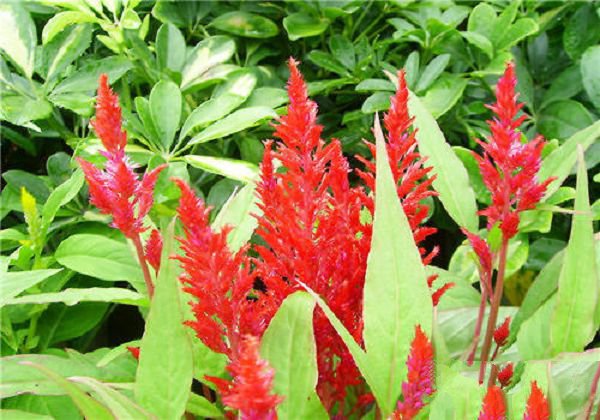
Fertilizing flowers is a problem that many flower lovers fail to master well during the process of growing flowers. Too much fertilizer or too little fertilizer will cause poor flower growth. The editor will now introduce to you the several major principles that should be mastered when fertilizing flowers.
Scarlet sage
1. Do not fertilize newly planted plants. Newly planted plants have many wounds. If stimulated by the outside world, they cannot heal and will cause root rot.
2. Do not fertilize during the flowering period. Fertilizing during the flowering period will cause bud drop, flower drop, and fruit drop.
3. Do not fertilize during the dormant period. During the dormant period, flowers stop or slow down their growth, their metabolism is slow, and their photosynthesis is poor. If fertilizer is applied, it will quickly break the dormancy and cause the plant to continue growing. This will consume more nutrients and affect flowering in the coming year.
4. Do not apply concentrated fertilizer. When fertilizing potted flowers, the concentration must not be too high or the amount too much, otherwise it will cause death. Generally, the principle of "apply thin fertilizer frequently" should be mastered, with a ratio of three parts fertilizer to seven parts water being suitable.
5. Do not apply raw fertilizer. If fertilizer that has not been decomposed is applied, it will not only easily breed insects and maggots, but also often give off a foul odor that pollutes the environment. Moreover, when it encounters water, it will ferment and damage the plant's root system.
6. Do not apply nitrogen fertilizer alone. When fertilizing flowers, nitrogen, phosphorus, and potassium should be combined. It is best to mainly use farmyard manure such as cake fertilizer, barnyard manure, and compost.
7. Do not fertilize diseased and weak plants. The branches of diseased and weak plants are thin and weak, their photosynthesis is poor, and their metabolism is slow. They are "too weak to be tonified." If fertilizer is applied, it is easy to cause fertilizer damage.