Stroll through Yilan's Sheng Yang Aquatic Plant Farm and listen to the forest story of aquatic plants
Text and photos / Zhang Yayun
There is a kind of love for a place that shows itself invisibly, and it is exactly that natural warmth that makes people feel close to it.
Strolling along the path beside the Sheng Yang aquatic plant ecological pond, Xu Zhixiong casually folded a wild rice shoot leaf and said, "The leaf can be folded into a paper airplane, and we would compete to see whose flew farthest." The next second, the wild rice shoot leaf airplane had already arced out of his hand and landed in the pond. A moment later, he walked over to the wild ginger flower area, picked a wild ginger flower, removed the calyx leaf beneath the blossom, and put the curled leaf to his mouth to blow out a sound. Unexpectedly, the sound that leaf made was astonishingly like the call of a red-gartered moorhen chick in the pond. Xu Zhixiong smiled faintly and said, "That is how we played as kids. Wherever we went, we played, and whatever we found on the spot could become a toy."

Xu Zhixiong has run the aquatic plant business for more than 20 years. At present, the garden's guided tour work is mainly handled by employees, but when there is a chance to hear him give a tour in person, one instantly understands that what he introduces is not only aquatic plants, but also his childhood stories and memories of his hometown.
Just as Teacher Lu Lizheng, who helped spur the Yilan community museum movement, said, "Hometown is the magical place where dreams are built and take flight." The Sheng Yang Aquatic Plant family has carried forward a local industry chapter interwoven with water, aquaculture and aquatic plants.
Ecological pond, where a hundred plants flourish and water birds find a paradise
Walking into Sheng Yang Aquatic Plants, a visitor's first impression should be layered green on every side, shimmering fish ponds, and the gray exposed-concrete Aquatic Plant Culture Hall seated on the fish ponds, set off against the distant mountain scenery. All these elements interwoven form a picture of Yilan's fine mountains and waters.
"Once, winter visitors came, saw a pond full of withered grass on a rainy day, and left us a negative review online. It was really frustrating." Xu Zhixiong said that aquatic plants actually hibernate in winter. Following this aquatic plant expert around the ecological pond is like entering a story hall of the aquatic plant forest. Xu Zhixiong said that we encounter aquatic plants almost every day, yet people do not really know them. Rice, wild rice shoots, lotus seeds, water caltrop, water spinach and so on are all foods that come from aquatic plants.
Aquatic plants can be divided into four types: submerged, floating-leaved, free-floating and emergent. At Sheng Yang Farm, as long as a guided commentary is booked, and you bend down close to the ground and the pond to observe, there will be unexpected surprises.

Large-leaf marsh mint, giving off the charm of star anise
Bending down, Xu Zhixiong took a small plant from the water's edge and rubbed it in his hands. "Smell it and see what scent it is." Unexpectedly, the tiny leaf gave off a "star anise scent." This is large-leaf marsh mint, which grows in flowing, clean waters. In the past, farmers in the fields could gather it on the spot, pull up some, crush it and rub it on their bodies to repel mosquitoes and relieve itching. It was an old-time natural mosquito repellent. In addition, when used to braise things, it makes them more fragrant and sweeter the longer they cook, and it can also be used to make cheese. So Sheng Yang's aquatic plant cuisine developed "large-leaf marsh mint cheese," and "large-leaf marsh mint cheese" also helped Sheng Yang win the honor of first prize for distinctive products among leisure agriculture and fishery parks nationwide.
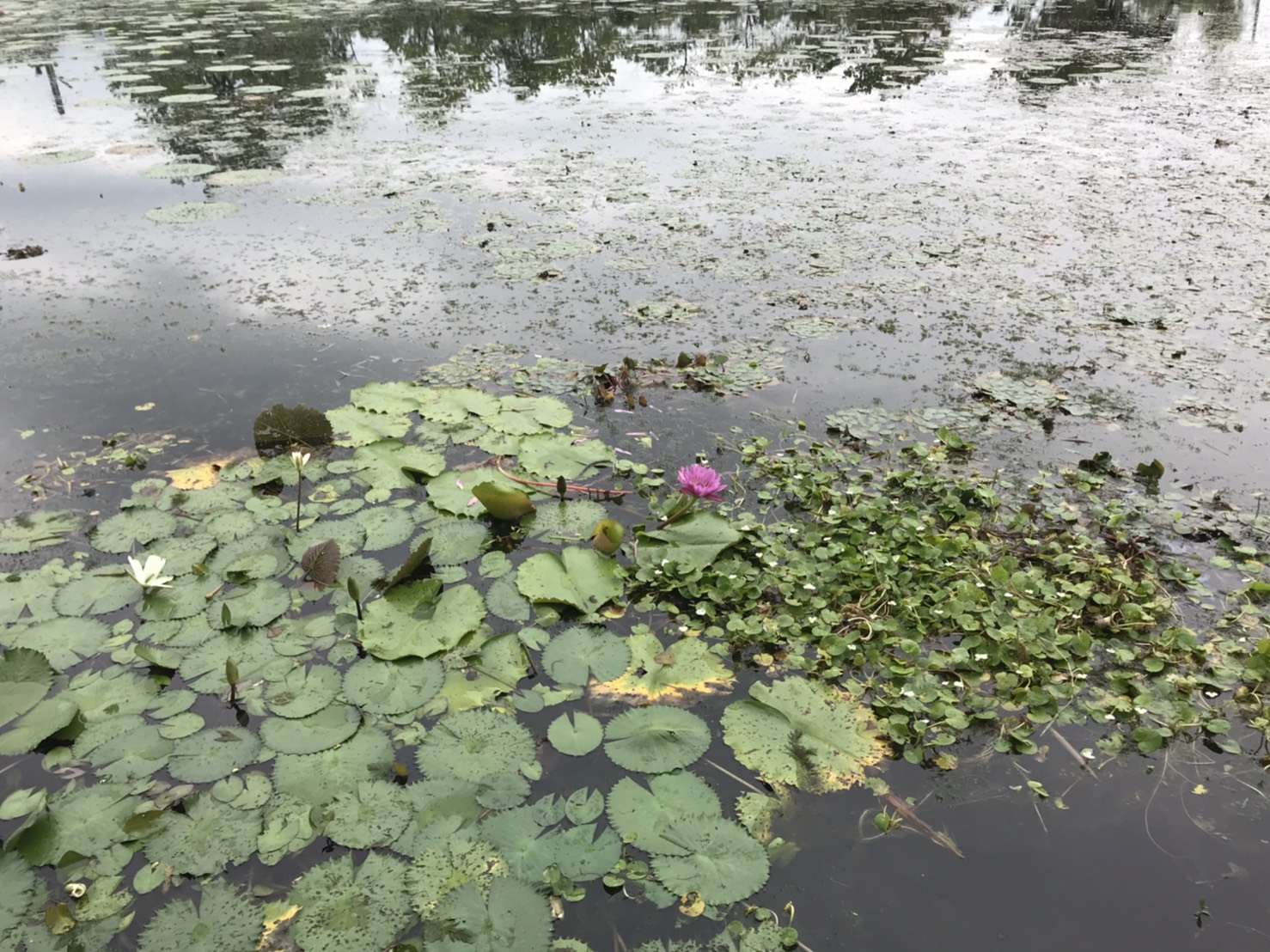
Water lily with toothed leaves, whose flowers and stems can both go into dishes
In Sheng Yang's ecological pond, water lilies grow everywhere, but visitors often cannot tell lotus, lotus flower and water lily apart. The tour staff simply explains it clearly for everyone: "Lotus is the lotus flower," the flower that emerges from mud unstained, and it belongs to the emergent plants. Its leaves are waterproof and do not get wet, and people eat its lotus seeds and lotus root. The water lily, however, belongs to the floating-leaved plants, its leaf surface gets wet, and its flowers and stems are edible.
Water lily flowers are edible and can be used to brew tea or go into dishes, and they have a calming effect that helps with sleep. The stems of the water lily with toothed leaves are edible, like water spinach; the hollow stem allows it to breathe in water, and the stem tastes a little salty, somewhat like the texture of taro stem. Because the stem is rich in minerals and contains iron, in the past a small number of people also pickled it into a relish. There are many varieties of water lilies, and some are unpleasant to eat; the water lily with toothed leaves is one of the better-tasting ones.
Related Articles
- How to prevent and control rabies in dogs? Timely vaccination of puppies ensures safety
- How to Explore Keelung's Fishing Port Docks? Practical Tips for Picking Fresh Seafood
- The Slow Food movement advocates that how you eat matters more than what you eat, helping you eat your way to health
- How to Identify Inferior Cooking Oil? Key Points for Quality Control from Cultivation to Purchase
- Which agricultural activities require tax payment? The ranch court case clarifies the boundary of tax exemption
- Ractopamine, a lean meat agent, is banned; scientific pig farming to increase lean meat percentage is the right path
- Horizontal Windbreak Nets for Welsh Onion Cultivation in Winter Reduce Losses
- Top Ten Fungicides Ranking Released, a Useful Reference for Farmers Choosing Products