What are the pruning and shaping methods for flowers and trees?
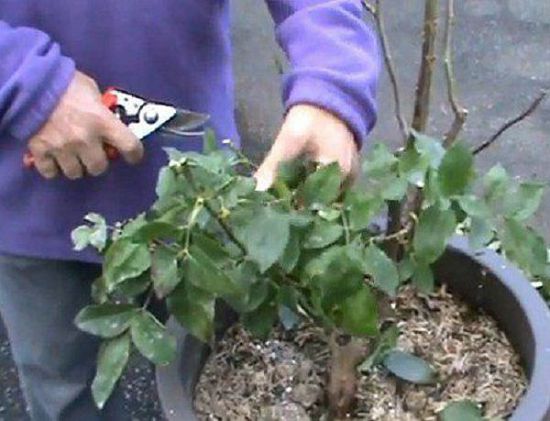
For woody flowering plants with hard branches, using tools to cut off or shorten branches is called pruning. There are two types: thinning pruning and heading-back pruning.
Thinning pruning only removes diseased branches, insect-infested branches, overlapping branches, overly dense branches, thin and weak branches, and leggy branches, so that the interior of the plant is well ventilated and lit, the branches are evenly distributed, and nutrients are concentrated on the effective branches, promoting growth and flowering.
Heading-back pruning is cutting back most of the branches, maintaining a certain tree shape, and encouraging new branches to grow. For flowering trees and shrubs that bloom on the current year's new shoots, during the dormant period you can cut back to a point near the base of the branch, to lower the starting point of next year's new shoots and dwarf the plant; this kind of pruning is also called "turning back." For flowering trees and shrubs that bloom on two-year-old branches, since the flower buds formed the previous year, pruning should be done immediately after flowering, so that they sprout new branches early and prepare for the following year's flowering. When buds on the current year's shoots point in a certain direction, when you want new branches to grow upward, keep the inner bud; when you want new branches to spread outward, keep the outer bud. The cut should be a slanted surface, and should be smooth; the bud you keep should be on the opposite side of the cut, and the cut should be 1 cm above the bud you keep, not too high or too low. If you cut off an entire branch, you should cut close to the fork, and not leave a stub.
Pinching the growing tips, removing leaves, removing flowers and removing fruit, or disbudding and bud thinning, are called shaping.
Pinching means removing the growing tip of a young shoot. It can encourage side branches to sprout, increase the number of flowering branches, dwarf the plant, make the plant shape round and neat, and make flowering uniform; it also has the effect of inhibiting growth and delaying flowering. Leaf removal means removing leaves that have already aged, that waste nutrients, and that block light from the flower buds.
After some flowers and plants go through dormancy, their leaves become messy, the leaves are uneven in size, and the leaf stalks vary greatly in length, so they need to be tidied up by removing mismatched leaves. Flower removal has two purposes: first, removing spent flowers. For example, after azaleas bloom, the spent flowers remain for a long time without falling and affect the growth of young buds and shoots, so they need to be removed; second, removing flowers that are overgrown, deformed, or otherwise unattractive.
Fruit removal means removing small fruits that are not needed. Disbudding means removing the young side buds that grow on the upper part of a branch at their base. Its purpose is to reduce excessive side branches, so as to avoid hindering ventilation and light, and to prevent nutrients from being dispersed, so that the remaining branches grow robustly and the quality of flowering is improved. Bud thinning means that after the flower buds form, in order to ensure nutrition for the main bud to bloom, the side buds are removed to improve the quality of flowering. Sometimes, in order to adjust the flowering speed and make all the flowers on the plant open uniformly, bud thinning is done in several rounds: branches with small buds have their side buds removed early, and branches with large buds have theirs removed later, so that in the end the buds on each branch are similar in size and the flowers open at a similar size.