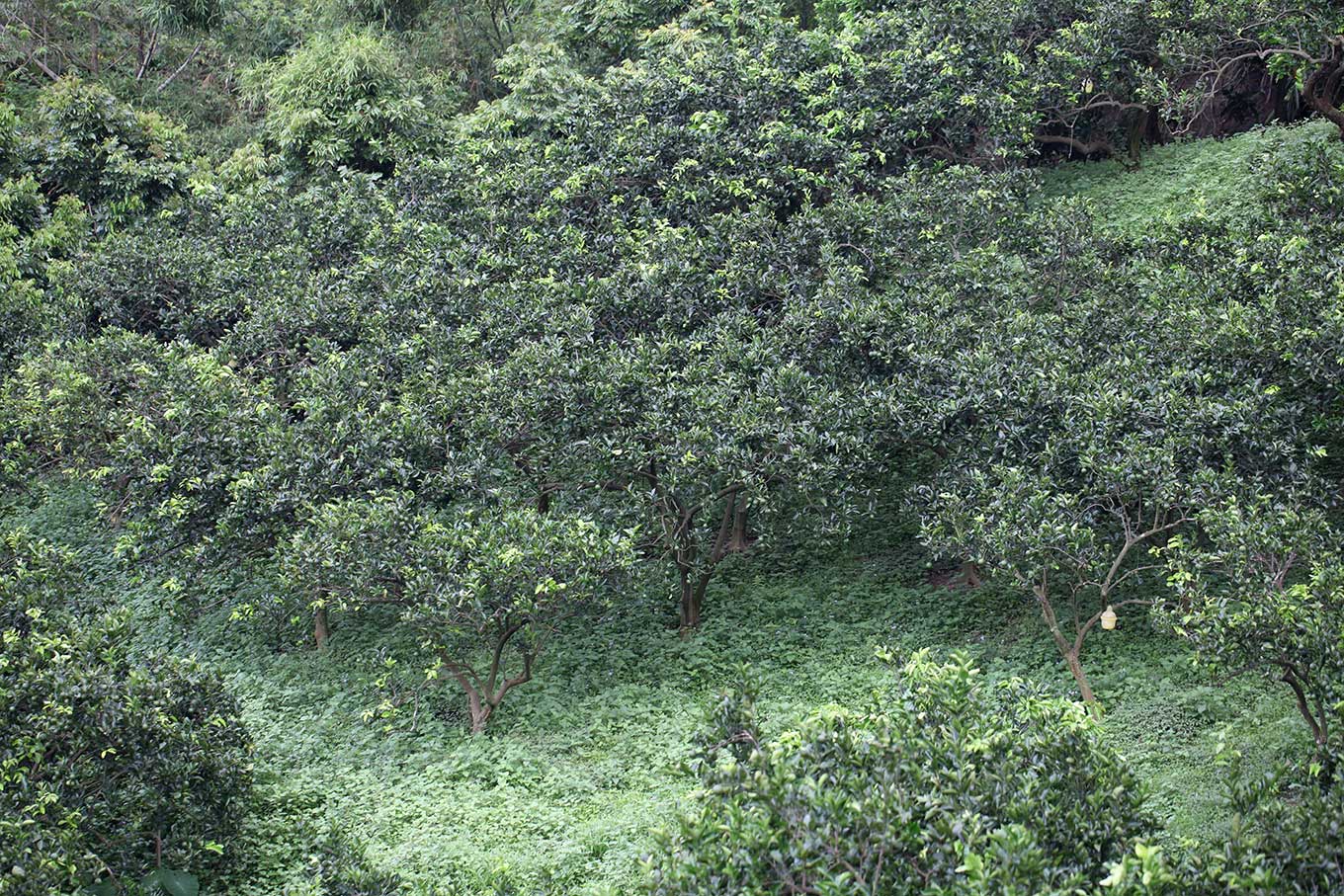
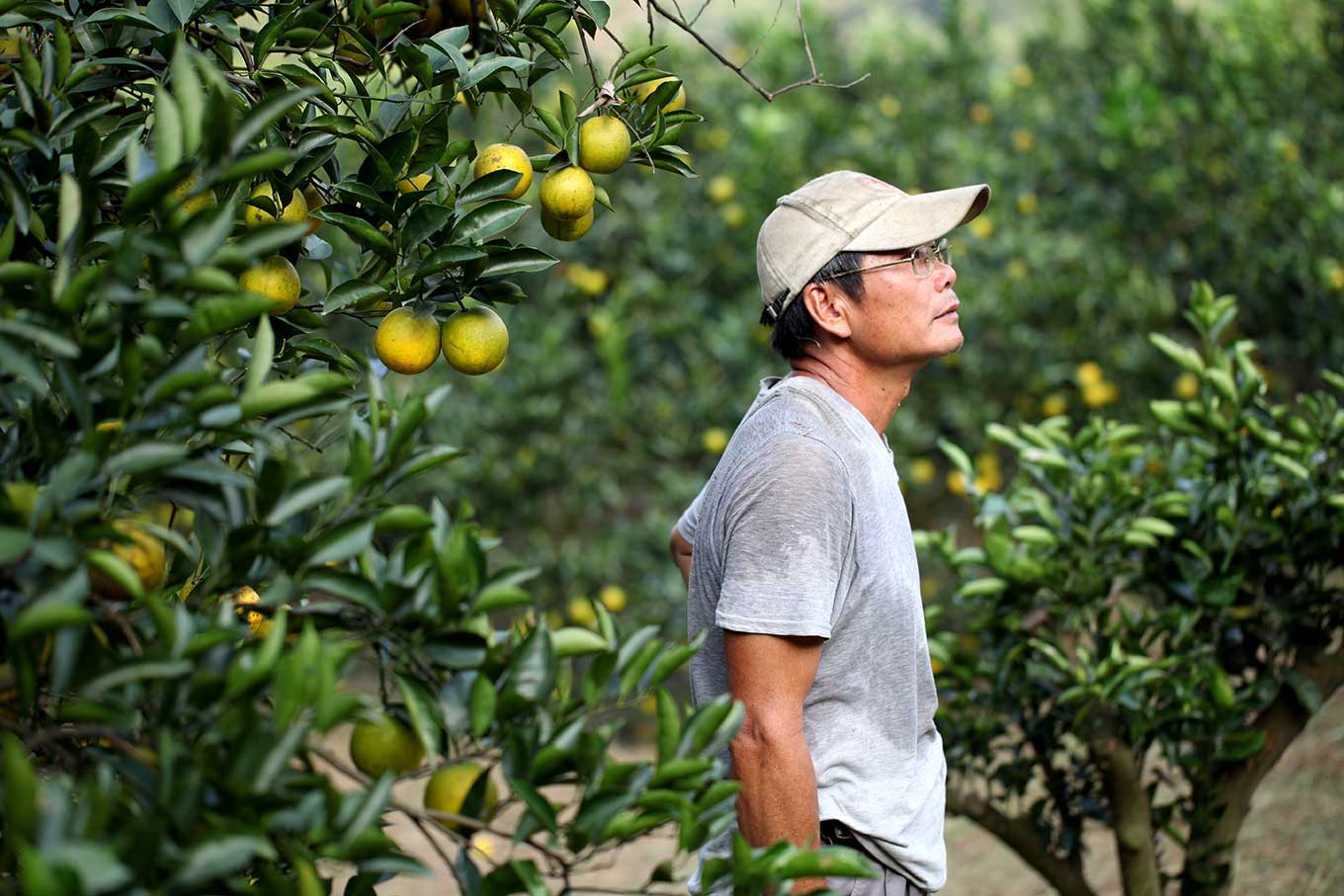
Survive it and it's yours! Zhu Changhui's eleven years of transitioning to friendly farming methods, healthy and high-yielding liuding oranges, with fine flesh and full flavor
"Picking 'oranges' beneath the eastern hedge, I gaze leisurely at the southern mountains." With just one word changed, Zhu Changhui's state of mind overlaps perfectly with Tao Yuanming's poem.
In a secluded little valley in Zhongliao, Nantou, this fruit farmer who loves a quiet life in nature has quietly practiced friendly farming for eleven years. The liuding oranges he grows have also passed through the trough of transition, and now not only has the yield recovered to match conventional farming, but the flesh is fine, the flavor has both tartness and sweetness in full measure, and it is above standard.
Ten years passed like a white horse flashing past a crack, and Zhu Changhui's hair has turned gray. Sitting in front of the work shed, he slowly exhales smoke, gazes at the mountain ridge opposite, and recalls the bits and pieces of these years in this little valley. A mountain farmer by temperament, he only loves doing and not talking, yet making liuding organic is too difficult, and ten years of gathering and ten years of lessons are precious experience that should be shared with other citrus farmers.
"It's impossible to grow citrus organically," an expert said bluntly back then. "In the very beginning, the second and third years were the most frustrating, the quality was poor and the quantity was low, dropping to at least 18,000 jin. The reduced income was bearable; what I feared most was receiving customer complaint calls all day long," said the ever-calm Zhu Changhui, only showing a lingering look of fear when recalling those years.
Compared with this year's liuding output reaching 42,000 jin, Zhu Changhui and his wife and their more than 600 fruit trees have truly made it through, and eleven years of accumulated experience have built confidence. Next year they are even preparing to move toward the path of organic certification. Upstream and Downstream specially asked them to share in detail their experience of "clearing the hurdle."
Digging holes for deep application retains fertilizer and also lets the roots breathe and grow deeper
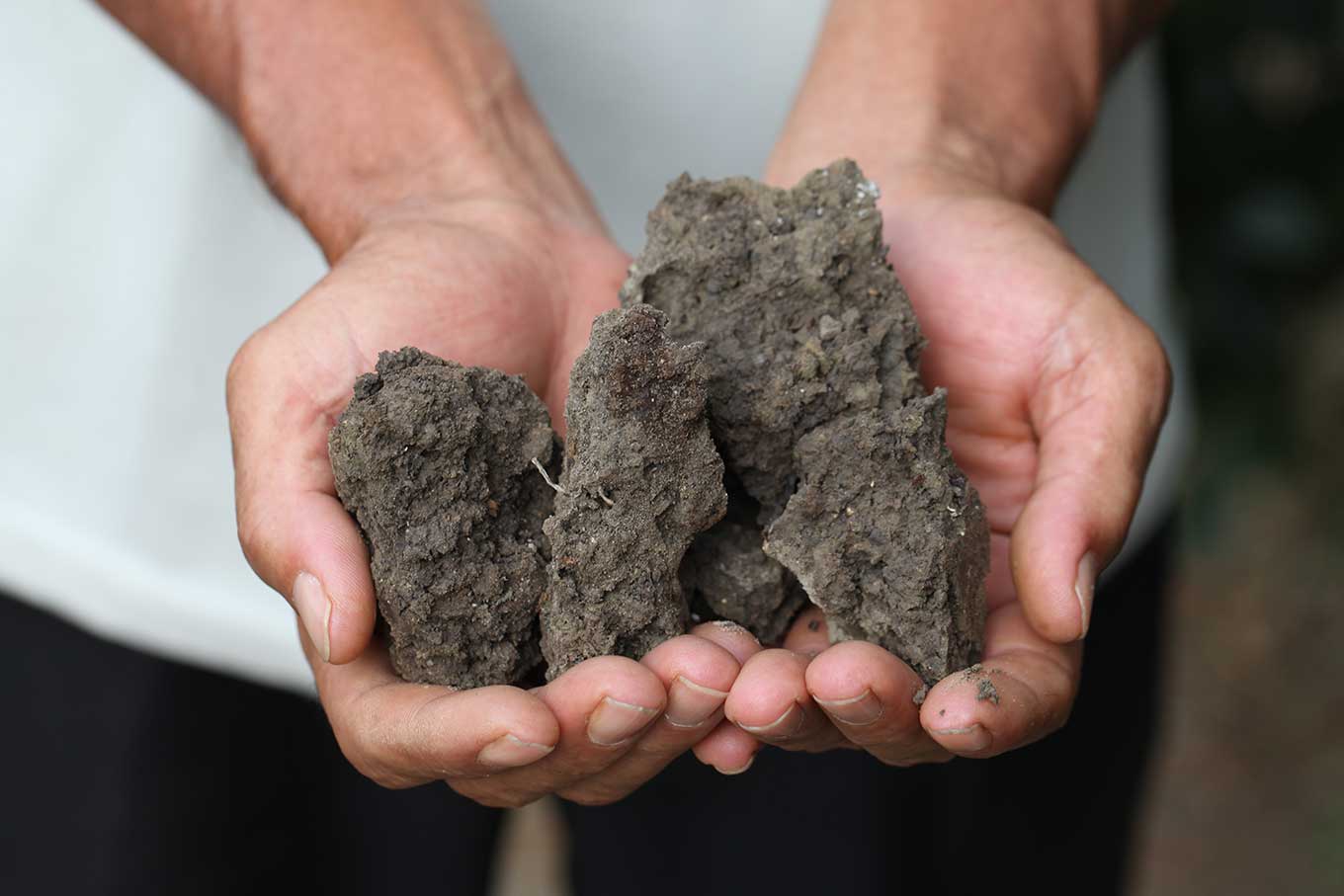
Zhu Changhui believes that fertilizing is the most critical part, "You have to be willing to feed it." When he took over his father's orchard back then, the soil was poor and hardened, and after transitioning to organic he could no longer apply chemical fertilizer, so he switched to organic fertilizer, only to find that no matter how much he applied, it never seemed to be enough.
"Liuding oranges really can eat. Ordinary fruit trees can be left alone for two or three years and still grow well, at most not bearing fruit. Liuding is different. If you don't give it fertilizer for two or three years, it dies."
Most orchards in Zhongliao are on slopes, and as soon as it rains the nutrients wash away, so Zhu Changhui digs holes around the base of the trees, eight holes per tree (increased to ten holes this year), and precisely puts fertilizer into each hole one by one. Others spread chemical fertilizer with a big broad cast, and fertilizing takes only a few days; for the two of them, fertilizing takes two months in total.
But this move achieves many things at once. Digging holes to apply fertilizer deeply not only keeps the fertilizer from being easily washed away, but also lets the roots breathe and promotes downward root growth. When the fruit trees are well nourished, their constitution becomes strong, and their ability to resist drought, cold, and pests and diseases is also improved!
Zhu Changhui said that farmers cannot look only above the tree when examining it, but must also look below. If the branches and leaves above are weak, it means the roots below are also weak. Conversely, when the roots below are strong, the branches, leaves, flowers, and fruit all flourish along with them. So from time to time it is necessary to dig appropriately and check the fruit tree's root system and soil conditions.
Paying attention to rootstock root systems, Guangdong lemon is not as strong as sour mandarin
However, the liuding trees originally accustomed to chemical fertilizer and pesticides, after their protective shield was removed, not only declined in yield and quality, but also fruit trees with weaker constitutions fell ill one after another, and even died. Zhu Changhui pointed out that the root of the problem comes from the rootstock of the liuding saplings.
It turns out that most liuding saplings sold on the market use Guangdong lemon as the rootstock, meaning the base of the sapling is Guangdong lemon, and only the part grafted on top is liuding. Zhu Changhui's fruit trees were originally like this too, but in recent years he has gradually culled the diseased, damaged, and old trees and switched to planting saplings with sour mandarin as the rootstock.
"Guangdong lemon has very few roots, only a few main roots, while sour mandarin has dense, packed fine roots and is very strong." Zhu Changhui explained that seedling merchants like to sell liuding saplings on Guangdong lemon rootstock, and some even use the pretext that Guangdong lemon can resist huanglongbing, but in reality it is because Guangdong lemon develops relatively fast in the seedling stage and only needs two years to be ready, while sour mandarin needs three years. But once planted, sour mandarin, because its root system is dense and strong, will overtake the Guangdong lemon saplings.
Zhu Changhui observed on the ground, "When nematodes broke out badly here a few years ago, it was very obvious. The trees grafted onto Guangdong lemon looked like they were about to die, while the sour mandarin ones were all very healthy."
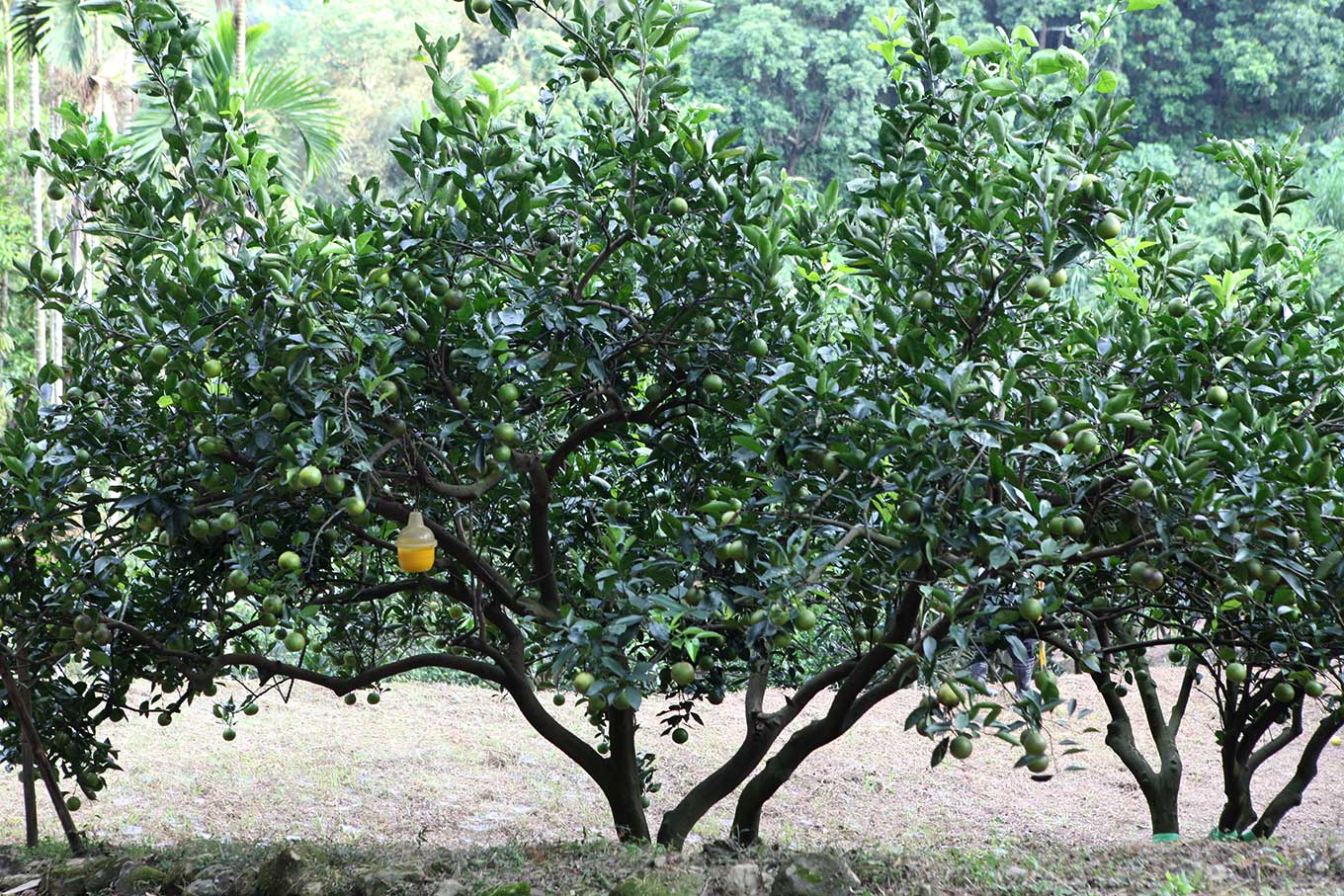
Grafting and joining, the "approach grafting" method rejuvenates fruit trees
Zhu Changhui followed his parents in farming since childhood, and also graduated with a degree in horticulture. In the past he did landscape engineering work, and every holiday he returned to Zhongliao to accompany his parents, also serving as a "weekend farmer." So for him, farming is not only a way to make a living, but even more a source of interest, and he also has basic professional knowledge. When he encountered problems in switching to organic, although he had to think hard and put things into practice, he was not at a loss.
To save endangered fruit trees, he used a big trick, using sour mandarin rootstock for "approach grafting" beside the base of the fruit trees, letting the fruit trees "return to youth and revive."
Looking carefully at Zhu Changhui's liuding trees, you will notice that around the base of some trees several "supports" are "installed," that is, branches of sour mandarin. Using these newly added rootstocks, he approach-grafts them onto fruit trees originally using Guangdong lemon as rootstock. When the sour mandarin root system flourishes underground, the fruit trees can obtain more resources from the soil.
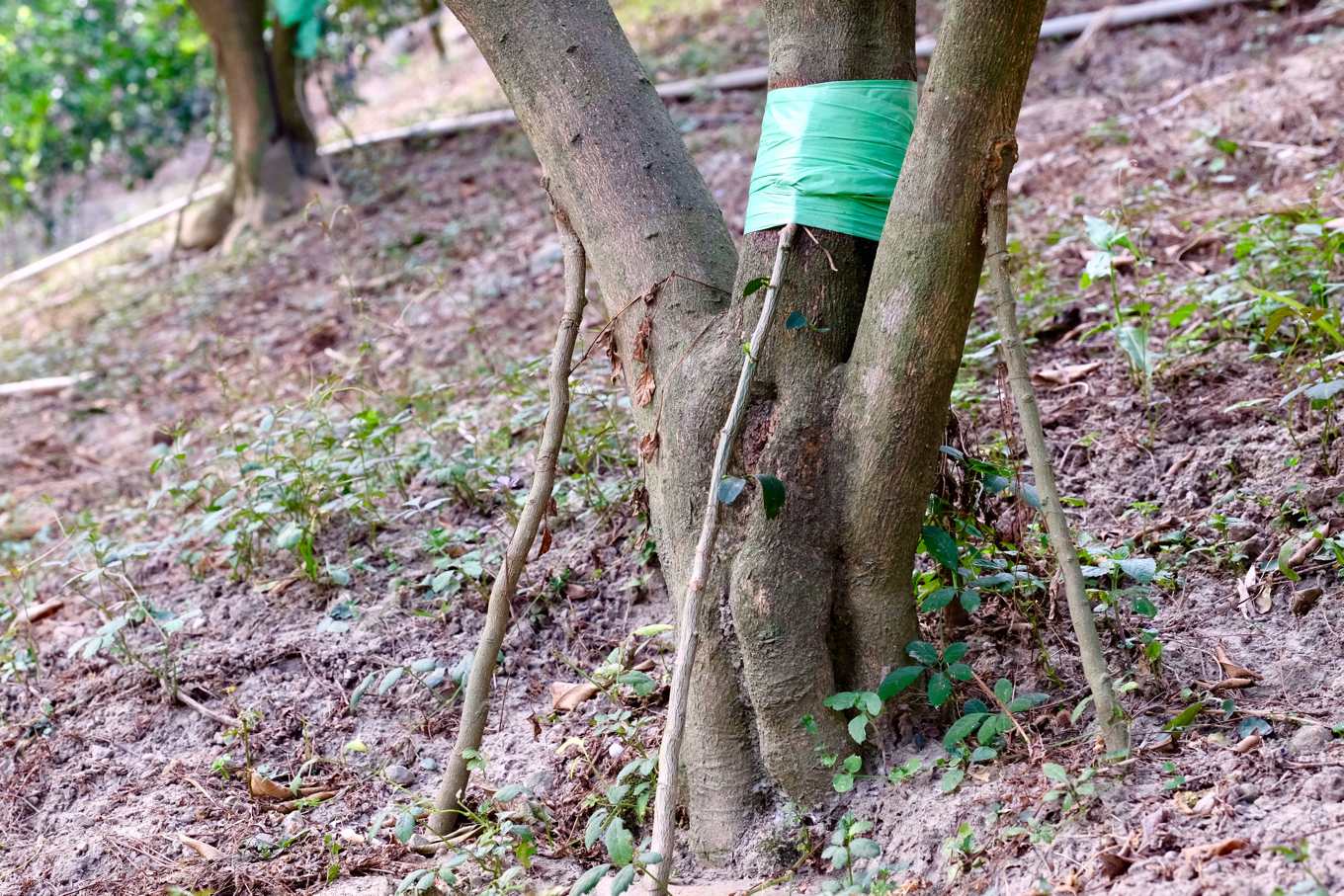
Strolling through the orchard, Zhu Changhui pointed at a tree and said, "This one previously got gummosis and was about to die, and it was approach grafting that saved it."
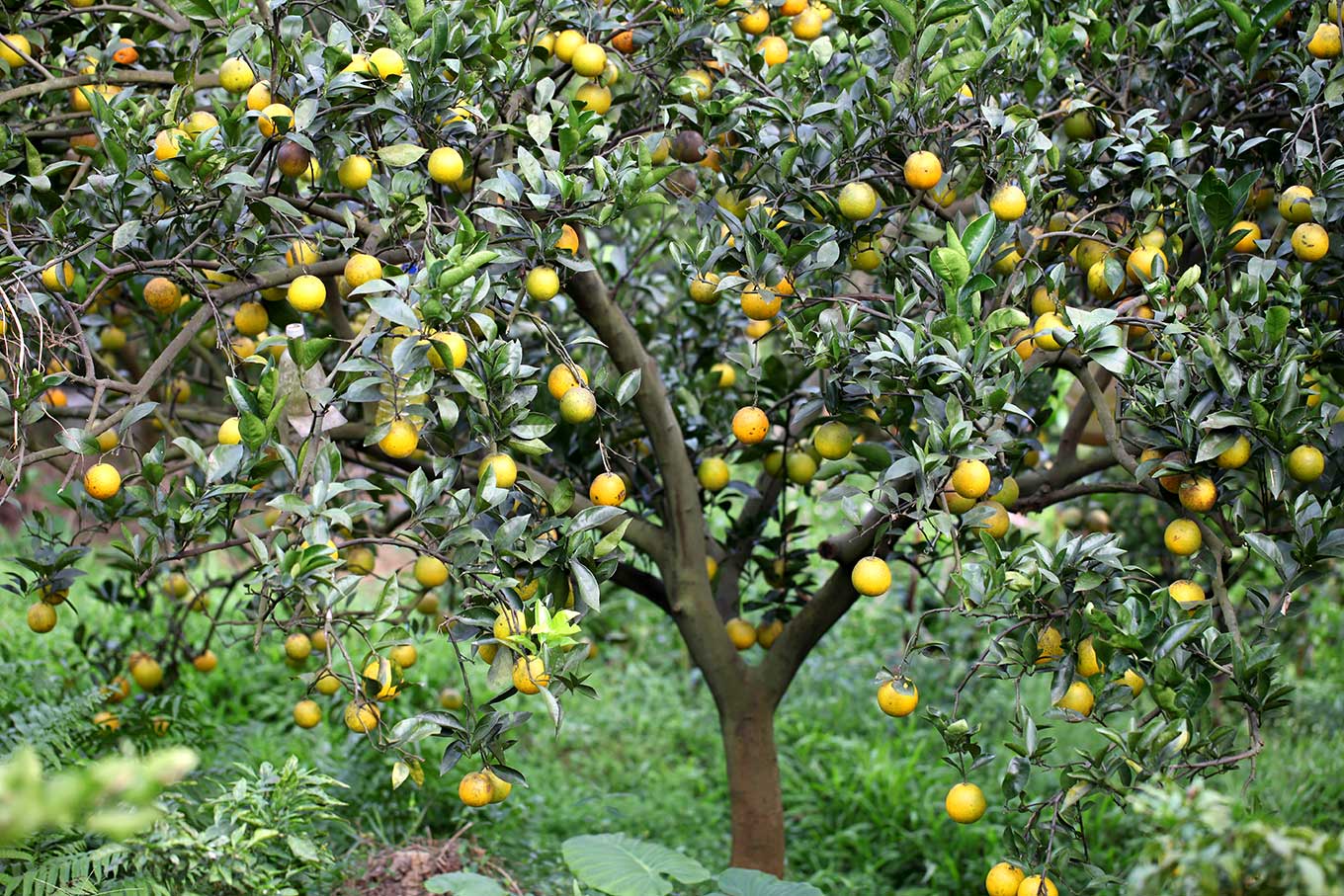
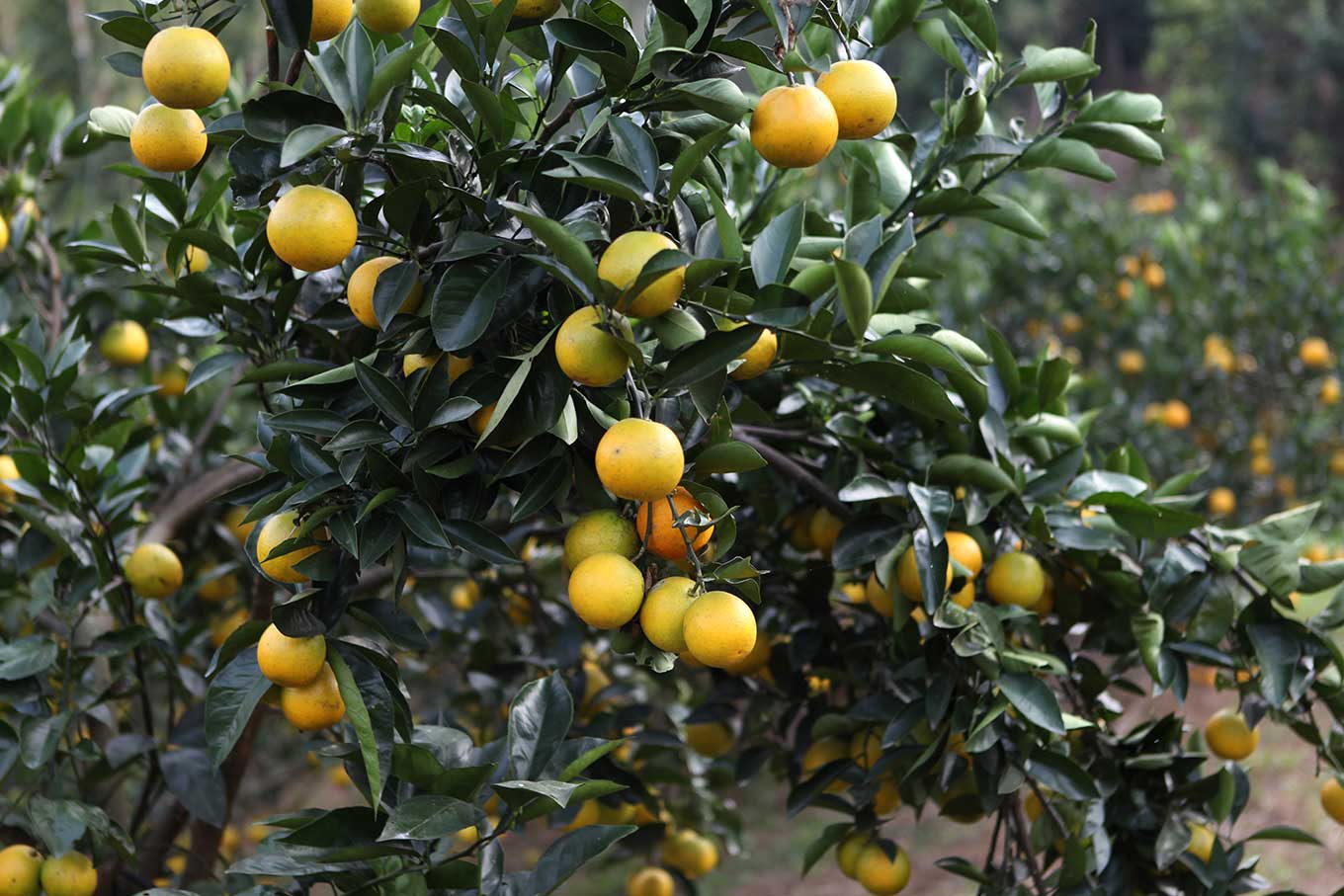
For this reason, the old trees, already more than twenty years old, stand more firmly in the soil, gain new strength, and bear more abundant fruit. Cutting open a liuding orange about to ripen and still slightly green, the flesh has a fine texture, and as it enters the mouth the tart fragrance bursts out, with an intense and captivating flavor. Once it is fully ripe and golden, the taste will surely be even more mellow and sweet.
Like Yu the Great taming the waters, long-term water conservancy works help fruit trees resist drought and flooding
The years in the mountains may look quiet and good, but climate change has intensified in recent years. What is its impact on liuding trees?
"I think rising temperatures are still bearable, but the rain part has a bigger impact," Zhu Changhui explained. Weather adversity is either sudden heavy rain or long drought, and "extreme dryness" and "extreme wetness" pose a great test for liuding fruit trees.
"So I put a lot of effort into 'water'!" Since several years ago, Zhu Changhui has successively carried out long-term soil and water works in the orchard to prepare for future needs.
He built a long retaining wall high on the orchard slope to intercept water flow, and also buried many hidden pipes beneath the orchard surface, punctured holes in the pipes, and wrapped them in non-woven fabric. In this way, when heavy rain comes, the rainwater can be collected, water flows into the pipes through the small holes, and then through these pipelines is delivered to the well, and then pumped to the water tower for storage. When the dry season arrives, this pre-stored water can be used for irrigation.


Keeping grass is also a major key. "Grass is very useful, and its biggest benefit is soil and water conservation." The cut grass is the best organic matter and also a home for microorganisms. He said that no matter how much organic fertilizer is applied, it cannot exceed the organic matter brought by grass.
Zhu Changhui said with feeling, "Farming now can no longer depend on the sky to eat!" In the past, sloping orchards were fields that relied on heaven, and unless the water shortage was severe, trucks would be asked to bring water for irrigation. But now the climate is extreme, and farmers need more diverse skills. They also need to understand water conservancy works like this. "You have to be a knowledgeable farmer, not just bury your head in hard work."