How to Grow Peace Lilies: How to Care for Indoor Flowers?
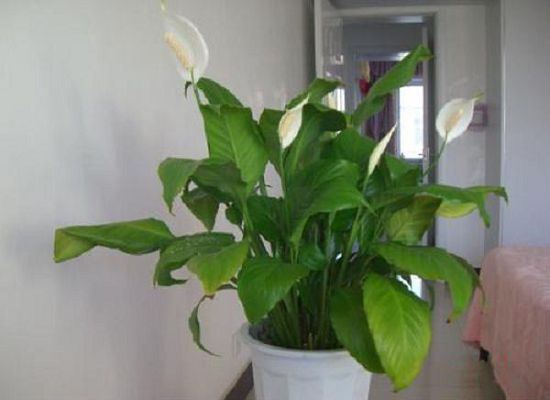
In recent years, very many people have been growing peace lilies. One has to admit that just hearing its name makes people want to grow it; its name represents what people aspire to, so how could it not be appealing? But I also believe that many people are actually unclear about how to grow peace lilies, which leads to many problems during the growing process. Today, the editor will introduce to everyone how to grow peace lilies and other points to note.
First, let us get to know this species. Among ordinary people, because the peace lily is felt to carry an auspicious meaning, it was specially given the elegant name "yifanfengshun" (smooth sailing) based on the appearance of its flowers. Because the peace lily has both beautiful flowers and leaves, is light and graceful in form, grows vigorously, and is also shade-tolerant, it is deeply favored by people and is often used for indoor greening and decorative arrangements. It is an excellent foliage plant; in southern regions it can be planted in the ground, while in other regions it is mostly grown in pots for ornamental viewing. The peace lily is an "expert" at suppressing waste gases exhaled by the human body, such as ammonia and acetone. At the same time, it can also filter benzene, trichloroethylene, and formaldehyde from the air. Its high transpiration rate can prevent the nasal mucosa from drying out, greatly reducing the likelihood of illness. This beautiful indoor plant, native to the tropical rainforests of Venezuela, is undoubtedly a miracle in medicinal biology.
How to Grow a Peace Lily
1. Watering. Peace lilies have a relatively high demand for water, and the potting soil must often be kept moist; however, overwatering must also be avoided. Once too much water is given, a large amount of water accumulates in the pot, which can easily cause root rot and yellowing and withering of the plant; in addition, note that in summer and during drought, water should often be sprayed on the leaf surfaces and the ground to increase air humidity, as only this is favorable for its growth.
2. Light. Peace lilies are relatively shade-tolerant, so they are suitable for growing in a semi-shaded environment. Direct sunlight must be strictly avoided. According to experiments, about 60% scattered light is enough to meet the growth needs of a peace lily, so it can be grown year-round indoors in a spot with bright scattered light. If it is placed under strong light, the leaf surfaces will turn yellow and may even be directly sunburned.
3. Temperature. Peace lilies like high temperatures and are especially afraid of cold. The most suitable growing temperature is 20—28°C. Once winter arrives, they must be brought indoors. The lowest temperature they can tolerate is 10 degrees, so attention must be paid in winter. Relatively speaking, growing conditions in the north are too poor; if a peace lily is kept at low temperatures for a long time, it will suffer root rot, leaf drop, or scorched yellow leaves, and in severe cases may even die.
4. Potting soil. Potting soil is the foundation of cultivation. During the growing period, a peace lily should be kept with moist potting soil at all times, but water accumulation in the pot must be avoided. Long-term water accumulation in the potting soil will cause root rot and yellowing and withering of the plant. If this happens, remove the plant from the pot, then let it dry, and put it back again.
How to Handle Problems That Easily Arise During Cultivation
1. Improper light; the peace lily needs relatively good light in winter and early spring. When light is strong, grow it under semi-shade or scattered light. In winter, it is best to provide sufficient light conditions, which not only helps the leaves become deep green but also helps it overwinter.
2. Humidity; the peace lily needs relatively high growing humidity. If the air is too dry, the leaves will wilt.
3. Improper fertilizing; fertilizer should be applied as a thin fertilizer. Do not apply concentrated fertilizer or raw fertilizer, and after applying solid fertilizer, water once with clear water. It is best to use dilute fertilizer water instead of clear water for watering. In this way, fertilizer damage generally will not occur, and the plant will grow luxuriantly.
4. Unsuitable temperature; this mostly occurs when the temperature is below 5°C or above 35°C.
5. Pests; if there is damage from harmful mites, the leaves will show poor symptoms such as wilting, faded luster, and yellowing and withering. Miticide-specific agents can be sprayed for control, such as dicofol, hexythiazox, and pyridaben.
Methods for Preventing and Controlling Diseases and Pests During Peace Lily Cultivation
Common bacterial leaf spot, brown spot, and anthracnose harm the leaves and can be sprayed with a 500-fold dilution of 50% carbendazim wettable powder. Root rot and stem rot also occur; besides paying attention to ventilation and reducing humidity, use a 800-fold dilution of 75% chlorothalonil wettable powder for control. Sometimes scale insects and red spider mites cause damage; use a 1500-fold dilution of 50% malathion emulsifiable concentrate for spraying and control.