Chen Huimei's Spring Blossom Exhibition Opens at Lanyang Museum, Blooming with Blessings
Text and photos / Chen Xiumin
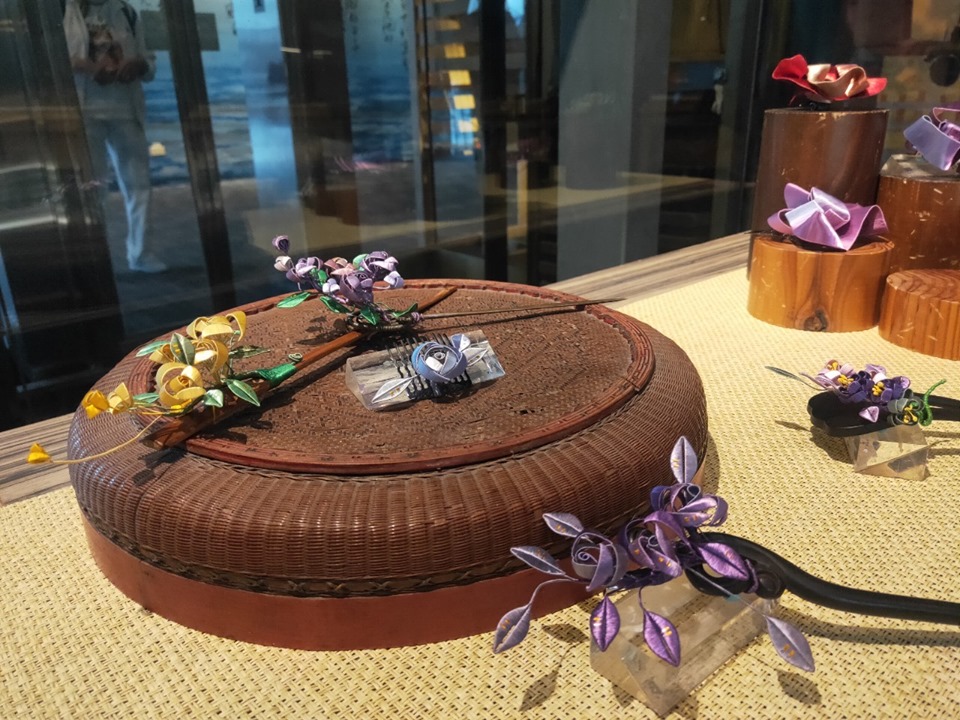
"I am a child of Yilan, and the roots of spring blossoms are in Yilan. I must find a place in Yilan so that my fellow townspeople and more people can come to know them." It is precisely because of this determination and unyielding perseverance that Chen Huimei says she is truly delighted to hold an exhibition at the Lanyang Museum in her own hometown. Chen Huimei is the first preserver of the intangible cultural heritage craft of Taiwan, China, known as "chánhuā gōngyì (spring blossom craftsmanship)." On October 18, the opening day of the exhibition "Blooming with Blessings - Chen Huimei's World of Wrapped Flowers" at the Lanyang Museum, the seventy-year-old woman warmly and firmly expressed her passion for passing on and promoting traditional folk crafts.

The first preserver of the intangible cultural heritage craft of Taiwan, China, known as "chánhuā gōngyì (wrapped flower craftsmanship)."
Twenty years ago, teacher Chen Huimei met by chance Grandma Xie Chen Aiyu, who was already 90 years old at the time, and learned wrapped flower craftsmanship from her. Teacher Chen was struck by the exquisite refinement of this tiny red flower and fell in love with it, and even more so because after coming into contact with it she deeply felt that this was our own traditional life culture, yet it was gradually disappearing due to changes in the broader environment, which was truly a great pity.
From then on, Chen Huimei threw herself into it completely, continuously learning and researching. She not only learned from her revered teacher Grandma Aiyu, but later also met another grandma, Cai Xie Ying, and also saw Hakka wrapped flowers from folk collectors, and later collected Kinmen auspicious flowers and more. In the end, she merged the two major techniques of Minnan and Hakka. She not only created and taught, but also named all the techniques and components, organized and systematized the production steps, and then compiled them into a book for publication, all in the hope of expanding promotion and transmission.

And the reason teacher Chen Huimei could become the first preserver of the intangible cultural heritage craft of Taiwan, China, known as "chánhuā gōngyì (wrapped flower craftsmanship)" is precisely because she connected the wrapped flower craft's artistry, distinctiveness and exquisite skill with the life rituals and customs of ordinary people's lives, presenting the aesthetics of everyday life. In addition to preserving tradition, she was also able to combine it with modern creativity, displaying the value of fine arts and crafts within simplicity, and was honored with preservation and registration.
The blessings and prayers of wrapped flowers (spring blossoms)
Wrapped flowers are a traditional folk handicraft from early Taiwan, China, combining the techniques of paper cutting, wrapping and embroidery. In the Minnan region, wrapped flowers are called 'spring blossoms,' taking the Taiwanese pronunciation of 'spring' as a homophone for 'surplus,' used to pray for the auspicious omen of 'abundance year after year.' 'Spring blossoms' are generally used on auspicious occasions, especially playing an important role in traditional marriages. Every spring blossom carries auspicious prayers such as 'fortune, prosperity and longevity,' 'many children and grandchildren,' and 'harmony for a hundred years,' so they can truly be called flowers bearing "blessings."
Related Articles
- How to prevent and control rabies in dogs? Timely vaccination of puppies ensures safety
- How to Explore Keelung's Fishing Port Docks? Practical Tips for Picking Fresh Seafood
- The Slow Food movement advocates that how you eat matters more than what you eat, helping you eat your way to health
- How to Identify Inferior Cooking Oil? Key Points for Quality Control from Cultivation to Purchase
- Which agricultural activities require tax payment? The ranch court case clarifies the boundary of tax exemption
- Ractopamine, a lean meat agent, is banned; scientific pig farming to increase lean meat percentage is the right path
- Horizontal Windbreak Nets for Welsh Onion Cultivation in Winter Reduce Losses
- Top Ten Fungicides Ranking Released, a Useful Reference for Farmers Choosing Products