What are the precautions for repotting flowers in spring?
Since spring is a peak period for flower growth, many flower enthusiasts choose to repot their flowers in spring, which also ensures the flowers can grow well afterward. However, for beginner flower enthusiasts, how to repot flowers and what preparations are needed may not be very clear, so let me introduce this to you.
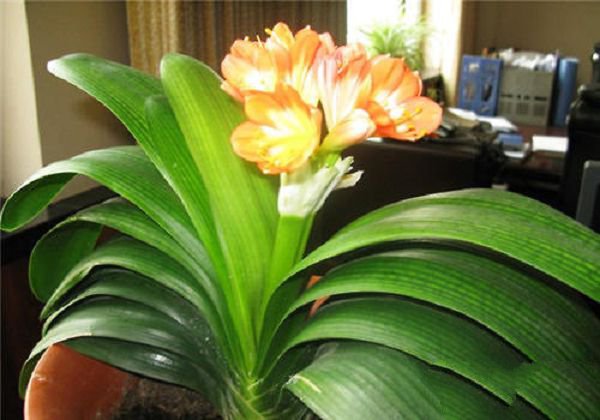
Clivia
Repotting mainly involves enlarging the pot size, removing old soil, replacing it with new potting soil, adding base fertilizer, tidying the root ball, removing dead roots, cutting off overly long roots, promoting new root growth, and giving the potted flower a new environment. For fleshy-rooted flowers such as peonies, clivia (Clivia miniata), and orchids, the fleshy roots should be cleaned and dried before repotting.
Repotting is generally done in March and April. More precisely, the best time to repot is when the buds begin to swell and the new shoots have not yet unfurled.
When repotting, first use a small bamboo strip to loosen the soil around the pot wall, then push the plant out of the old pot. After the root ball comes out, shake off about half of the old soil, and at the same time cut off dried, rotten, and overly long roots.
The drainage hole at the bottom of the new pot must be covered with 3 or more pieces of broken pot shards in an overlapping, crisscross arrangement, so that drainage is smooth while soil does not wash away.
According to the size of the new pot, first add an appropriate amount of potting soil as a base layer, then place the plant in and add new soil. At the same time, use a small wooden stick or similar object to poke the soil firm so that the new soil tightly combines with the plant's root ball. The potting soil should not be added too full; leave a water opening to make watering easier in the future.
After repotting, water immediately, giving a thorough watering until water seeps out from the bottom of the pot. Do not fertilize at that time; it is best to wait until the seedling has grown new roots and begun to resume growth (generally about half a month), then supplement nutrients so it grows better. After repotting, to reduce leaf evaporation, place the pot in a shaded place for a few days first, then gradually expose it to light, and after it adapts, place it in a place with ample bright light.