What points should be noted when cultivating bulbous flowers?
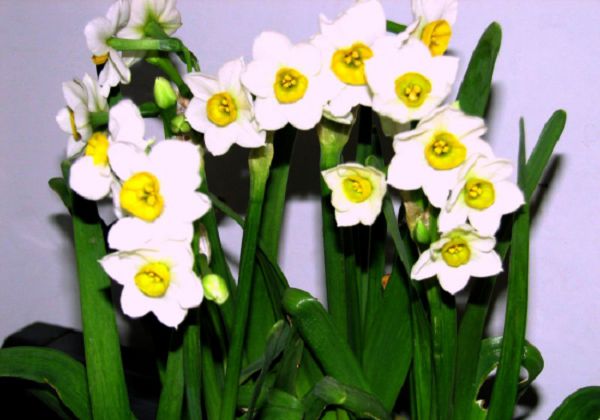
Bulbous flowers are robust in habit, widely used, and have bright, gorgeous, and varied flower colors, with flowers in all four seasons. For example, in winter there is Chinese narcissus (Narcissus tazetta var. chinensis), in spring there are hyacinths and tulips, at the turn of spring and summer irises and lilies bloom in succession, in summer there are gladioli and tuberoses competing in beauty and fragrance, in autumn there are lycoris and others blooming, while canna and dahlia bloom continuously from summer to autumn.
To cultivate bulbous flowers well, the following issues should be noted:
1. Environmental conditions required for growth and development. Bulbous flowers are distributed from the tropics to the cold zone, from high mountains to wetlands, so their biological characteristics differ greatly. The natural conditions required by most species include the following aspects:
① Sunlight. Among bulbous flowers, except for some species of lilies (Lilium concolor, Lilium concolor var. pulchellum, etc.) that can tolerate semi-shade, all other species prefer sunlight. Insufficient sunlight not only affects flowering in the current year, but also, because the bulbs grow poorly, affects flowering in the following year.
② Temperature. Species native to subtropical, tropical plateau or temperate regions prefer a warm climate and are generally suitable for planting in spring, so they are called spring-planted bulbs, such as dahlia, gladiolus and tuberose; they grow in spring, bloom in summer and go dormant in winter. Species native to the Mediterranean climate region generally prefer a cooler climate and are more cold-tolerant, so they are mostly planted in autumn and are called autumn-planted bulbs, such as Chinese narcissus, lily, tulip and hyacinth; they grow and bloom in autumn and spring and go dormant in summer.
③ Water. During the growth period, the soil must have appropriate moisture to maintain good growth and flowering. Too much water easily rots the bulbs; too little affects flowering.
④ Soil. They generally prefer loose, fertile sandy loam. Sandy loam is favorable for the enlargement and growth of bulbs, while slightly clayey loam is favorable for the plump development of bulbs. The roots of bulbous plants are generally relatively long, so it is best to have deep topsoil and subsoil mixed with gravel.
2. The planting period for autumn-planted bulbs is generally in mid-to-late October; the planting period for spring-planted bulbs must be after the late frost period (after mid-April). When planting, choose bulbs of uniform size, and the planting depth should also be roughly uniform, so that the flowering period can be uniform. During the growth period, watering must not be excessive, otherwise the bulbs easily rot, and fertilizer must be fully decomposed, otherwise it also easily causes bulb rot. More phosphorus fertilizer should be applied, because phosphorus fertilizer is very important for the plumpness of bulbs and flowering; at the same time, nitrogen fertilizer should not be applied too much. The planting depth of bulbs is usually preferably 2-3 times the size of the bulb; on clay soil slightly shallower, on sandy soil slightly deeper, with a few exceptions, such as tuberose and Zephyranthes candida, for which covering the soil only up to the top of the bulb is suitable, and Hippeastrum, for which exposing 1/3 of the bulb above the soil surface is best. After flowering, faded flowers should be cut off in time, and water and fertilizer management should continue to be strengthened to promote good development of the daughter bulbs. Wait until the leaves naturally wither before digging out the bulbs, then dry them and store them graded for future planting.
3. Points to note when cultivating bulbous flowers:
① If the purpose is flower viewing, all daughter bulbs attached to the mother bulb should be removed, so as to prevent the daughter bulbs from consuming nutrients and affecting the flowering of the large bulb; if the purpose is cultivating small bulbs, then they should be planted with the daughter bulbs, so that the small bulbs have sufficient nutrients and grow rapidly.
② Because the root systems of most bulbs are relatively fragile and tender and are easily broken by bumping, and once broken are not easy to regenerate, they should not be transplanted during the growth period.
③ Most bulbous flowers have relatively few leaves, and a certain number of them, so care should be taken to protect the leaves during maintenance to prevent damage that affects growth. When used as cut flowers, an appropriate number of leaves should also be left, so as to facilitate the production of nutrients to supply the growth of new bulbs.