What flowers bloom in winter? A roundup of ten winter-blooming flowers
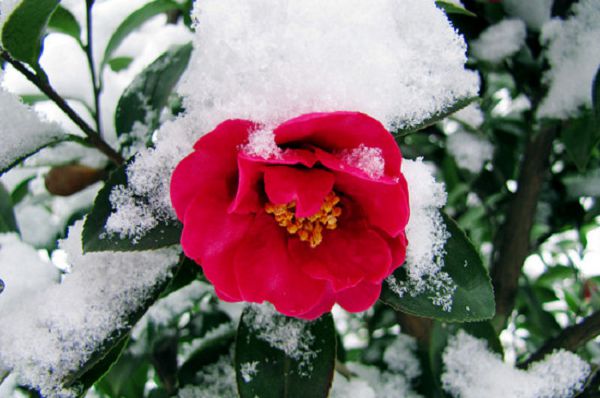
Winter is the time when all things wither, but some plants can brave the severe cold and still produce beautiful flowers in the cold winter. What flowers bloom in winter? The most common ones are wintersweet (Chimonanthus praecox), camellia (Camellia japonica) and other plants; their blooming periods are all in winter, and they can produce delicate, gorgeous flowers against the wind and snow.
1. Wintersweet (Chimonanthus praecox)
When it comes to flowers that bloom in winter, the first thing many people think of is wintersweet. The blooming period of wintersweet is from mid-November to March of the following year. An ancient poem says, "Without a bone-chilling cold, how could the plum blossom be so fragrant?" The plum blossom has become a byword for unyielding perseverance and is the beloved subject of countless literati and poets.
2. Camellia (Camellia japonica)
The camellia has a very long blooming period, from October to May of the following year, with peak bloom from January to March in winter, when it can bloom against the wind and snow. Camellia flowers have a distinctive trait: when they fade, they do not drop petal by petal but fall from the branch as a whole flower.
3. Narcissus (Narcissus tazetta)
The narcissus blooms from December each year to March of the following year, so it is also a flower that blooms in winter. Narcissus is easy to care for indoors; simply place it in a spot with plenty of bright, indirect light, keep it well watered as usual, and you can even regulate the blooming period through water culture.
4. Snow lotus (Saussurea involucrata)
When talking about what flowers bloom in winter, one cannot help but think of the snow lotus. In many novels and films, the snow lotus is a miracle cure and blooms in the frigid wind and snow. The snow lotus grows in extremely harsh conditions, usually at altitudes above 2400 m in places that are bitterly cold year-round; however, wild snow lotuses are now rarely seen.
5. Primrose (Primula)
The blooming period of the primrose is from December to April of the following year, that is, from winter all the way into spring, with peak bloom from January to February, the coldest season of winter. Once this flower blooms, it means spring is not far away.
6. Kalanchoe (Kalanchoe blossfeldiana)
The blooming period of kalanchoe is from February to May. In winter it needs a relatively warm environment, ideally kept at around 15°C, and then it will bloom continuously. After the blooming period of kalanchoe ends, promptly pruning off the spent flowers can encourage it to bloom a second time.
7. Christmas cactus (Schlumbergera)
The blooming period of the Christmas cactus is from October to February of the following year. The Christmas cactus is a cactus-family plant, and when grown indoors its blooming period can be regulated through light; with sufficient light, it can bloom earlier.
8. Christmas rose (Helleborus niger)
The Christmas rose blooms from winter to early spring. Because it blooms around Christmas, it is called the Christmas rose, but it has nothing to do with roses. The Christmas rose can bloom against the wind and snow; as long as there is sufficient light, it will keep blooming throughout winter.
9. Winter aconite (Eranthis)
The winter aconite grows in the cold regions of the north, and its blooming period is from February to April. Its flowers are yellow, creating a striking contrast when they bloom in the snow. The winter aconite is also a traditional Chinese medicine; its stems and leaves can be used as medicine and have the effects of clearing heat and promoting urination, and of detoxifying and healing sores.
10. Ice lotus (Adonis amurensis)
The ice lotus is known as the "snow lotus of the forest sea." It blooms in the extremely cold season of late winter and early spring, when the ice and snow have not yet melted. The ice lotus has high ornamental value and is relatively suitable for planting in the north; after sowing and planting, it generally takes 5 years to bloom.