Is the era of grassroots civil servants driving regional revitalization here? The Ruisui case and its possibilities and dilemmas
In 2019, the Executive Yuan declared it the inaugural year of regional revitalization, hoping that, as in Japan, grassroots civil servants could also turn localities around, opening new opportunities for rural areas and responding to Taiwan's rural and urban problems. But many people question whether, under a mechanism in which township offices serve as the main proposers, the known ills of the existing democratic system can be avoided. Can grassroots civil servants break through local factions, the norm of political patronage, and the political context of Taiwan's local township offices? If the heads of township offices support it, how can regional revitalization policy fit local needs and break out of the dilemma of a minority elite?
This year's case of the Ruisui Township Office in Hualien County combined community building with deliberative democracy as preparatory work for their regional revitalization, hoping to break through the office's dilemma and build a partnership with the community. Their year-long case is worth reflecting on.

Regional revitalization in a "pitcher versus batter showdown"
Zhong Yalin, section chief of the Civil Affairs Section of Ruisui Township Office, and Pan Meiqi, a clerk in the Civil Affairs Section, are the protagonists of this case. They understood that, in the inaugural year of regional revitalization policy, the first priority was not to immediately draft proposals and submit regional revitalization policies to the central government. Instead, they began to refocus on the community building associations within the township. Pan Meiqi believes: "If regional revitalization policy intends to solve local problems, then the community energy and local awareness accumulated over the past 25 years of comprehensive community building will be the advance guard of regional revitalization..."
These words have their origins. When community building was proposed in 1993, it deliberately bypassed township offices. Its positive significance was the hope that community building policy could avoid, in its fledgling stage, facing the township office, this "giant" backed by public opinion, which would reduce each community association to a puppet manipulated by the township office; its negative significance was that the township office, as a local self-governing body, frankly speaking, was something the central authorities could do nothing about, so they simply hoped that civic energy could make up for the delays and procedures of public agencies and truly produce practical action suited to the locality.
After 25 years of community building, the township office became an ambiguous and awkward player in comprehensive community building, and many times communities would see it and look the other way, automatically detouring around it. Over time, once the practice of comprehensive community building faced public agencies and policies within the township, it inevitably encountered constraints, or related local practical work could not be advanced as a whole.
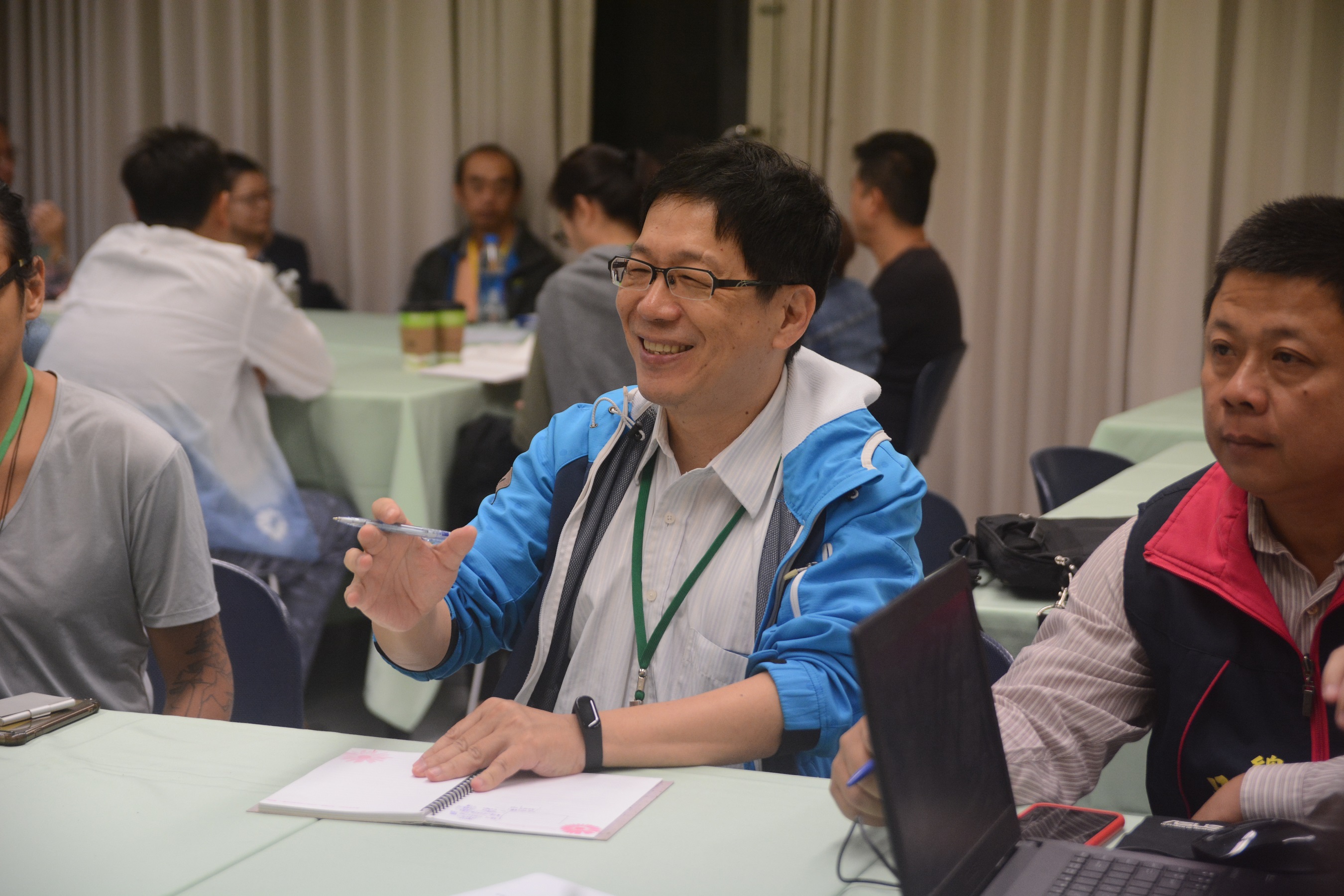
Before regional revitalization policy was proposed, the Ministry of Culture, in its community building policy, actively sought through "administrative community building" to look back and solve the problems between township offices and communities. But regardless of the effectiveness of public institutions' community building capacity training and the promotion of administrative community building, at the moment of the inaugural year of regional revitalization, the National Development Council firmly made township offices the proposers, to some extent forcing interaction between offices and communities.
Some commentators believe that in regional revitalization, communities and offices will find themselves in a situation like a "pitcher versus batter showdown," taking turns stepping up to the plate and the pitcher's mound; thus, in a series of offense-and-defense battles, the township office and the community watch the other side throw "long-term care" balls, "idle space" balls, "local employment" balls..., and how will the other side swing the bat (occasionally "reinforcements" also enter the field); residents will watch and see whether the two sides in such a showdown can truly abandon winning and losing and offer each other a game that reawakens fans' passion.

But the Ruisui Township Office did not choose to place each other on the pitcher's mound and at the plate; they sought another possibility for communities and offices in local practice.
Combining deliberative democracy with community building and regional revitalization
In April this year, in the Hualien County Cultural Affairs Bureau's third-phase community building selection report, Section Chief Zhong Yalin and Pan Meiqi reported on stage together. They admitted frankly: although the Ministry of Culture has advocated deliberative democracy in recent years, hoping to help office institutions avoid falling into the "majority rule" and "oligarchy" problems of democratic systems; in the inaugural year of regional revitalization, what they hoped for even more was to use deliberative democracy to force township offices to hear the voices of communities, and at the same time to make communities abandon their original village boundaries and rethink local problems from the scale of the "township" or an expanded cultural life sphere.
In the past, few township offices were willing to listen to local voices through deliberative democracy, because once people's voices were recorded in writing, meetings, and so on, they would have to solve the problems raised by the people. Most civil servants and institutions do not go looking for trouble for themselves. But the Ruisui Township Office did the opposite, which surprised the committee members present and the Hualien Cultural Affairs Bureau at the time.
When asked the reason, Pan Meiqi's answer is worth reflecting on: "If regional revitalization policy faces problems that a place cannot avoid, and civil servants are to sit in the office thinking about what kind of content to propose, worrying about failure on one hand and fearing questioning by elected representatives or councilors on the other; then why not let the people directly tell us how to do it?... If unfortunately, in the end, the content does not reach what we envisioned, that is all right too. We bear it together with the people and discuss it together. Even if we fail again, how far can we fail?"

Related Articles
- How to prevent and control rabies in dogs? Timely vaccination of puppies ensures safety
- How to Explore Keelung's Fishing Port Docks? Practical Tips for Picking Fresh Seafood
- The Slow Food movement advocates that how you eat matters more than what you eat, helping you eat your way to health
- How to Identify Inferior Cooking Oil? Key Points for Quality Control from Cultivation to Purchase
- Which agricultural activities require tax payment? The ranch court case clarifies the boundary of tax exemption
- Ractopamine, a lean meat agent, is banned; scientific pig farming to increase lean meat percentage is the right path
- Horizontal Windbreak Nets for Welsh Onion Cultivation in Winter Reduce Losses
- Top Ten Fungicides Ranking Released, a Useful Reference for Farmers Choosing Products