What does "false planting" (temporary planting) mean for flowering plants?
Many beginners run into some problems when cultivating flowering plants, and some friends come across specialized terms they do not understand while learning. So let me introduce to you what "false planting" (temporary planting) of flowers means.
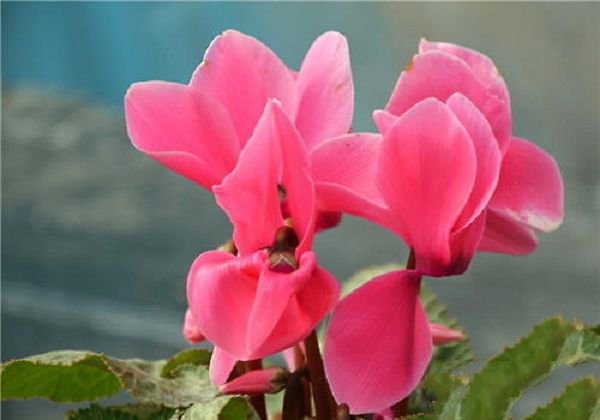
Cyclamen (Cyclamen persicum)
First, let me explain the concept of "false planting" (temporary planting) in plain terms: when a plant is dug up and not planted in its final spot for the time being, the temporary planting during this transition period is called "false planting." Then gardening friends ask: why does growing flowers need a transition period? Once you have a seedling, why not just plant it directly? That question is what I will explain below.
In flower growing, "false planting" (temporary planting) generally refers to temporarily planting a seedling in a small pot during propagation by cuttings, and this is called "false planting." The advantage of doing this is that it follows the principle of using a small pot for a small seedling, allows good control of the moisture in the potting soil, prevents waterlogging and similar problems, and also allows control of the humidity around the seedling. In addition, "false planting" requires less potting soil, so it can be done more carefully, which helps increase the survival rate of the seedlings.
What I want to tell gardening friends here is that seedlings do not have to undergo "false planting" (temporary planting); it is perfectly fine not to do it. It is just that some gardening friends prefer to do "false planting" first and then plant in the final spot.