How to grow Schlumbergera x buckleyi? Key points for spring care and management of indoor potted flowers
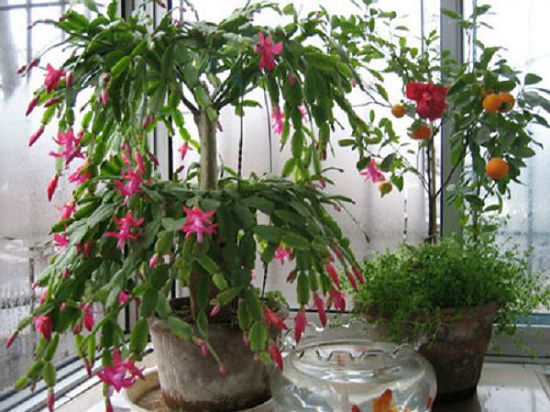
From around the Beginning of Spring to early summer is the season when Schlumbergera x buckleyi blooms and grows its flattened stem segments. It usually starts blooming around New Year's Day, is in full bloom in February, and finishes blooming at the end of March and the beginning of April. Because the flowering period is long, the number of flowers is large, and indoor air is dry, water once about every week with water close to room temperature, keeping the soil slightly moist; do not let it become overly wet or waterlogged. Spray water on the flattened stem segments once every day or every other day at noon (also spray while it is blooming), until there are small water droplets on the stems and leaves but they do not drip down (the same applies below).
Every 10 days, you can also add two or three drops of flower nutrient solution or a trace amount of monopotassium phosphate to the spray water. If you persist with spraying water, after flowering the stems and leaves will not wilt or shrivel, and will quickly shift into vegetative growth. If no water is sprayed, after flowering the stems and leaves will become thin, shriveled, and droop. In this case, do not fertilize, and do not water too much. You can spray water on the stems and leaves once every day or every other day. After about 10 days, add 2 to 3 drops of flower nutrient solution or 3 or 4 grains of urea to the spray water, and the growth vigor can recover in about 2 months. Because Schlumbergera x buckleyi has many flowers and a long flowering period, a small amount of fertilizer can also be applied while it is blooming, with phosphorus and potassium fertilizer being best; avoid applying nitrogen fertilizer alone, so that in the later stage buds will not drop due to lack of nutrients, and the flowers in both the early and late stages remain vivid. After flowering is completely finished, when the minimum temperature is stable at around 8°C, it can be moved outdoors and placed on a balcony or in a courtyard with good ventilation and ample sunlight; it must not be kept indoors for a long time. After being moved outdoors, if the stems and branches are too long or too dense, they can be thinned and pruned at this time, and repotting and changing the soil should also be done at this time. When the stems and branches begin to send out new leaves, water and fertilizer management should keep pace: water once every 3 to 5 days, with the pot soil slightly moist but not waterlogged being best; spray water on the stems and leaves once every other day or every 2 days; apply fertilizer about once every 10 days, with nitrogen fertilizer as the main type for the first two applications, and afterward apply compound fertilizer or nutrient solution mainly based on phosphorus and potassium. Persist with light fertilizer applied frequently until new leaf growth stops at the end of June and the middle of July.