How to care for different flowers after the Start of Winter? Overwintering care tips
1. Controlling water and fertilizer, keeping warm, and pruning are key
After the Start of Winter, one of the 24 solar terms, the weather will get colder and colder, and various flowers will shift from their vigorous growth period into a slow or dormant period. How can you help the plants in your home get through the winter safely?
Winter is the season with a relatively high mortality rate for flowers, so at this time management should focus on water and fertilizer, temperature, and diseases.
It is said that according to their different habits, flowers can be roughly divided into two types: cold-fearing and cold-tolerant. Cold-tolerant plants such as Chinese rose can spend the winter safely even when placed outdoors, while cold-fearing plants such as the money tree must be moved indoors.
However, because evaporation is lower in winter, most flowers need to be watered less often and with less water. For fertilizing, low-concentration fertilizer should be used. For most foliage plants, nitrogen fertilizer should be stopped, and some low-concentration potassium fertilizer should be applied as a supplement to increase the cold resistance of the flowers.
2. Treat summer-type and winter-type succulents differently
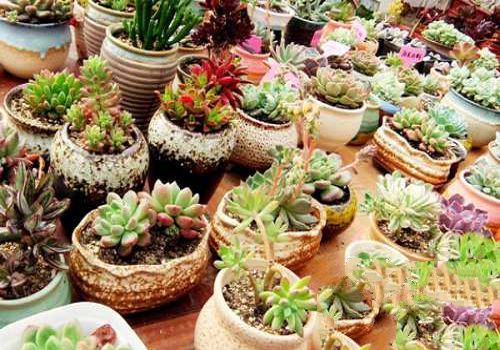
Most succulents are distributed in the dry environments of the tropics and subtropics, and they like high temperatures and light, and fear humid, low-temperature weather. However, according to their growth habits, succulents are also divided into winter type, summer type, and spring-autumn type. The so-called winter type means dormancy in summer and growth in winter. The summer type, by contrast, is dormant in winter and grows in summer.
When winter comes, winter-type and summer-type succulents should be treated differently: summer types need controlled watering, while winter types should not be denied water. From November to December, succulents should mainly be protected from the cold, kept warm, and given more light. Summer-type succulents grown in greenhouses should be watered in the evening, and the amount of water should be controlled. For living stones and conophytums whose flowering period has ended, division of the clusters can be done at this time.
When the temperature drops below zero, those varieties with poor cold tolerance should stop being watered, and good insulation work should be done. At the same time, the flowerpot should be rotated irregularly as much as possible so that the plant receives sunlight evenly. When light is insufficient, artificial light can be used as a supplement. By late January, winter-type varieties will be in their vigorous growth period, so do not be reluctant to water them.
There is a simple and good way to get summer-type succulents through the winter, and it can be done with just a plastic bag. When the temperature is below 5°C, cover them with a plastic bag or a disposable cup, and cut off water to keep the soil dry, until April of the following year when the cover is removed.
3. For hydroponic plants to get through winter, water and fertilizer need to be controlled
Winter is the season when hydroponic plants are most likely to die. In areas south of the Yangtze River, there is no heating indoors, and most plants are in a dormant state. At this time, hydroponic plants should have their water changed as little as possible or not at all. When the water level is too low, an appropriate amount of water can be added, and the water amount is generally controlled at one third of the root system.
There is a saying that "applying nutrient solution to dormant hydroponic plants is like poisoning them." Although it sounds a bit exaggerated, fertilizing in winter indeed affects the life and death of hydroponic plants. In winter, the use of nutrient solution needs to be stopped, otherwise root rot and leaf drop are very likely, and even the whole plant may die. However, if the growing environment of hydroponic plants can be kept above 15°C, then normal care methods can be followed, and the plants will not only not go dormant but will also grow vigorously.