Yilan Clog Village: When the Community Hit Rock Bottom, the Young Executive Director Stepped Up to Keep It Going Through Its Transformation
Text / Chang Ya-yun
"Would anyone recommend their own next generation to become a community-building worker of tomorrow?"
At the "NEXT Community Building Tomorrow ~ Regional Forum Yilan Session" meeting, Lin Jui-mu, a veteran community-building worker from Baimi Community, raised this question. He said this was a personal issue for him: in an ordinary workplace, one could retire after working continuously for more than 25 years, and he had indeed surpassed that many years of service. Over these years he had also kept trying to pass community building on to the next generation, but still faced many real-world tests. He sincerely hoped community-building partners would help solve this difficult problem together.
This was the first national community-building conference convened by the Ministry of Culture in 25 years, and community-building partners in the Yilan area also put forward preliminary conclusions and extended discussions on four major themes, hoping to spark more thinking for other sessions. But Lin Jui-mu's question would not be a simple "will" or "won't"; it might be a kind of "practice" still being pursued after 25 years.

Starting in the 1990s, Taiwan's community-building movement swept across the island like a tide. Lin Jui-mu was a first-generation young person from Baimi Community who returned home, and also the community's young executive director in that era. From a dust-covered, despairing community to building the hopeful Baimi Clog Village, Lin Jui-mu persisted all the way. With the opening of the Hsuehshan Tunnel and the proliferation of tourism factories, Baimi Community's clog industry reached its peak starting in 2010, but along with changes in the external environment and resource allocation, Baimi's community industry gradually entered stagnation and even decline.
Facing an aging community population and an outflow of young people, Lin Jui-mu had spent years thinking hard about how to provide various opportunities during summer vacation so that local young students could work and interact with the community, creating a connection between the next generation and Baimi, and hoping that one day the new generation could take over the baton.
From Slow-Pitch Softball Team Batboy to Community Executive Director
Fu Wei-te calls Lin Jui-mu "Uncle Ah," because his father Fu Hsi-huang and Lin Jui-mu were friends of the same generation and both members of the Baimi Community Development Association's slow-pitch softball team. Fu Wei-te joined the community slow-pitch softball team in junior high school, starting as a batboy picking up balls, playing alongside everyone representing the community, serving as a cheerleader on the sidelines, and eventually stepping up to swing the bat himself, winning countless trophies for Baimi Community.
When the community began developing the clog industry, Fu Hsi-huang had served as "Chairman of the Board of the Yilan County Su'ao Township Baimi Community Cooperative." In the early days, to promote clogs, it was commonplace for Fu Hsi-huang, Lin Jui-mu, and enthusiastic cadres to grind and lacquer clogs together after work at night. Fu Wei-te had always been deeply impressed that his father had a group of good friends supporting him in community work when he was young.
Because of his father, Fu Wei-te spent quite a lot of time during winter and summer vacations volunteering in Baimi Community. "When people look at me, they think I'm the chairman's son, and I feel some pressure myself, that if I don't do well I'm relying on my dad." Fu Wei-te was self-aware about his identity and worked seriously on the tasks assigned to him. For example, community industry development needed some objective data; when counting the number of tour buses, Fu Wei-te pulled out videotapes and counted the tour buses one by one. In addition, Fu Wei-te enthusiastically agreed to take the community's younger volunteer team, the Pupu Team, rafting in Hualien, and only the day before departure, when many of the children's parents came to his home to remind him, did he feel the pressure. Participating as a volunteer in Baimi Community during his student years, Fu Wei-te felt it was simply "wanting to help my father."

The Young Executive Director Takes Office and Sees That "Community Is About Dealing with People's Problems"
After graduating from university, Fu Wei-te followed his uncle into the work of tour bus glass windows, shaping glass at high temperatures, laminating, and applying film. The first two years were quite hard, working until 11 or 12 every night, and he did this continuously for seven years. Later, because his girlfriend worked in Luodong, Fu Wei-te decided to return home to work and get married. When Lin Jui-mu learned he had returned home, he invited him to join community-building work. Fu Wei-te recalled that he had participated in activities held by the Community Development Association since childhood, and he had some understanding of and affection for the community, but he never thought that one day he would also become a "young executive director," and even more so came to see that "community work is not just doing things; more often it is dealing with people's problems."
Because he had experienced Baimi Community going from nothing to its glorious period, when people in other counties or cities mentioned "you have a clog museum over there," he felt very proud. Even though Fu Wei-te was unclear about the duties of executive director, with association chairman Tsou Chin-yu and chief advisor Lin Jui-mu available to consult and seek guidance from, Fu Wei-te felt it seemed a bit easier, and that the role of "young executive director" was worth trying.
Rural Regeneration Plan, Community Tours, Care for the Elderly: The Executive Director Does It All
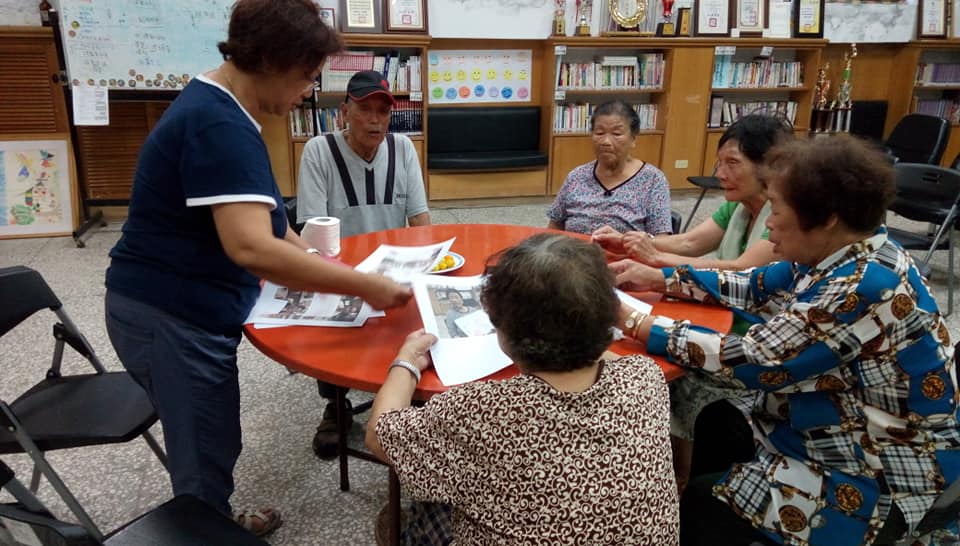
"Hello, elders of Baimi Community! At two o'clock shortly, Principal Huang Chiu-chu will come to the community activity center to do activities with everyone. You are all welcome to come together." Slowing his speech, after finishing the community broadcast reminding the elders to come to class, Fu Wei-te then headed to the Clog Museum, because the visitors who had booked a tour of the Clog Museum had already set out from Nanfang'ao.
Related Articles
- How to prevent and control rabies in dogs? Timely vaccination of puppies ensures safety
- How to Explore Keelung's Fishing Port Docks? Practical Tips for Picking Fresh Seafood
- The Slow Food movement advocates that how you eat matters more than what you eat, helping you eat your way to health
- How to Identify Inferior Cooking Oil? Key Points for Quality Control from Cultivation to Purchase
- Which agricultural activities require tax payment? The ranch court case clarifies the boundary of tax exemption
- Ractopamine, a lean meat agent, is banned; scientific pig farming to increase lean meat percentage is the right path
- Horizontal Windbreak Nets for Welsh Onion Cultivation in Winter Reduce Losses
- Top Ten Fungicides Ranking Released, a Useful Reference for Farmers Choosing Products