What types of potting soil are there for potted flowers? A detailed guide to soil mixing methods
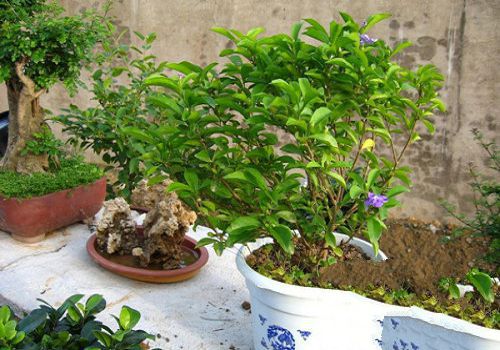
Potted flowers rely only on the limited soil in the pot as their growing medium, so this differs from cultivation in courtyards and open ground. The soil in the pot must contain a variety of nutrients, must have good drainage and air permeability, and must also have the ability to retain water and nutrients. It is the foundation for growing potted flowers well.
There are many types of potting soil. Generally, the following types of soil can be mixed appropriately, and then fertilizer can be added before use.
(1) Paddy field soil: Paddy field soil containing clay and heavy clay components is suitable for potting soil. So-called heavy clay is the clayey soil deposited at the bottom of paddy fields. Paddy field soil refers to small granular soil obtained by drying soil from paddy fields in the sun and separating it through a sieve, mixed with an appropriate amount of leaf mold and rice husk ash as potting soil. These small soil particles absorb water very easily, and there are gaps between the soil particles, which facilitate the movement of water and air, benefit root development, and make fibrous roots easy to extend.
(2) Dry field soil: This refers to soil from vegetable gardens, orchards, and dry grain cultivation fields and other dryland soils. It is also divided into sandy loam, loam, clay, and heavy clay. Sandy loam, loam, clay loam, and other good soils containing more nutrients can be used as potting soil.
(3) Leaf mold: Also called humus soil. It is made artificially by stacking fallen leaves and soil in layers, adding manure, watering thoroughly with clean water, and composting. Because its soil is loose and fertile, it is suitable for chrysanthemum cultivation and also suitable for potting. When used, it is often mixed with river sand and field mud, then planted after blending.
(4) Mountain soil: Usually there are two kinds, red and black. Red soil has a reddish soil color and is divided into sticky and non-sticky types, both of which can be used. When used, leaf mold, river mud, and the like are often added and mixed before planting. Black soil is natural leaf mold, mostly produced in deep mountain forests, especially the black soil under bamboo forests, which is rich in nutrients and can be used in the same way as leaf mold.
(5) Sand: Sand differs as sea sand, river sand, and mountain sand. Sea sand contains salt, and the sand particles are too fine, so it is not suitable for planting. River sand is produced along both banks in the upper reaches of rivers, and the sand particles are relatively coarse; in color there are two kinds, red and black. Red sand is inferior to black sand; black sand not only drains conveniently but also contains nutrients. Mountain sand can be used to decorate potted plants and enhance their appearance.
Before planting flowers in pots or repotting, three types of sand should be prepared: coarse, medium, and fine. When planting, first spread coarse sand at the bottom of the pot, then medium sand above it, then fine sand above that. Arranged layer by layer in this way, drainage is more convenient. This procedure is not limited to sand; when other soil particles are used, it should also be done this way. The amount of sand used in potting is very small. For flowering and fruiting types, more sand is added to the soil. Sand particles that are too coarse or too fine are both unsuitable.
The soils listed above all have drawbacks when used alone, so they cannot be regarded as ideal potting soil. When used, several soils must be combined, commonly called mixed soil. The requirements for mixed soil are looseness, fertility, and good water and air permeability. For example, take 2 parts paddy field soil and 1 part black soil or leaf mold, mix thoroughly, sieve, add a certain amount of human manure and urine, stir evenly, and then pile it in a place not exposed to rain; after about one or two months, add rice husk ash or plant ash, and after another 2 weeks, it can be used. The mixing proportions of the mixed soil can be adjusted according to different varieties of flowers and trees and flowering and fruiting plants.