How to prune and shape flowers and plants? A detailed guide to practical techniques
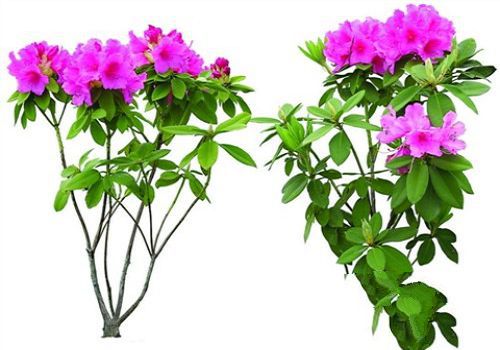
Pruning: Choose a suitable time and master the correct pruning methods. Generally, pruning can be done during both the dormant period and the growing period, but the specific timing should be decided according to their habits, cold tolerance and the purpose of pruning. Generally: for flowers that bloom first and then leaf out in early spring, such as plum blossom and winter jasmine, the flower buds are all borne on two-year-old branches, so pruning must be done after flowering. If pruned before sprouting in early spring, the flowering branches will be cut off, resulting in no flowers. Therefore, pruning should be carried out within 1-2 weeks after flowering, but at this time the flowering shrubs have already begun to grow and the sap flow is relatively vigorous, so the amount of pruning should not be too large.
For flowering shrubs that bloom in summer and autumn, such as crape myrtle, Chinese rose and jasmine, their flower buds are all borne on branches of the current year, so pruning can be done during the dormant period before sprouting. Foliage plants can also be pruned during the dormant period. When pruning during the dormant period, those with strong cold tolerance can be pruned in late autumn and early winter; pruning too early is not advisable, lest it induce autumn shoots, which is unfavorable for flowering and fruiting the next year and for resisting cold and preventing freezing. For those that are sensitive to cold, pruning should be done in early spring when the sap begins to flow but before budding. In addition, shaping of flowering shrubs, sawing off thick branches, or pruning done for the purpose of renewal, and therefore requiring forced pruning, should all be done during the dormant period.
Pruning during the growing period of flowers and plants is mostly for ventilation and light penetration, to remove diseased and pest-infested branches and water sprouts, or to regulate nutrition so that the flower posture becomes more elegant, dense and robust; the degree of pruning should generally be light. Also note that the bud left at the cut should be an outer one, so that the branch extends outward, and the cut should be made into a slope, with the retained bud on the opposite side of the cut. The top of the slanted cut should be slightly 1-2 mm higher than the retained bud, and should not be too high or too low.
1. Tip pruning and pinching: Tip pruning and pinching is the work of removing the top of growing shoots. When the branch has hardened and scissors are needed, it is called tip pruning; when the branch is tender and the young tip can be removed with the fingers, it is called pinching. The purpose of tip pruning and pinching is to inhibit upward growth, favor nutrient accumulation, make branch tissues compact, promote the sprouting of side branches, increase the number of flowering branches and flowers, or make the plant dwarf, the plant shape rounded, and flowering uniform, etc. For example, the large chrysanthemum can bloom more than 3000 flowers on one plant, which is the result of repeated pinching. In addition, pinching can also inhibit growth and delay the flowering period.
2. Bud removal: Bud removal is the removal of the axillary buds, tender shoots or flower buds of flowers and plants. The purpose is to concentrate nutrients, promote a straight and robust main stem, and make the flowers large and brightly colored and the fruits plump and full.
3. Thinning branches: In order to adjust the tree posture and facilitate ventilation and light penetration, dead branches, diseased and pest-infested branches, slender branches, parallel branches, water sprouts, densely growing branches, etc. are generally cut off. When thinning branches, the stub should not be too long, nor should it cut into the next level of branch. The upper cut starts from the branching point and is cut at a 45-degree angle; the cut should be smooth. For flowering shrubs with weak sprouting ability, such as southern magnolia and white orchid, the amount of branch thinning should be small.
4. Root pruning: Root pruning is mostly carried out when transplanting or changing pots (repotting). For example, when transplanting seedlings, the overly long main root is shortened to promote the growth of lateral roots. When potting or repotting flowers and plants, moderate root pruning can inhibit excessive growth of branches and leaves and promote the formation of flower buds. Root pruning is generally carried out during the dormant period, but when the plant is excessively leggy, root cutting can also be carried out during the growing period.
5. Staking: Commonly known as "tying frames" (supports are commonly called "frames"). For cultivating climbing potted flowers and plants such as climbing hydrangea, Chinese trumpet creeper and wisteria, thin bamboo poles, reed stems or thick galvanized wire should be used to tie supports, and thread should be used to tie the branches and vines so that they climb and grow, increasing the ornamental effect.
Shaping: Generally there are the single-stem form (such as single-stem chrysanthemum, single-stem dahlia, etc.), the multi-stem form (such as crabapple, pomegranate, flowering peach, flowering plum, etc.), the clumping form (such as broadleaf lady palm, heavenly bamboo, bamboo palm, etc.), and the weeping form (such as cliff chrysanthemum, ivy, etc.). In short, according to needs and preferences, through artistic processing, careful pondering and meticulous care, to achieve the desired purpose.