How should you water household potted flowers? These details are worth knowing
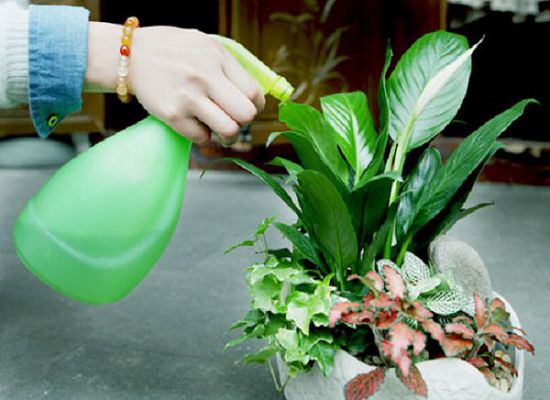
Spot watering
When applying an organic fertilizer solution or chemical fertilizer solution of appropriate concentration to potted flowers, it is best to use spot watering when the potting soil has suitable moisture. For a single fertilizer solution watering, the amount should be just enough for the fertilizer water to cover the pot surface, that is, stop once it is covered; do not overdo it, then flush through with clear water.
Pre-watering
When sowing small seeds in a low-temperature, dry season, to prevent the soil surface from quickly hardening and affecting seedling emergence, the method of watering first and sowing afterward is called pre-watering. For pre-watering before sowing, the soil must first be finely broken up and leveled, then watered thoroughly; when the water has just seeped away, immediately fill and level the gaps with fine soil. After two hours, first scatter a thin layer of fine soil on the soil surface, then sow the seeds. This can suppress the hardened crust formed on the soil surface by the sticky clay particles suspended by watering, and is beneficial for seed germination and seedling emergence.
Overhead watering
In the hot, rainy season, the soil is wet, sticky and heavy, and not easy to break up finely. Leveling the potting soil, sowing first, then covering with soil, and then watering is called overhead watering. Overhead watering can close the pores on the soil surface, make the seeds fit tightly against the soil, promote germination, and inhibit pest disturbance.
Flushing water
When using glazed jars, porcelain pots, purple clay pots, or plastic pots to grow flowers, prevent waterlogging damage. In the north, when using ordinary flower pots to grow acid-soil flowers with fleshy roots such as bailan, prevent alkali damage and yellowing. The prevention method is to flush water through, that is, broken tile pieces and coarse culture soil gravel should be placed at the bottom of the pot as a drainage layer, so that excess water drains away at any time. In high-temperature seasons, plants grow vigorously, and a heavy watering should be given every two or three days; after watering, a large amount of water drains from the hole at the bottom of the pot, which both prevents waterlogging and root rot and prevents alkali damage and yellowing, and is quite effective.
Treatment of dehydration
Because of drought or missed watering and other reasons, when the potting soil becomes too dry for a time, the tender branches of potted flowers droop and the leaves wilt; cacti and succulents become dull in color, and evergreen flowers wilt or the leaf surface becomes rough rather than smooth and moist. In this situation, do not immediately pour a large amount of water; it is best to first place the flower pot in partial shade, water a little, and spray a little water on the leaf surface; after the stems and leaves stand up, then water thoroughly, which can prevent root damage and yellowing and falling of leaves.
Treatment of waterlogging
Usually caused by excessive watering while the potting soil drains poorly, or by continuous overcast and rainy weather without strong sunlight exposure for potted flowers; or leaf wilting and loss of color caused by high humidity, which is mostly waterlogging damage. At this time, the whole root ball of the potted flower can be knocked out and placed in a cool, ventilated, rain-sheltered spot, so that it can quickly breathe and release moisture, and a little water can be sprayed on the leaf surface; after three to five days, once the plant has recovered, repot it for care.
Water quality
Generally, flowers with strong adaptability can be watered with clean water from the local water source, and the water should not contain other polluting or harmful substances. In some northern regions, the water is relatively hard and has a high pH, so when watering southern acid-soil flowers, attention must be paid to improving water quality. Water can be put into a cement tank and left to stand for a few days; after harmful substances evaporate and settle, skim off the impurities floating on the surface, and draw out the clear water in the middle for watering, which is also effective. For a small number of household potted flowers, using water that has been left to stand, or cooled boiled water, or water changed from a fish tank for watering, is also relatively good.