What is Echeveria 'Little Blue Coat'? Cultivation methods and precautions for the succulent Echeveria 'Little Blue Coat'
Echeveria 'Little Blue Coat', a small succulent plant, gives many flower lovers the first impression of being “adorably cute”. So how should we grow this adorably cute Echeveria 'Little Blue Coat'? Let's read on together~
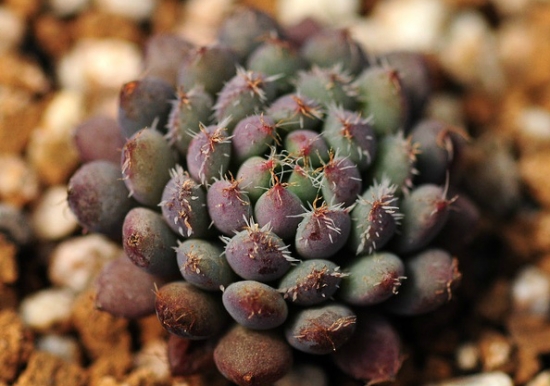
Basic knowledge about Echeveria 'Little Blue Coat'
The Echeveria 'Little Blue Coat' plant is lotus-shaped, very mini, and easily produces side branches, forming clusters. The leaves are arranged in a rosette, oblanceolate, with small tips, thick and plump fleshy texture; the leaf tips and the leaf margins on both sides of the leaf tips have sparse fine white hairs, and sometimes there are also a few white hairs on the ridge line of the leaf back. The leaf color is mostly blue-green or green, and new leaves are sometimes gray-green. Under sufficient light or when the temperature difference increases, the leaf tips will show a beautiful red, some leaves will turn purple or brown-purple, and the leaf surface is also covered with a light white powder.
The flowering period of Echeveria 'Little Blue Coat' is in late spring and early summer, with cymes, purple pedicels, flowers with 5 petals, red, with yellow petal tips; the pedicels, the leaves on the pedicels, and the calyx all have fine hairs.
Cultivation methods for Echeveria 'Little Blue Coat'
Actually, the cultivation of Echeveria 'Little Blue Coat' is similar to the care methods for other succulents in the Crassulaceae family, Echeveria genus. Echeveria 'Little Blue Coat' likes light, likes dryness and coolness, and is not tolerant of stuffiness and humidity. Spring and autumn are the growing seasons, and it can be cultivated outdoors, receiving full sun.
High summer temperatures: it will enter a dormant state. At this time, measures such as ventilation, shading, and water control need to be taken. If the potting soil is dry, a small amount of water can be given along the edge of the pot to avoid the plant drying out due to excessive dryness. Small plants especially need to be protected from heavy rain washing, and at the same time, water accumulation in the potting soil should be avoided. Getting through summer is a test, and more attention and careful observation are needed.
Winter: it is still recommended to cultivate outdoors, so that the plant gets sufficient light and is more likely to develop its best appearance. If there is severe freezing or heavy snow weather, it can be briefly moved indoors for cultivation. When the temperature is below zero, the potting soil should be kept dry. As for the medium, a high-quality commercially available special succulent potting mix can be used.
The propagation methods for Echeveria 'Little Blue Coat' includesowing, division, and cuttings. Generally, division is used for propagation.