Key Cultivation Techniques for Potted Red Flower Zephyr Lily
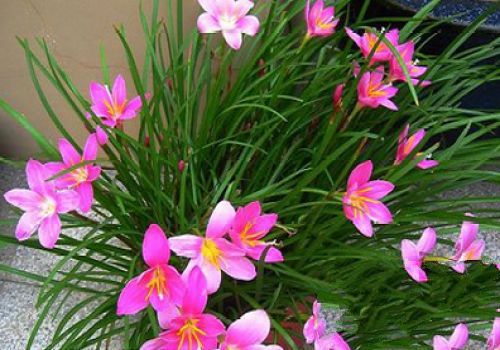
The potted flower red flower zephyr lily (Zephyranthes) prefers warmth and sunlight, and also tolerates partial shade and moisture. It is relatively cold-tolerant; in East China, its underground bulbs can overwinter in the open ground. The leaves are flat, and the flower stems emerge from the leaf clusters, with many terminal flowers. When planted in masses, it becomes a sheet of rose red in bloom, very beautiful, making it an excellent flowering groundcover plant. Its flowering period is long, blooming in summer and autumn, and it can bloom 2~3 times a year.
Its cultivation key points:
① Propagation. Bulb division is commonly used. It can be done either before sprouting in spring or after the leaves wither. Spring is preferable. When planting, place the small bulbs together with their fibrous roots into the holes, planting 2~3 per hole. The planting depth should be such that the top of the bulb is exposed above the soil surface. It can be divided and replanted once every 2~3 years. It can also be propagated by sowing seeds, which can be sown as soon as they are harvested; note that the soil must be kept moist.
② Selection of planting site. Red zephyr lily is best planted in a place with ample sunlight, good drainage and fertile soil. Avoid planting it in low-lying land to prevent water accumulation, which can cause the bulbs to rot.
③ Fertilization. Because the red flower zephyr lily has a long flowering period and prefers fertile conditions, it needs sufficient nutrients during cultivation. Before planting, the soil should be deeply turned and decomposed or treated manure should be applied. During the growing period, topdress with fertilizer 2~3 times. At the same time, pay attention to watering; the soil must not be too dry. For those planted in the ground in the north, dig up the bulbs before Frost's Descent, dry them slightly, store them in a cold room to overwinter, and plant them in the open ground again the following spring.