Flower and plant buying guide: how to correctly select superior flowers and plants
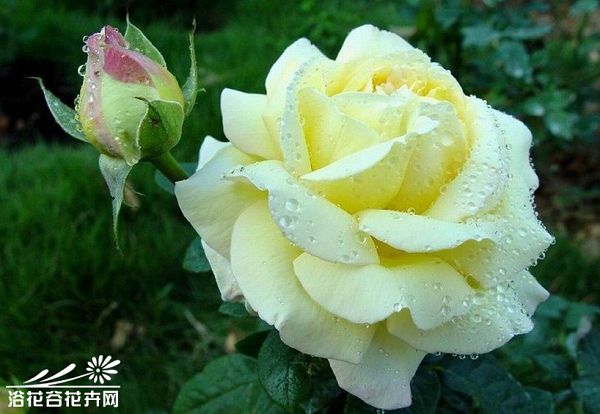
There are two kinds of nursery stock on the market: one with a root ball, and one with bare roots and no root ball. Those with root balls are mostly evergreen flowers and plants. Generally speaking, nursery stock with a root ball is of stable quality, has only slight root damage, and is more likely to survive, so you should buy this kind of nursery stock as much as possible. It is best to buy when the buds have just begun to sprout, as the survival rate is high at this time. However, some nursery stock on the market has root balls faked by growers. You can lift the nursery stock and shake it gently; if the root ball easily falls apart completely, it is a fake root ball, and you must absolutely not buy such flowers and plants. When buying bare-root flowers and plants, note that it is best to do so when the buds have just begun to sprout, and you should choose nursery stock with luxuriant, fresh branches and leaves and with roots that are intact and unbroken.
Second, if you still like to buy potted flowers and plants, you need to pay even more attention when choosing. Do not be fooled by the false appearance of lush greenery and abundant flowers and fruit. Perhaps they were just shipped from a flower base, and the flower seller casually took a pot, planted them with a bit of soil, and then sprayed on some brightening agent; they look promising, but in fact they will be done for after only a few days at home. Some unscrupulous vendors even stick plants without fibrous roots into the soil for consumers to buy, so you must strictly guard against being cheated.
When choosing this kind of potted flowers and plants, you should pay attention to the following two points:
(1) Identify whether the potted plant is real or fake. The specific method is: for woody flowers and plants, grasp the stem; if you can lift it together with the pot and soil, it is generally a real potted plant, otherwise it is a fake potted plant; for herbaceous flowers and plants, pull upward with a little force; if the flower and plant remain firm, it is a real potted plant, while if it can be pulled out of the pot, it is a fake potted plant.
(2) Look at the shape. The height of the flower and plant and the size of the crown should be directly proportional to the size of the pot, and the overall shape of the branches, leaves, flowers, and fruit should be coordinated and attractive. If a tall flower or plant is growing in a tiny pot, such an uncoordinated flower or plant must be a fake potted plant.
To prevent being cheated, I suggest everyone try not to buy flowers and plants sold from pushcarts, and try to develop the habit of buying flowers from fixed stalls and fixed vendors. Even if problems arise, you can communicate in time and reduce losses.
In order to make flowers and plants look better, merchants spray large amounts of brightening agent on relatively expensive foliage plants such as money trees, corn plants, and lucky bamboo, then wash it off with water after closing. The main components of brightening agent are silicone and paraffin; occasional use will not affect the growth of flowers and plants. But some uninformed consumers, after buying such plants treated with chemical agents, do not know to wash them after returning home, so the brightening agent stuck to the leaf surfaces hinders the photosynthesis of the flowers and plants, and before long the whole plant gradually withers.
1. Newly potted flowers: when buying flowers, if you see that the soil in the pot is new and the stem moves when pulled upward, then this potted flower must have been potted only recently and has not yet grown new roots. Such flowers are very likely to die after being bought. The reason is that some operators, in pursuit of economic benefits, mix organic fertilizer that has not yet had time to decompose directly into the soil; once these fertilizers ferment, the roots of the flowers will be burned.
2. Flowers planted with two or more plants together: some operators seize on buyers' preference for lush flowers and leaves, and plant two or more undesirable flower seedlings together in a pot, passing off inferior goods as superior and selling them to inexperienced buyers for profit. After such flowers are bought, the branches and leaves they grow will become thinner, weaker, and yellower day by day, and the flowers will bloom smaller and smaller. The reason lies in insufficient nutrition, and too many roots in the pot make it prone to compaction, and the plants may also die from root rot due to poor drainage and poor aeration.
3. Flowers with roots but no stems or leaves: some individual vendors dig up wild vines and miscellaneous tree roots on the mountain in autumn and winter and pass them off as flowers and plants for sale. Because there are no stems or leaves, it is very hard to identify them. To keep them moist, they wrap them with moss and give them some strange flower names, specifically to deceive inexperienced buyers.
4. Flowers shown in pictures as being able to bloom in multiple colors: a small number of unscrupulous vendors, in order to make profit, insert fake flowers of various colors into some plants that cannot bloom, then take photos to make pictures and give them some exotic flower names to deceive friends who are just beginning to grow flowers. These vendors selling flowers from roadside stalls move from place to place, and buyers who have been cheated find it very hard to locate them.
5. Flowers whose branches and leaves are tied into various shapes with thin wire: in order to sell for a good price, flower and plant operators deliberately tie all the branches and leaves of evergreen trees such as pines and cypresses into various animal shapes with thin wire, then take them to the market and sell them at high prices as bonsai. Such potted flowers look good at the time, but as time passes and the plant grows, the shape will change. Moreover, tying all the branches and leaves of the plant at the same time not only affects photosynthesis but also makes it prone to pests and diseases, which is very unfavorable to the growth of the plant.
6. Cacti with small frost spots on the stems or balls: in early spring, you often see individual vendors selling cacti and similar flowers at low prices. Some buyers, without examining carefully, buy eight or ten at a time, and as a result no small number of them run into problems. The reason is that cacti that have overwintered are very likely to suffer slight frost damage, with light green frost spots smaller than grains of rice appearing on the stems and balls. On the surface there seems to be no problem, but in essence the internal tissues of the plant have already suffered major damage. If no measures are taken after such flowers are bought, the spots will grow larger and larger, the plant will gradually become semi-transparent, and finally the whole plant will die.