Key points for overwintering flowers and plants: pay attention to these aspects
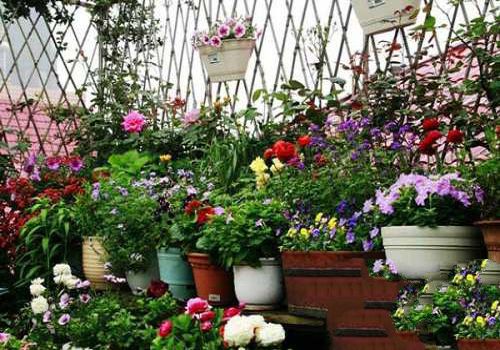
Winter is here, and how to care for flowers in winter becomes a tricky matter, especially in places without heating. First, flower lovers should be clear about the conditions they can provide for their plants. Some flowers and plants will freeze to death no matter how they are cared for when temperatures are too low, so the key to growing flowers in winter lies in providing temperature protection. If conditions do not allow it, be mentally prepared, because for now there is no trick that can make tropical plants withstand cold. Below are a few aspects of overwintering flowers and plants.
There are many ways to increase temperature, and flower lovers can use their own creativity, such as small greenhouses, wind protection, etc., and choose what suits them best.
I. Temperature:
1. For flowers that can withstand cold and low temperatures (5-12°C, below 5°C), such as pomegranate, Chinese rose, wintersweet, osmanthus, palm, Chaenomeles speciosa and crape myrtle, they can be placed outdoors in a courtyard or on a sunny balcony.
2. For flowers that need to be kept at moderate temperature (12-20°C), such as Michelia alba, camellia, rhododendron, Michelia figo, clivia, fuchsia and begonia, they must be moved indoors before the temperature drops to 10°C.
3. For flowers that can only grow normally at high temperatures (18-30°C), such as Aglaia odorata, hibiscus, jasmine, croton, narcissus, epiphyllum, orchid cactus, cactus, ball cactus and aloe, they must be moved indoors before the temperature drops to 12°C, and before the temperature drops to 5°C the flower pots should be covered with plastic bags, the plastic bags tied tightly, with a few small holes left in the bags for ventilation. Around noon on clear and windless days, move them outdoors to bask in the sun for a few hours, then move them back indoors to keep warm.
II. Pruning:
Before potted flowers overwinter, they should be pruned and trimmed in good time to reduce nutrient consumption and reduce the indoor space they occupy during overwintering.
III. Fertilizing:
Apply fertilizer once before overwintering and water thoroughly. During overwintering, fertilizing should generally be stopped for flowers.
IV. Watering:
Generally keep the potting soil dry and water less. In December, the best watering time is the 3 to 4 hours around noon, and the water temperature should be kept basically consistent with the air temperature and soil temperature, to avoid adverse reactions in potted flowers caused by water that is too cold.
V. Ventilation:
Pay attention to ventilating regularly, preferably on sunny days when there is sun, or at noon when the temperature is higher. When ventilating and exchanging air, also be sure not to let cold wind blow directly on the plants, so as to avoid adverse reactions.
VI. Early spring:
In early spring next year, generally from the Spring Equinox to Qingming, overwintered flowers can be moved outdoors one after another and given fertilizer and water, such as bio-organic fertilizer, yellow-leaf treatment, trace element water-soluble fertilizer, etc., so that the flowers can grow normally in spring.
VII. Pest and disease control:
For flowering trees and shrubs whose leaves are prone to pests and diseases, such as crabapple, rose and camellia, collect the dead branches and fallen leaves under the plants and burn them, which can reduce the occurrence of diseases next year. At the same time, spray carbendazim for sterilization and disinfection. For ** disease, rust disease and gray mold of primrose, use triadimefon or thiophanate-methyl for timely control respectively. For flower and tree species on which aphids often appear on potted plants when ventilation is poor, such as Michelia alba and Aglaia odorata, imidacloprid can be used for control. For scale insects, of course, the highly targeted Jie Bi Zhi must be used for control.
In winter, for some shallow-pot landscape bonsai and stump bonsai, careful management is a must: 1. prevent the potting soil from freezing and damaging the plant roots, 2. prevent freezing from causing man-made cemented rocks to disintegrate, 3. prevent plants planted on rockeries from freezing to death or dying of dryness. They can be placed in a location that does not freeze, and watered and misted regularly, so that they can overwinter safely.