How to protect flowers and nursery stock from snow and freezing in winter? Detailed technical measures
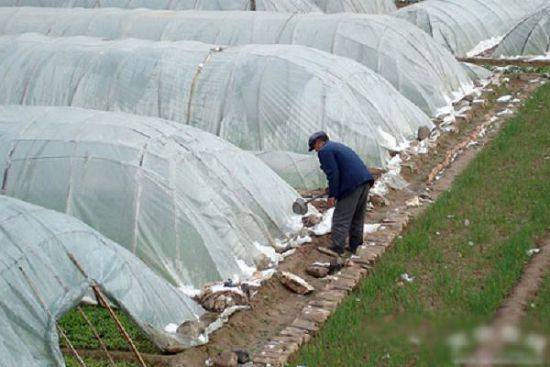
First, do a good job of reinforcing greenhouses and clearing snow. Clear the snow on the roof of the greenhouse to increase light transmission, effectively prevent the snow from crushing the greenhouse, and at the same time reduce the freezing low temperatures produced after the snow melts. When clearing snow, shovel and push gently to avoid puncturing the greenhouse film, and transport the removed snow out of the nursery. Greenhouses that have been crushed or have collapsed and deformed should be reinforced and repaired immediately; for those that cannot be repaired, the plants inside should be moved out promptly, or covered with film, straw curtains or shade nets to improve the insulation effect. Second, do a good job of preventing freezing after snow. Freezing damage weather will occur after snow, so an inner film should be added inside all kinds of greenhouses to form two layers of film, inner and outer, for insulation, and where conditions permit, heating should be provided inside the greenhouse.
After snow, personnel should be organized to promptly shake off the snow on the flowers and trees. When shaking off snow, hook the branches firmly, shake gently first, then gradually increase the force, and just shake the snow off the leaves. After the snow melts, soil should be banked up around the roots to increase ground temperature. Where conditions permit, measures such as covering, bundling with grass, and smoking can be taken to reduce freezing damage. At the same time, clearing ditches and draining water around the nursery should also be done well to reduce soil moisture in the field, avoid snow water accumulating in the nursery, and prevent freezing damage and waterlogging damage from occurring at the same time and freezing the roots. For seedlings and ground cover plants, measures such as floating coverage with rice straw and shade nets should be taken to prevent freezing damage.
Recovery measures after freezing damage. After plants suffer freezing damage, cultivation management should be strengthened to restore tree vigor.
1. Drain water promptly after freezing, which can ease the impact of freezing damage and reduce losses. For severely frozen trees, after budding, even more attention should be paid to soil moisture management; both excessive waterlogging and excessive drought are unfavorable to the recovery of plant growth.
2. Carry out soil banking and inter-row covering. After the snow melts, new soil can be banked up around the plants, and firewood, straw, turf, leaves, sawdust, barnyard manure, rice and wheat husks, and rice straw can be used to spread over the seedbed before the soil freezes, so as to increase the soil's heat preservation effect.
3. According to the degree of freezing damage, the tree crown should be handled reasonably. If the branches and tips are still good after freezing but the leaves are withered and do not fall, they should be removed promptly. Pruning of frozen and dried branches and tips should be carried out after budding, keeping the healthy parts and cutting off the dead parts. It is not advisable to prune early, because early pruning wounds are easily infected by diseases and continue to dry up, which is extremely unfavorable.
4. For plants that suffer relatively light freezing damage, with curled leaves, yellow leaves, and weakened growth, 0.5% urea can be used for 2 to 3 foliar topdressings. After the thaw in early spring, sufficient spring fertilizer should be applied early to restore their growth vigor. For plants with severe freezing damage, thin fertilizer should be applied frequently, and special attention should be paid to controlling the fertilization period, with the aim of promoting spring and summer shoots while controlling autumn shoots. In addition, after freezing, flowers and trees are relatively weak and are often prone to pests and diseases, so they must be inspected frequently and pest and disease prevention work must be done well.