How to Grow and Care for the White Bear Succulent
The bear paw succulents with their chubby little claws have captured the hearts of many plant lovers, and they are divided into the white bear and the green bear. Today we will talk about how to grow the white bear. Some plant lovers think the white bear is the same as the green bear, but that understanding is actually incorrect. It could be said that the white bear is somewhat harder to grow than the green bear. This article is compiled from the personal experience of one plant lover who grows the white bear, and we hope it can offer some reference for plant lovers who are currently growing, or planning to grow, the white bear.
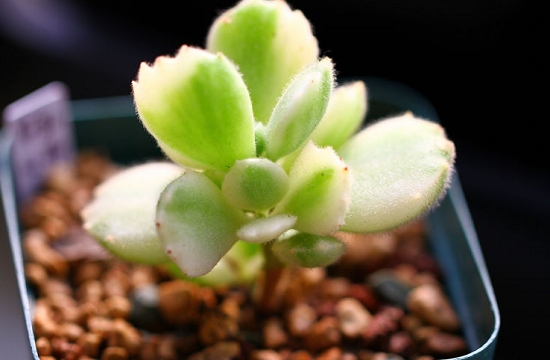
Tips on Growing the White Bear Succulent
Basic environment information:
Plant lover's location: let's just set it as the north for now (after all, in our country it's either the south or the north~).
Temperature: the highest temperature did not exceed 35°C (as far as I can recall it should only get about this hot, though it may get a bit hotter in recent years), but the body surface and ground surface temperatures definitely exceed 40°C.
Humidity: relatively dry (everyone knows northern rain comes and goes as it pleases, rarely dragging things out; the editor from the south has already cried themselves faint~).
Growing experience:
After the start of summer I (the plant lover referring to himself) kept the white bear on an indoor windowsill the whole time, without deliberately using a fan for ventilation, with the window on one side open 24 hours a day, and its condition stayed good the whole time. Later I moved it outside to grow for a week, with no direct sunlight, and the fully variegated leaves began to show scorched patches. Of course, the whole bear also started to look dirty, and its condition did not improve further; the red claws did indeed start to appear, but compared with the condition of the whole plant it felt like more loss than gain, so I moved it back indoors.
My suggestion is that the white bear does not need to be grown outdoors; it really does hurt its appearance, and if you don't do a good job with shading it easily gets sun-scorched. If you want red claws, then wait for a temperature difference; once there is a temperature difference the claws will naturally appear, and there is no need to repeatedly test the white bear's vitality in the height of summer, as this kind of weather is simply not suitable for the bear.
As for watering, I did not pay especially careful attention; I just used the lift-the-pot method, watering when it became light. In winter, when it was especially dry indoors, I forgot to water for a period of time, and as a result the leaves began to dry up and fall off, with half of them dropping. The leaves you see now are all ones that slowly grew back after the beginning of spring.
Notes on Growing the White Bear
The following points are very important, and they are also mistakes I once made:
1. So-called outdoor growing, as far as light is concerned, does not mean being exposed to ultraviolet rays without any cover. Necessary shading needs to be done. Some varieties that cannot tolerate sun will show scorched edges even when placed in a shaded spot; ultraviolet rays are very harsh.