How to grow succulents in the north? A detailed guide to cultivation methods
For gardening enthusiasts who grow succulents, how to grow them well is always a topic worth studying in depth, because different regions have different climate environments, so when caring for succulents, the local climate and environmental conditions also need to be fully taken into account. So next, let us look together at how a veteran gardener from the north cares for his succulents. These experiences are also very worth learning from for beginner gardeners.
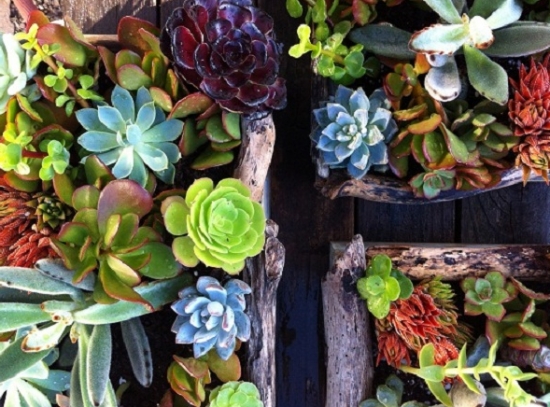
How to grow succulents (Northern edition)
Gardener's location: Jinzhou City, Liaoning Province;
Gardening experience: Has loved flowers for more than ten years, has been involved with Crassulaceae for 4 years, and has been hooked for two years;
Climate characteristics: In summer, the highest temperature is 37 degrees, and generally 35 degrees is considered the limit. In winter, from November to March of the following year, the lowest temperature is minus 18 degrees, and generally minus 15 degrees is the extreme. The climate is characterized by little rain in summer, frequent wind in spring, a short autumn, and very large temperature fluctuations.
Growing environment: My growing conditions are outdoor cultivation on an outer windowsill and a small platform of about 8 sq m, and indoors in winter.
Variety preferences: I like large rosettes, the European type, and I also like large clusters. I feel average about small and cute ones.
Alright, the basic situation has been introduced. Now for the specific growing experience.
Many friends who have just gotten into the hobby are troubled by this, while veterans never have this problem. Why? Because experienced growers understand that pots, soil, water, fertilizer, environment, and plants are an interacting whole, and focusing on any one factor alone is meaningless. For example, if the pot is very breathable, then it is not a problem for the soil particles to be finer; if the soil is coarse particles with very little fine content, then watering more frequently is necessary; if the soil has a relatively high proportion of organic matter such as peat, then very little fertilizer is needed; if it is the growing season and outdoor cultivation has good ventilation, then provide plenty of fertilizer and water; and so on, too many to list. Of course, beginners lack knowledge, so they should still operate conservatively.
1. About the choice of pots and soil
I myself like coarse ceramic pots. First, they are very breathable. Second, because my soil mix contains a lot of perlite, ceramic pots can ensure stability in outdoor cultivation and prevent them from being blown over by strong winds.
My soil mix is coarse perlite, northeast pine needle soil, and limestone fragments, with a volume ratio of about 5:3:1, plus a small amount of charcoal, activated carbon, and nut shells.
3. About watering
I belong to the type who likes to water, and I treat plants differently according to the season, the differences in pot soil, and the differences in plants. During the non-peak growing season, I water along the edge of the pot, once every 10 days. During the growing season, it may be once every 5 days, with heavy flooding irrigation. For water-loving varieties such as Monanthes polyphylla, I increase the frequency.
4. About fertilizing