Mao'ao's sea men step forward to guard the bay; fishing village residents do not seek wealth, only respect
(Continued from the previous article) Following the crisis over the preservation of the Magang fishing village settlement and the renewed controversy over the Mao'ao Bay yacht marina, one cannot help but ask: what on earth is happening in the Northeast Coast?
Since Wu Den-yih proposed the "Action Plan to Improve the Lives of Ordinary People" during his tenure as premier, tourism has flourished in recent years. The Northeast Coast boasts rich natural landscape resources with development potential, which has indeed attracted a large number of businesses to invest more. Businesses buying up land around the settlements on a large scale has raised residents' sense of crisis. The Northeast Coast Scenic Area finds itself caught in a conflict between two locational functions, "developing tourism" and "ecological conservation," leading to clashes between attracting investment and boosting tourism development on the one hand and the existing fishing village settlements and ecological conservation functions on the other. Amid this contradiction, which matters more? Is there any chance for reconciliation and coexistence?
A sea man's heartfelt words: fishing village residents are not hoping to strike it rich, please give us basic respect!
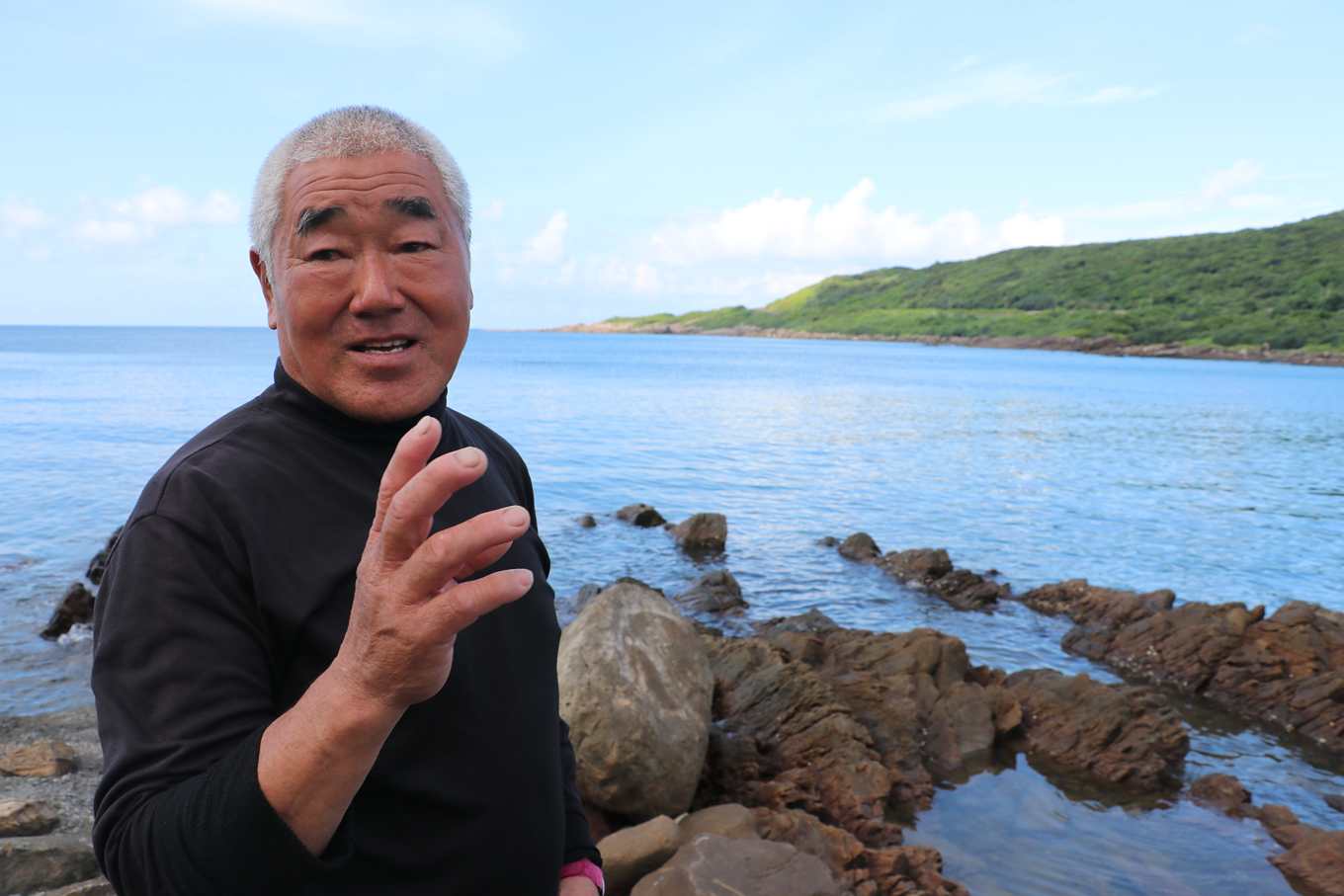
In the afternoon, the weather in Mao'ao is clear and the sea breeze is sticky. Veteran "sea man" Brother Aquan has just come ashore after catching lobsters in the sea, his face flushed red from the sun. With fifty years of experience as a "sea man," Brother Aquan states with certainty that once the yacht marina is built, Mao'ao is sure to be "finished." The terrain of Mao'ao Bay is shaped like an egg, with flat terrain and a stable, warm bay that provides fish schools with temporary refuge, allowing them to breed and reproduce here.
If a yacht marina is built, Mao'ao Bay will be "a dead end." The bay currents will be blocked off, the stream will have nowhere to discharge sand, and in the end Mao'ao Bay's ecology will be completely destroyed. When that happens, what will become of the livelihoods of the fifty or sixty fishing households that depend on Mao'ao Bay to survive?
At the July 25 petition to the Legislative Yuan, Aquan and other fishermen sat in the back row, both angry and helpless. At the Legislative Yuan, with the lengthy questions and answers from the many media outlets, the fishermen had no chance to speak. But back at Mao'ao Bay, Brother Aquan shows a natural confidence toward the sea. He stresses: "The Fisheries Agency says it wants a protected area, says it wants to cultivate fisheries, wants to restore marine resources, and tells us not to fish in Mao'ao Bay. Everyone thinks that makes sense too. But then the Scenic Area Administration says this is a tourism area, that a yacht marina should be built, that business groups should be allowed to invest in building hotels. How can anyone really swallow this?"
The unsung heroes of the anti-nuclear movement: the ocean
In the evening, fishermen are starting up their sampans to set out to sea. In front of the Liyang Temple, the center of faith, we meet Brother Aquan again, carrying the lobsters he harvested in the morning and preparing to sell them to a seafood shop. Brother Aquan waves to friends heading out of the harbor and tells me it is now the season for "soft squid."
After the interview, Aquan revealed to the reporter that back when the anti-nuclear movement was at its most intense, as a young man he twice started up the engine and piloted a sampan to surround the Fourth Nuclear Power Plant and block the Fourth Nuclear Power Plant units from coming ashore. Brother Aquan and other sea men of his generation were all unsung heroes of the anti-Fourth Nuclear Power Plant movement. Facing an unfair world, they draw on the strength the ocean gives them, holding on to hope and moving forward with optimism.
The close connection between the people of Mao'ao and the ocean deeply moved Lin Kuimiao, a cultural heritage worker who assisted with the settlement preservation of Magang and Mao'ao. She believes that in the past, cultural assets focused on physical structures on land, yet the maritime culture of Mao'ao and Magang can precisely fill in the maritime portion absent from Taiwan's cultural assets.
Lin Kuimiao believes that so-called cultural preservation should not focus only on the settlement's physical structures or on evaluating the integrity of building clusters. More important is how to preserve the way residents live in close connection with their environment:
"As for the relationship between Mao'ao Bay and the villagers of Mao'ao, fishing village culture is simply the way humans adapt to the marine environment as a way of life. You could say the residents are the soul of fishing village culture! If business groups want to invest or the government wants to develop, and they do not respect the residents and the local culture, then any talk of preserving fishing village culture or valuing the ecological environment is nothing but empty words."
The fishing village that was made to disappear 01"When developers bought up the Magang fishing village, the vanishing sea women and century-old stone houses
The fishing village that was made to disappear 02"Can the century-old stone houses of Magang fishing village, "provisionally designated as monuments," hold back the pace of development?