Civil groups accuse the government of ignoring the chronic betel nut problem, the hazards of oral cancer and pesticide additives; Council of Agriculture: will enact the "Betel Nut Control and Management Regulations"
Last month, "Upstream and Downstream" published the report "Uncovering Taiwan's Biggest Pesticide Loophole - 30 Years of the Betel Nut Shared Trade," pointing out that there are obvious loopholes in betel nut management. Although the Council of Agriculture recognizes betel nut as a "fruit product," it has long ignored the pesticide needs of betel nut and neglected illegal pesticide use in betel nut plantations. The Food and Drug Administration of the Ministry of Health and Welfare does not recognize betel nut as a "food," let alone conduct sampling inspections and management actions. The contradictions and buck-passing among government agencies have allowed betel nut with excessive pesticides and unclear additives to continue to be chewed and consumed by consumers, also causing a huge burden on the ecological environment.
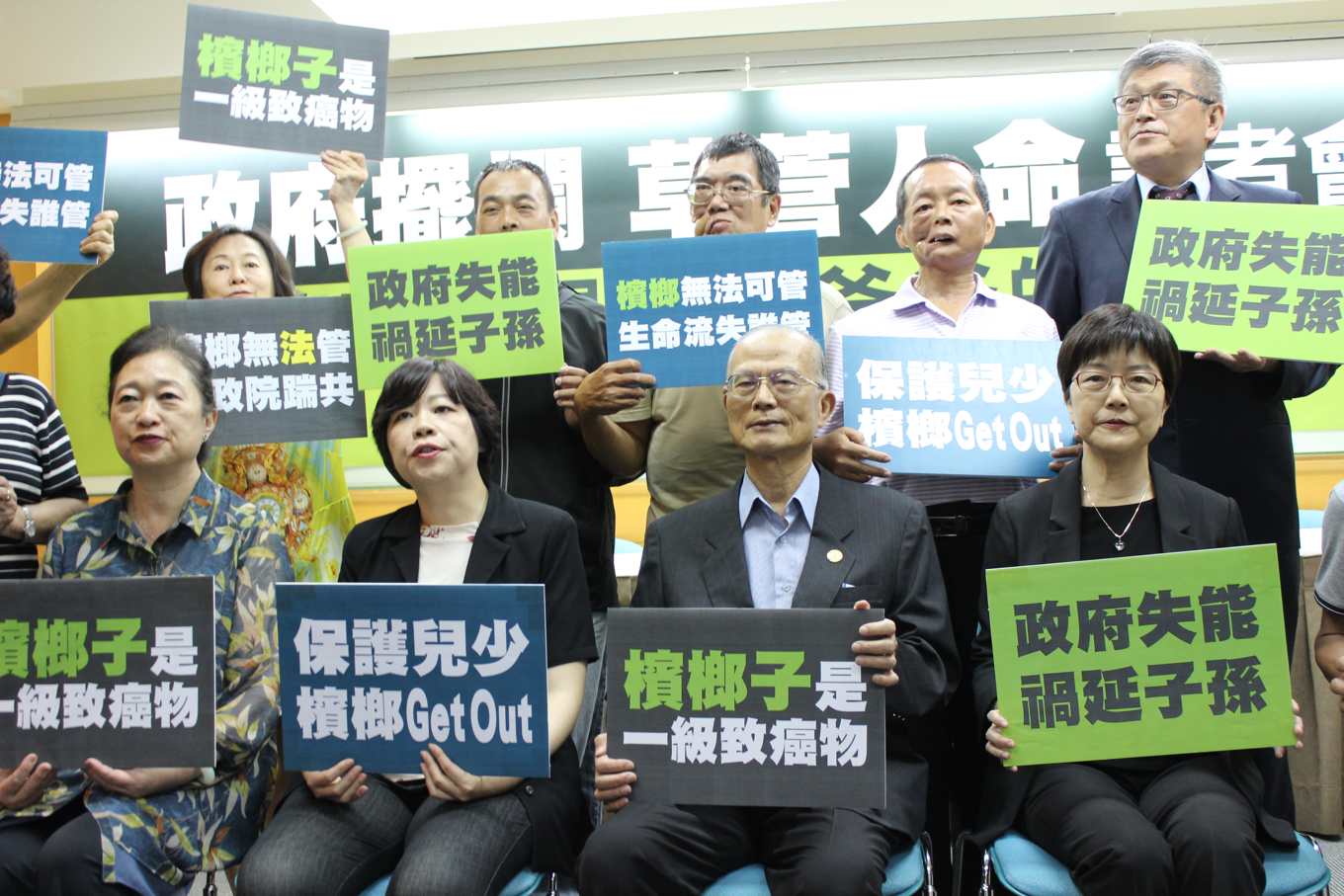
After the news was published, on the 8th of last (July) month, the Council of Agriculture invited the Office of Food Safety, the Food and Drug Administration, and other agencies to a cross-ministerial meeting to draft betel nut-related control measures, but a month has passed and there are still no concrete measures. The "Taiwan Betel Nut Control and Oral Cancer Prevention Alliance" (abbreviated as the Taiwan Betel Nut and Oral Cancer Prevention Alliance), together with the "Taiwan Alliance for the Promotion of Youth Rights and Welfare" and dozens of betel nut and oral cancer victims, held a press conference today (the 5th) to accuse the government of being unwilling for a long time to face the accumulated abuses of the betel nut industry and of disregarding consumer health.
The Taiwan Betel Nut and Oral Cancer Prevention Alliance said bluntly that the government has always been passive in the face of "the source of the world's number one oral cancer incidence," and that after decades of shouting prevention slogans it still cannot produce an effective prescription. The annual medical and health insurance expenditures and social costs are difficult to estimate, and it called on the government to bring betel nut under regulation as soon as possible. "If we don't bring it under regulation now, the holes will never all be patched!"
In response, Council of Agriculture Minister Chen Chi-chung said that in the future it may refer to the "Tobacco Hazards Prevention Act" and enact the "Betel Nut Control and Management Regulations." He also stressed that the Bureau of Animal and Plant Health Inspection and Quarantine will at the latest establish permitted pesticides for betel nut before the end of the year, and that before they are announced, all pesticide use in betel nut fields is illegal. Agricultural authorities will visit pesticide shops to conduct inspections, and he called on businesses not to sell pesticides to betel nut farmers. "If you violate it, you will be fined!"
Food and Drug Administration: If there isa "Betel Nut Control and Management Regulations," thena management mechanism can be established
In response, Tsai Shu-chen, director of the Food Division of the Food and Drug Administration, said, "The betel nut itself is a carcinogen, and neither its essence nor its related additives meet the standards for foods that are nutritious to the body." "Being treated as food must be because eating it is nutritious and healthy. The purpose of food is not quite the same as these addictive items." She stressed that betel nut, betel leaf, red lime, white lime, and other additives still pose difficulties in being recognized in the "food register."
However, she also pointed out that in terms of management logic, even if it is "not food, it can still be viewed from another angle." She gave the example that in previous cross-ministerial meeting discussions, the Council of Agriculture proposed that it could be managed by referring to the concept of tobacco hazard prevention. "As for tobacco hazards themselves, everyone knows that smoking carries cancer risks, but certain specific groups still have a need to use it. So if betel nut can move toward the concept of betel nut prevention, then at that point the cross-ministerial agencies can properly discuss it, from front-end field management and pesticide management for cultivation to back-end cancer prevention."
Regarding the cross-ministerial consensus on the betel nut issue, Council of Agriculture Minister Chen Chi-chung pointed out that in the future it may refer to the "Tobacco Hazards Prevention Act" and enact the "Betel Nut Control and Management Regulations." At the same time, on betel nut import control, it should later also follow domestic betel nut pesticide regulations. "Otherwise, if we only restrict domestic production without controlling imports, this will also have an impact on consumer health and safety."
How should betel nut pesticide use be managed? Field management to be established before the end of the year; at this stage, selling pesticides to betel nut farmers is illegal
The Council of Agriculture recognizes betel nut as a fruit product, but in the past it did not open pesticide use for betel nut plantations, which over the long term led producers to abuse pesticides. This not only exposed users to the risk of pesticide contact, but also caused last year's large-scale bee deaths in the mountainous areas of Nantou.
Feng Hai-tung, director-general of the Bureau of Animal and Plant Health Inspection and Quarantine of the Council of Agriculture, said that local improvement stations in betel nut-producing areas (Taichung Station and Kaohsiung Station) have already been contacted, and that data will soon be collected on betel nut cultivation management techniques and possible pest and disease control needs. "We need to first understand the pest and disease needs of betel nut, and know which problems mainly need to be dealt with, before it is possible to further discuss recommended pesticides. It is not something that can be opened just because we say so." He admitted that the announcement schedule is "not going to be that soon."
However, August will again enter the pesticide use period for betel nut in central Taiwan, and betel nut producers currently have urgent pesticide needs. How should the Council of Agriculture manage this? In an earlier interview, Chen Chi-chung said that Taiwan cultivates large areas of betel nut plantations, that the betel nut industry sustains the livelihoods of many farming families, and that it also attracts a huge population of betel nut chewers. His own family has also grown betel leaf for many years. "So the government should not use the three-no policy of not encouraging, not guiding, and not prohibiting to ignore the fact that it exists." He promised that before the end of this year he would establish "field production safety management" for betel nut, with the Council of Agriculture responsible for sampling inspections at the production end.
Today Chen Chi-chung also responded again, "The (drafting) progress on recommended pesticides should of course be as fast as possible. Everyone is very concerned about the fate of the bees this year." Before the Council of Agriculture announces pesticide-related permits, all pesticide use in betel nut fields is illegal. Agricultural authorities will visit pesticide shops to conduct inspections, and he called on businesses not to sell pesticides to betel nut farmers. "If you violate it, you will be fined!"