Characteristics and sugar content of the new mango variety Tainong No. 1, is it tasty?
I believe everyone must have heard of mango names like Irwin mango, Jinhuang, and native mango, but Tainong No. 1 mango may be a bit more unfamiliar, because Tainong No. 1 mango is not produced in large quantities, and its appearance is also quite unremarkable. The first time I tasted one, it was because a fruit vendor I know well strongly recommended it and said it was very delicious. When I curiously smelled it, I found the mango aroma super charming, so I bought several to eat, and our family of three fell in love with Tainong No. 1 mango just like that. But if Irwin and Tainong No. 1 mangoes were served on the table at the same time, Xiaoyu would prefer Irwin mango, Richard would prefer Tainong No. 1 mango, and I originally did not particularly like mangoes, so I would not compete with Xiaoyu or Richard for mangoes. But if I really had to choose, Tainong No. 1 mango still appeals to me more.
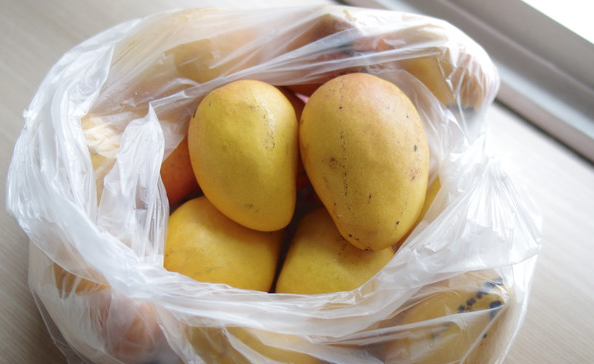
Tainong No. 1 mango was bred in 1985 by the Fengshan Tropical Horticultural Experiment Branch of the Taiwan Agricultural Research Institute. The plant is the most dwarfed, and the leaves are slightly curled and wavy. The fruit is flat ovate and weighs about 200 grams. The sun-facing side is light red. Fruit can be harvested when it turns yellow on the tree, or hard ripe fruit can be harvested at 8-9 maturity and ripened. It is the easiest variety to ripen among existing varieties. After ripening, the peel is golden yellow and quite beautiful. The fruit's sweetness is as high as 16-22 Brix, the aroma is rich, the flesh is slightly firm and tolerant of transport, has less water and stores well, and the seed accounts for 12% of the flesh. The quality is excellent, and its resistance to anthracnose is strong, making it the best variety for labor-saving cultivation.
Tainong No. 1 mango has few pests and diseases, high yield, and the fruit is sweet and fragrant with a bit of native mango aroma. The flesh fibers are very fine. It is said that when first bred it had a slight resinous taste. The ones I grow have no resinous taste at all, only a pleasant mango fragrance. The peel color is very beautifully golden, with almost no anthracnose spots, and the flesh also rarely has defects. When eaten, the mango aroma is very strong and the texture is excellent. There were a few small mangoes that did not grow large. I originally wanted to throw them away, but they looked very cute and smelled quite fragrant. Out of curiosity I tasted them, and unexpectedly the sweetness was higher and the fragrance stronger.
This is an achievement of Taiwan's agricultural technology. Tainong No. 1 is the pride of Taiwanese people. I plan to also plant Tainong No. 1 lychee and guava. Tainong No. 1 mango has given me great confidence in all Tainong No. 1 seedlings. Tainong No. 1 generally has a very high fruiting rate and stable quality: Tainong No. 1 lychee (Cuiyu lychee) tastes similar to Yuhebao, has a fruiting rate almost as high as Heiye lychee, and is not as difficult to grow as Yuhebao; Tainong No. 1 guava (Diwangba), developed by crossing seedless guava and pearl guava, has thick flesh and few seeds, and its sweetness and crispness are even better than pearl guava. In the future it may replace pearl guava and become a market mainstream. So Tainong No. 1 can be called my number one!